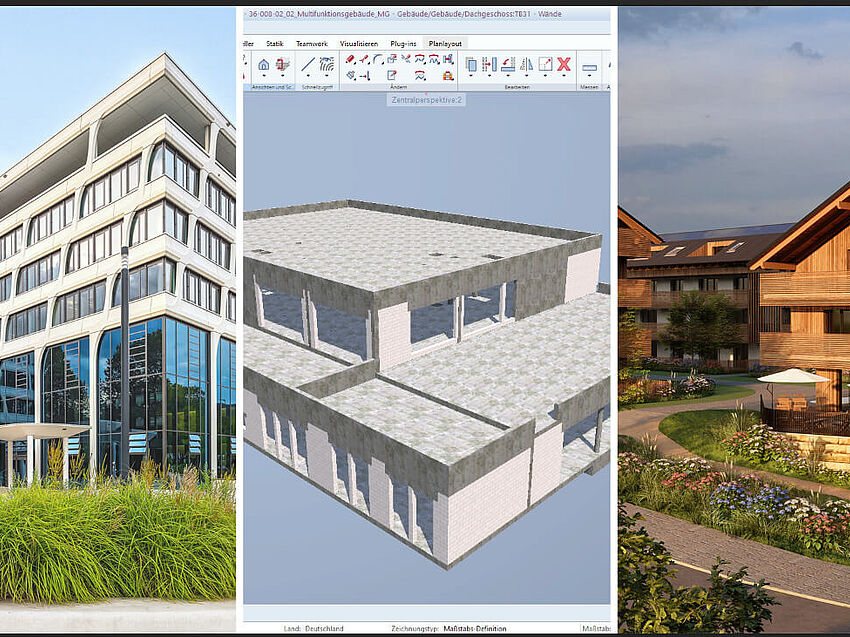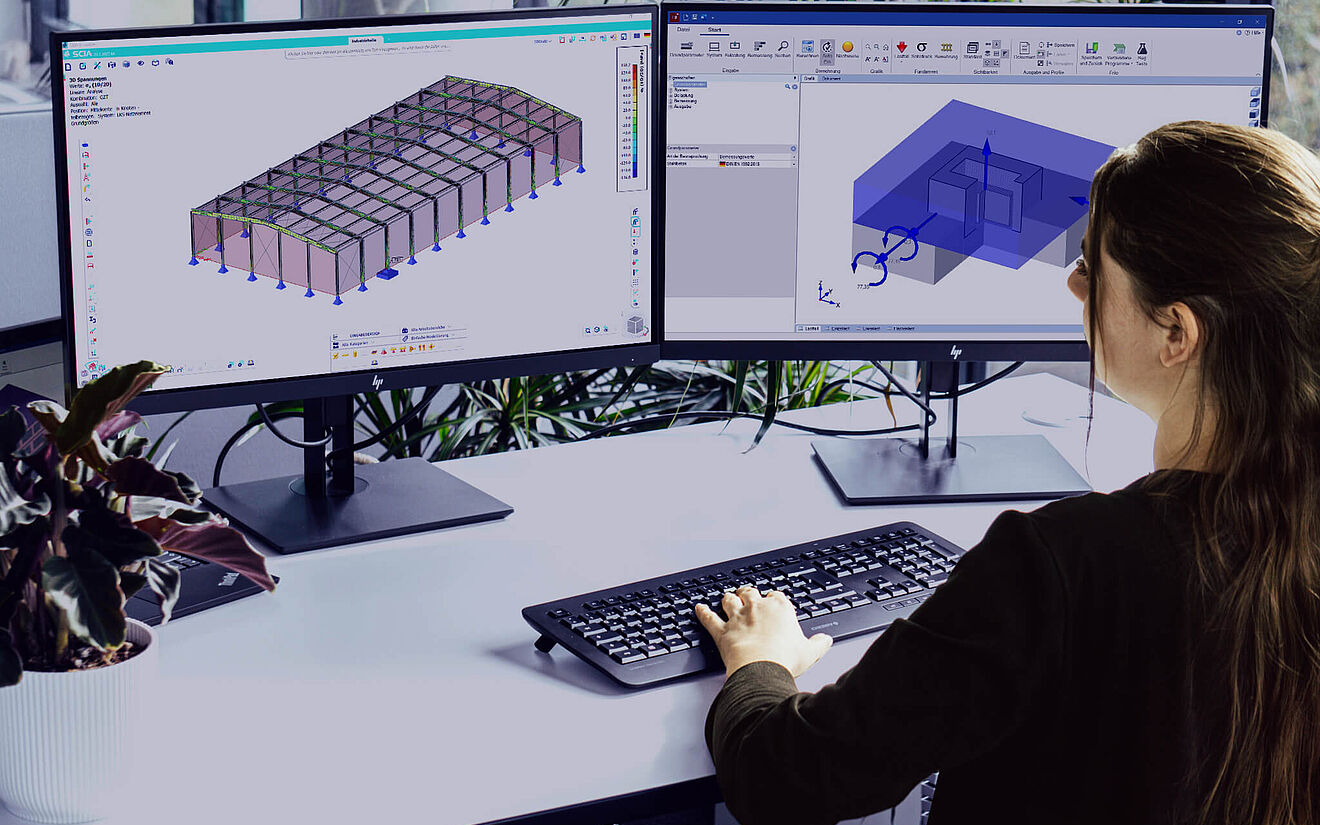
Component-oriented structural analysis or 3D structural analysis? Typically, structural analysis and design software is based on one of these two concepts for calculating and designing structures. What distinguishes the two concepts? How do they complement each other? And what does this mean for your choice when looking for the right software for structural analysis and design? You will find the answers in this article.
In summary: > In component-oriented structural analysis, the structural verifications, calculations and designs of a structure are carried out based on the loads acting on each individual component. > In structural analysis using 3D models, on the other hand, the entire load-bearing structure is modeled, analyzed, and designed as a coherent system, typically using the finite element method. > The two concepts complement each other and together cover the various requirements for structural analysis and design. |
Professional and powerful structural analysis and design software has been an indispensable tool for structural engineers for decades. Computer-aided modeling, calculations, and design enable engineers to meet the industry's ever-increasing demands for cost-effectiveness, efficiency, reliability, and digital collaboration. Structural analysis and design software not only guarantees both code- and legally compliant verification but also delivers reliable calculations in the quickest possible time. In addition, at a time when architectural designs are becoming increasingly sophisticated and complex, it enables structural engineers to turn those creative drafts into reality.
What types of structural analysis and design software are available?
Firstly, it is important to realize that not all structural analysis software is the same. This is primarily due to the fact that two legitimate but fundamentally different concepts prevail in the structural analysis and design of load-bearing structures. Typically, structural analysis and design software is based on one of the following two approaches:
> Component-oriented structural analysis and design: Traditional, component-oriented structural analysis and design follows the philosophy of performing the structural verifications, calculations and designs of a structure based on the loads acting on each individual component. Each component is considered a separate element with its own geometry, materials and loads.
> 3D structural analysis and design: In structural analysis and design using a 3D model, on the other hand, the entire load-bearing structure is modeled, analyzed and designed as a coherent system, typically using the finite element method. This enables structural engineers to take into account global interacting forces between all components of the system as a whole.
What characterizes component-oriented structural analysis?
Because component-oriented structural analysis considers each component individually, the components can be calculated and designed with particular precision, a high level of detail and highly specialized verifications. The structural engineer decides which components of the structure are suitable for transferring loads to the ground and are therefore classified as load-bearing.
The advantages of component-oriented structural analysis include:
> Efficiency and time savings: The verification of individual components significantly reduces modeling and calculation effort. In addition, it is up to the structural engineer to group related components (e.g., concrete columns on the same story) and calculate only one of the components as a representative of the rest. Thus, not every component has to be verified individually.
> Checkability and plausibility: The calculation results are clearly structured and very easy to understand. Each verification clearly refers to a specific component, allowing particularly concise, plausible and checkable results to be created and documented for all parties involved – including the test engineer responsible for reviewing them.
> High level of detail: Changes can be made and verified directly on an individual component with a high level of detail, independently of the entire system. If they do not cause any major interactions between individual components, design adjustments to a component are easier to implement than in the 3D model.
Due to its characteristics, structural engineers rely primarily on component-oriented structural analysis for conventional structures in traditional building construction, where load transfer is clearly defined and straightforward. The approach has proven itself in the design of residential and office buildings as well as single-family homes because it produces verifiable and checkable results faster compared to the more complex structural analysis using 3D models.
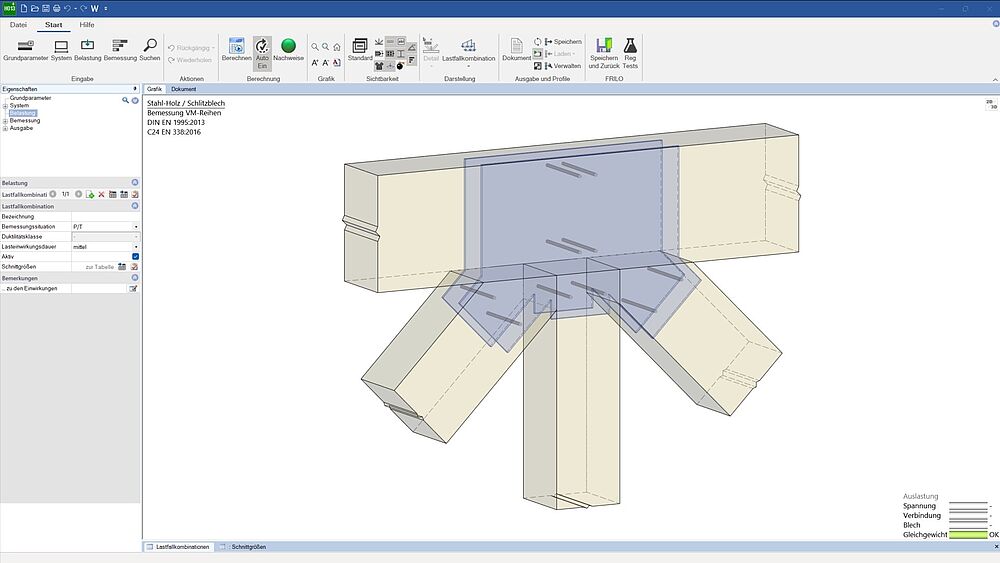 Calculation and design of truss nodes in timber construction according to the current Eurocode using FRILO software
 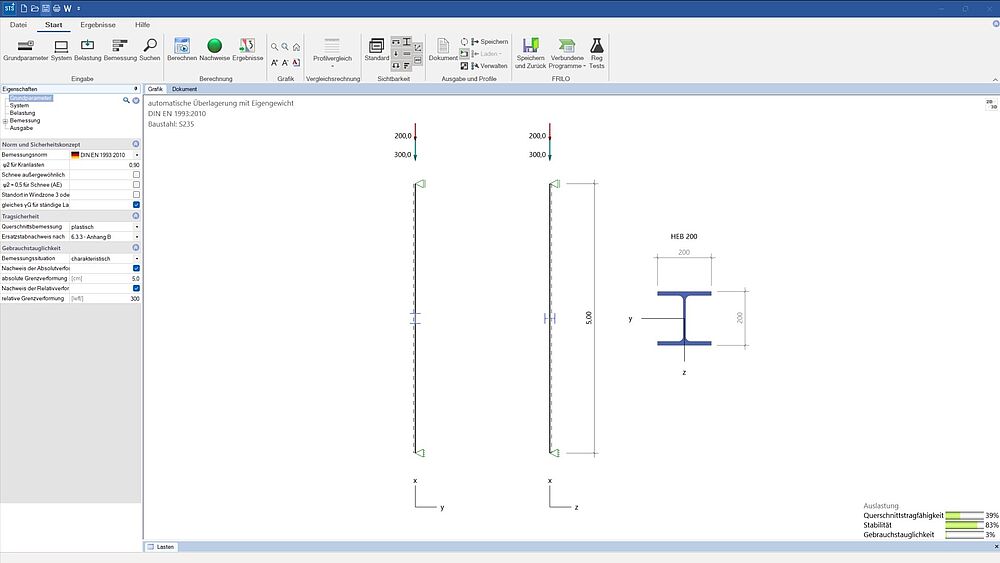 Calculation and design of single-story steel columns according to the current Eurocode using FRILO software
 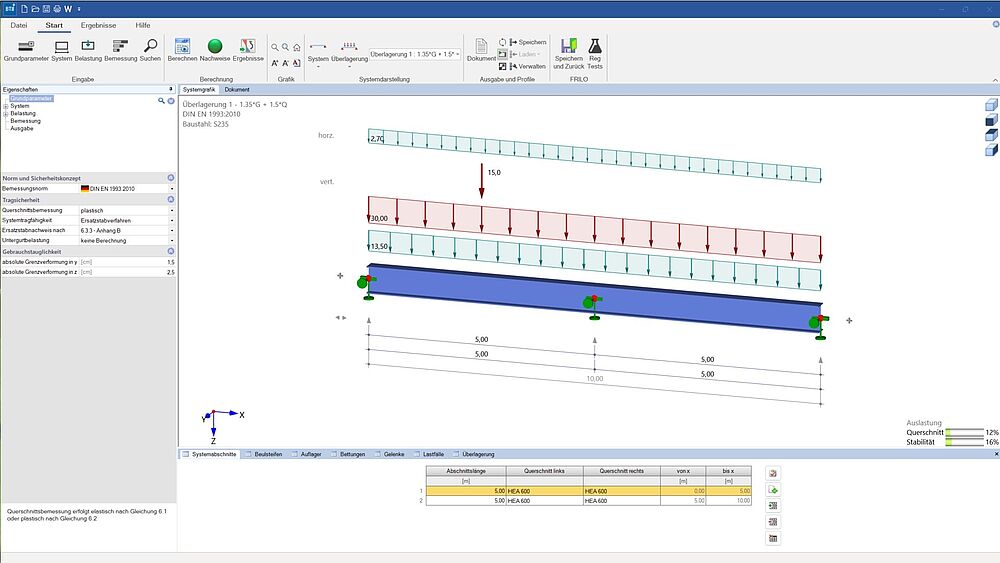 Provision of the necessary structural safety certificates for straight, arbitrarily supported steel bar systems using FRILO software
 What characterizes 3D structural analysis?
In structural analysis with 3D models, because load-bearing structures are modeled, calculated, and designed as a coherent, entire system, global interactions between components can be taken into account. The holistic view of the load-bearing structure allows structural engineers to consider structure-wide verifications, complex dynamic analyses (e.g., earthquake design), and precise nonlinearities.
The advantages of 3D structural analysis include:
> Complex geometries: In free-form structures or buildings with irregular grids, load transfer is often unclear. For precise and economical structural analysis, 3D models are required because they realistically represent not only complex component interactions and mutual dependencies, but also the overall flow of forces and loads.
> Dynamic analyses: The finite element method allows dynamic analyses of the interaction of the entire system – for example, in the case of earthquakes, wind, vibration, or temperature stresses. Local instabilities and global stability failures can also be identified.
> Automated load transfer: Because the system is viewed holistically, the support reactions of a component are automatically transferred as loads to the components below. Changes made to a component in the 3D model have an immediate and automatic effect on the entire system.
Complex, free-form structures such as thin shell structures, membrane structures, high-rise buildings, or bridges can be designed reliably with the aid of 3D structural analysis and design software and calculated using the finite element method. If the flow of forces and loads is unclear and the interaction between components is significant, the approach of component-oriented structural analysis reaches its limits and structural analysis of the entire 3D system becomes an indispensable tool. Nevertheless, component-oriented structural analysis can be a perfect addition to 3D structural analysis, for example to examine complex nodes or individual components isolated from the overall system and calculate them separately with very specific verifications.
 Static calculation of a glulam support structure using a 3D model in SCIA Engineer
 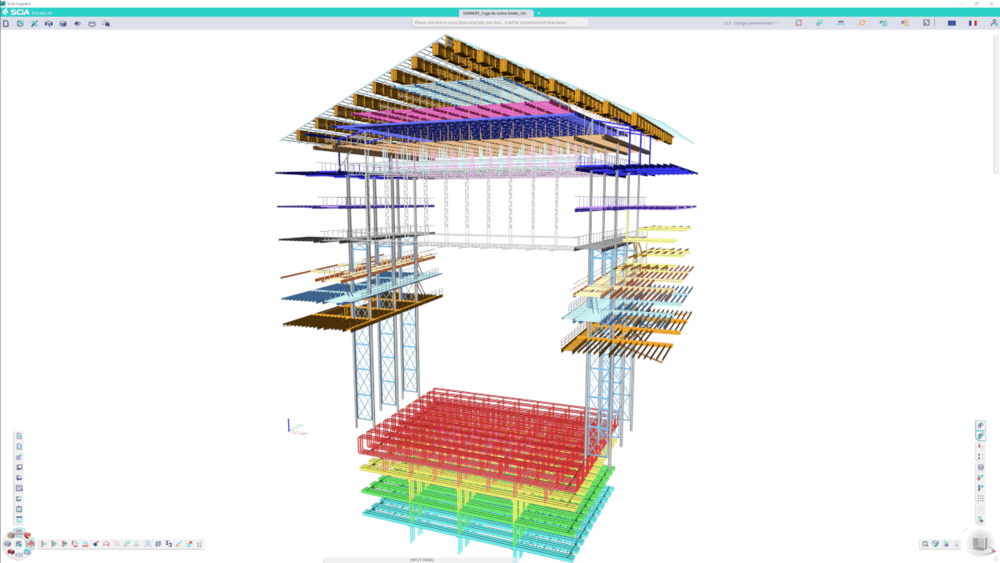 Creating structural diagnostics for a steel stage cage using SCIA Engineer
  Static calculation and design of a new steel plant in an earthquake zone using SCIA Engineer
 What’s next? Four tips for determining your requirements
These two concepts for structural analysis and design do not compete with each other. Rather, thanks to their contrasting advantages, they complement each other perfectly and, when used together, cover the various requirements of structural analysis and design. This is a convenient starting point for business owners or managers, as it ultimately allows them to choose the software solutions that best suit their needs from a wide range of options. However, this will also require you to first clarify which types of structures you intend to provide planning services for and what requirements the structural analysis and design software must fulfill.
When determining your requirements, answer the following key questions:
> Types of structures: How complex are the structures planned by my engineering office? Do I only plan simple, conventional structures or also sophisticated structures with complex geometries?
> Verifications: What type and form of structural verifications do I need to be able to provide? Are simple non-linear considerations for individual components sufficient, or does the interaction of components need to be taken into account? Is simplified seismic verification sufficient, or is 3D seismic design required?
> Material: Which materials are typically used in my projects and can the structural analysis software model all the building materials used?
> Discipline: Does my engineering office focus exclusively on building projects or does the structural analysis software also have to meet civil engineering requirements (e.g., excavation pits, deep foundations, or bridges)?
Conclusion
Every construction project places unique demands on an engineering firm and thus on the scope of structural analysis software. First, thoroughly analyze your needs to narrow down the software options to those that best equip you for your projects. Also, consider combining software for component-oriented structural analysis and structural analysis using 3D models to benefit from the advantages of both approaches.