New precast bridge in the Ahr Valley: Structural analysis with ALLPLAN Civil
Across the world, bridges are reaching the end of their service lives faster than they can be renewed. In Germany, the latest BASt figures reveal that nearly 30% of federal road bridges fall into adequate or less than satisfactory condition, with around 5% already rated “not sufficient” or worse. More than one-third are also over 50 years old – beyond the design life they were built for. The United States faces a parallel challenge. According to the 2025 ASCE Infrastructure Report Card, of the nation’s 623,000 bridges, almost half (49.1%) are in “fair” condition, while 6.8% are classed as “poor.” Different countries, different metrics, but one story: much of our critical infrastructure is running out of time. The need for renovation is no longer an option – it is a pressing necessity today.
Why Bridge Renovation Can’t Wait
The numbers tell only part of the story. Behind every inspection report lies a critical route for commuters, freight, and emergency services. When a bridge falls into disrepair, the effects ripple outward: trucks are forced onto longer detours, local roads face congestion, and supply chains slow down. The consequences of neglect are also severe, with several high-profile collapses in recent years having demonstrated this.
Renovation is therefore not just about preventing disaster; it is about ensuring continuity, resilience, and trust in the systems people rely on every day. With so much of the network approaching the end of its design life, the choice is simple: renovate now, or pay a far higher price later.
The Complexity of Renovation
Renovating bridges is far more complex than building new ones. Engineers must contend with aging materials, hidden defects, and outdated design standards – while keeping traffic moving safely overhead. Deterioration is rarely uniform, meaning one span may remain stable while another demands urgent reinforcement.
Safety adds further challenges. Temporary supports, staged construction, and continuous monitoring are often required to maintain stability. At the same time, traffic management can become a project in itself, as diversions on busy routes cause major disruption.
Together, these factors make bridge renovation one of civil engineering’s most demanding tasks. Here, digital tools provide a decisive advantage – helping teams model, analyze, and plan interventions with far greater precision than was ever possible when the structures were first built.
How Digital Tools Make the Difference
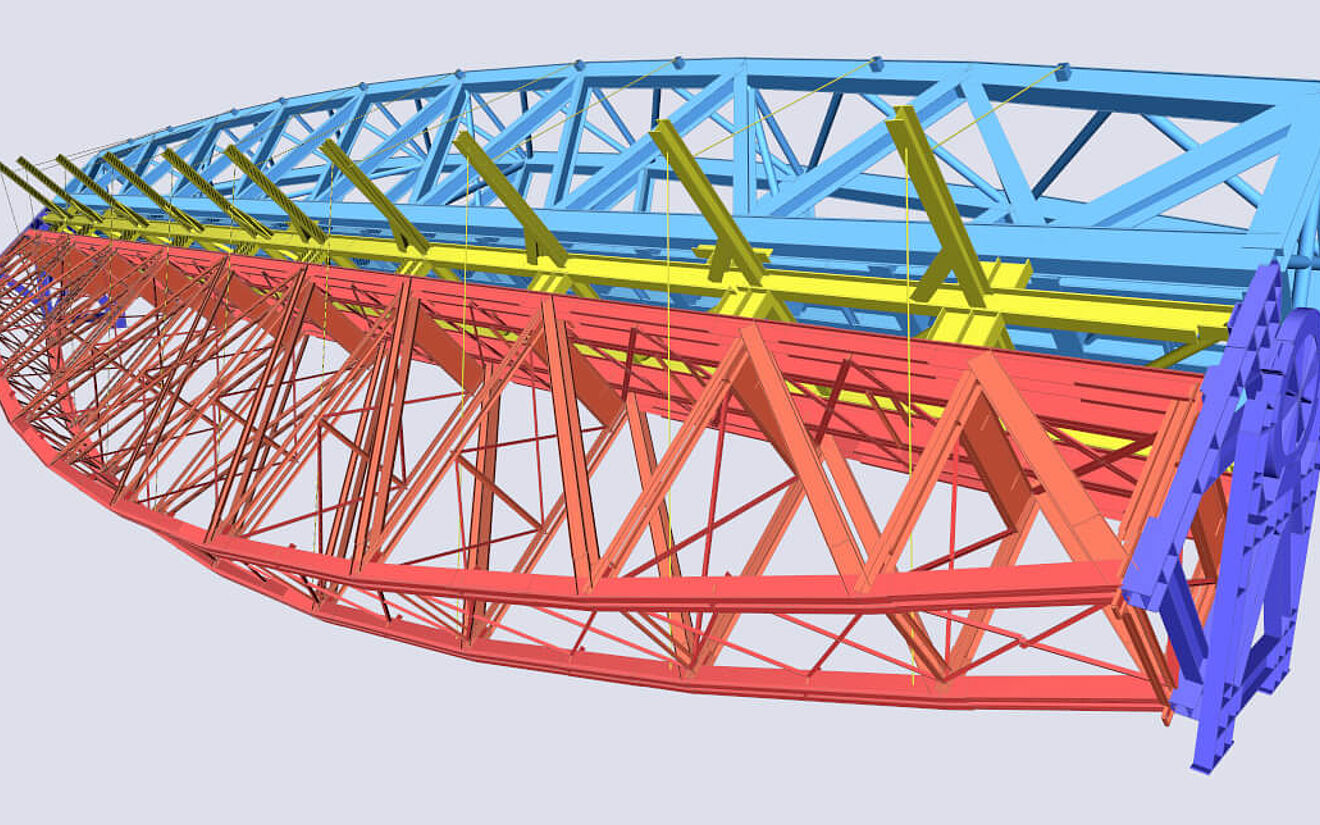
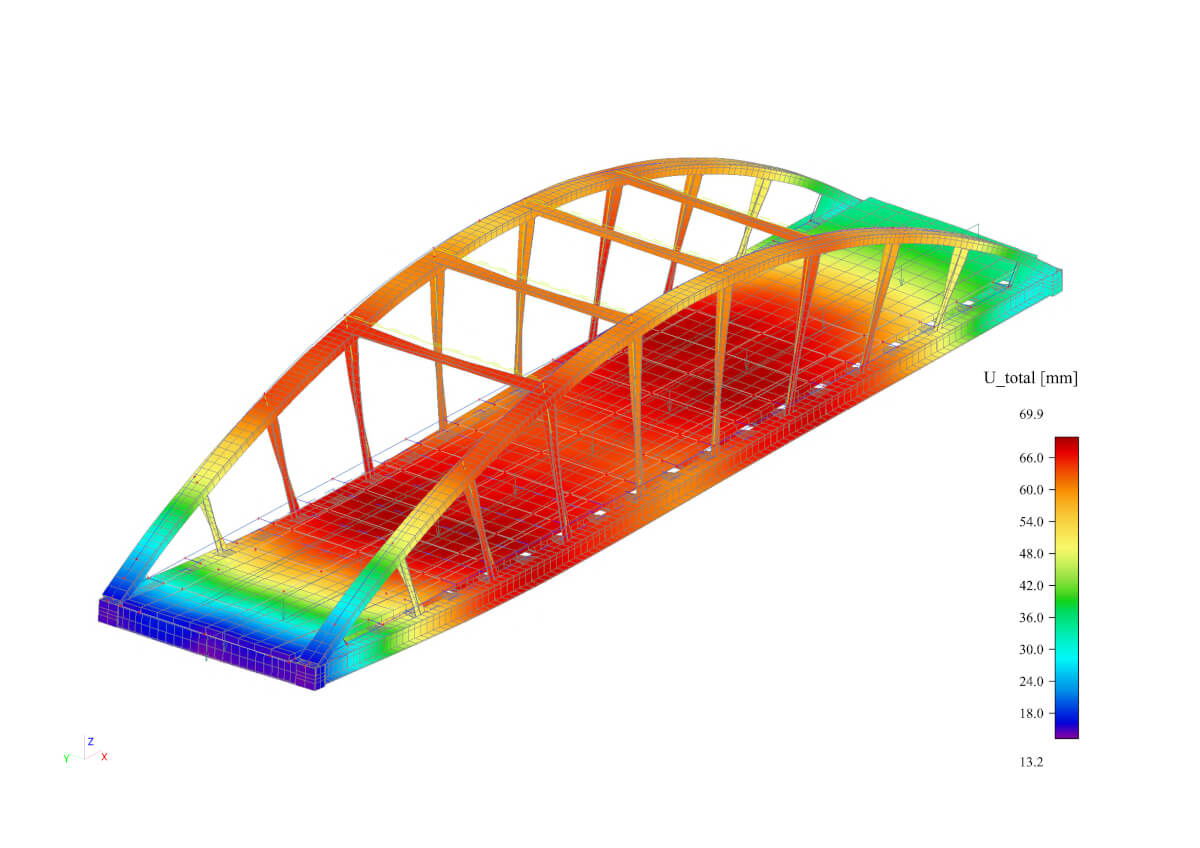
For today’s engineers, digital analysis and modeling are no longer optional – they are essential. Tools like SCIA Engineer allow teams to build accurate structural models of existing bridges, incorporating inspection data, material properties, and loading conditions. This enables engineers to test different strengthening strategies virtually, identifying the safest and most cost-effective approach before setting foot on site.
Additionally, SCIA makes it possible to evaluate non-linear behaviors and complex load cases that older design codes never accounted for. This could be simulating the impact of heavier traffic loads, assessing fatigue in prestressed concrete, or exploring staged construction scenarios. In any of these scenarios, the software provides insights that help minimize risk.
For clients and authorities, these capabilities translate into clearer decision-making. Renovation plans can be backed by transparent calculations and visualizations, improving communication and ensuring that stakeholders understand both the challenges and the solutions. In short, SCIA brings confidence to projects where the margin for error is small.
SCIA in Action
The true impact of SCIA becomes clear when looking at real projects. Across Europe, engineering teams are already using the software to assess, strengthen, and extend the life of vital infrastructure.
Strengthening a 1960s motorway viaduct
In Belgium, a concrete viaduct dating back to the 1960s required urgent reinforcement to handle today’s heavier traffic. Using SCIA Engineer, the design team created a detailed model of the structure, including prestressed concrete elements and time-dependent material behavior. This allowed them to simulate various strengthening options and prove the safety of their chosen solution. By testing multiple approaches digitally, the engineers avoided costly trial-and-error on site.
Renovation of a historic railway bridge
In the Czech Republic, SCIA was used to analyze a 19th-century railway bridge slated for modernization. Engineers faced the challenge of integrating new loads and safety requirements without compromising the heritage structure. SCIA enabled precise modeling of load paths and fatigue behavior, helping the team develop a solution that respected the bridge’s historic fabric while meeting today’s standards.
Widening and adapting for new traffic patterns
A German highway bridge required widening to accommodate additional lanes while remaining in service. SCIA made it possible to model staged construction sequences, assessing how partial demolition and new deck additions would affect overall stability at every step. This predictive capability ensured that traffic could continue safely throughout the renovation period.
Evaluating long-term performance
In the Netherlands, engineers used SCIA to examine the residual life of an aging prestressed concrete bridge. By incorporating inspection data, creep, shrinkage, and non-linear analysis into the model, they could forecast the structure’s performance over the coming decades. The results provided highway authorities with clear evidence to support investment decisions and prioritize renovation over replacement.
These projects illustrate the versatility of SCIA in tackling the full spectrum of bridge renovation challenges – whether dealing with reinforced concrete, steel, or composite structures; balancing heritage concerns with modern demands; or ensuring safety under phased construction. For engineers, the value lies in reducing uncertainty. For authorities and the public, it means safer bridges, smarter investment, and minimized disruption to daily life.
A Defining Moment
Bridge renovation is one of the defining engineering challenges of our time. With much of the world’s infrastructure aging beyond its design life, delays are no longer an option. By equipping engineers with advanced analysis and modeling capabilities, SCIA is helping transform complex renovations into safe, efficient, and future-ready projects – ensuring that the backbone of our transport networks remains strong.