
Steel Estimating Explained: Why It’s Still Manual and How AI Helps
Steel detailing has always been a discipline defined by precision. But now more than ever, it is increasingly defined by pressure. Detailing teams are being asked to deliver fabrication-ready models earlier, coordinate with a wider range of stakeholders, and manage growing model complexity – all while navigating tight schedules and ongoing skills shortages. In this environment, productivity is no longer simply about working faster. Instead, it has become a question of resilience: how reliably a team can deliver accurate information, incorporate changes, and keep projects moving without sacrificing quality or affecting subsequent activities.
In summary: > Steel detailing productivity is now about reducing rework, improving accuracy, and maintaining reliable workflows under increasing project pressure. > This requires model-centric processes, automated connection logic, built-in validation, and clean data handoffs between detailing, fabrication, and coordination teams. > Productivity gains come from reducing manual intervention, linking drawings and material outputs directly to the 3D model, and applying consistent logic at scale. > SDS2 2026 supports this approach through automation, intelligent connection design, batch drawing management, and stronger data continuity. > This provides improved delivery predictability, faster revision cycles, and measurable ROI across steel detailing operations. |
Faster and more productive steel detailing, then, is not about speed for its own sake. It is about reducing rework, improving accuracy, accelerating handoffs, and creating workflows that support consistent delivery, even as project demands continue to rise. Here’s how to achieve it.
From working faster to working smarter
Much of the time lost on detailing projects does not come from the complexity of the steel itself, but from the way work is structured. Manual connection checks repeated across similar conditions. Revision updates applied one drawing at a time. Documentation assembled separately from the model it describes. Each task may be manageable in isolation, but together they create friction that slows teams down and increases the likelihood of errors.
This is where the idea of productivity needs to change. Working faster on fragmented processes only amplifies their weaknesses. Working smarter means reducing the amount of manual intervention required in the first place and ensuring that information flows cleanly from one stage of the workflow to the next.
In practice, that means moving away from productivity as an individual effort and toward productivity as a system. Doing this requires intelligence embedded in the model, and consistency applied automatically rather than manually checked. Data should be created once and reused, rather than recreated downstream. When those principles are in place, productivity gains are not just incremental – they compound across the life of a project.
What modern productivity in steel detailing looks like
Productivity in steel detailing is less about isolated time savings and more about how reliably information moves through the project. High-performing workflows are designed to minimize manual intervention, reduce uncertainty, and surface issues earlier, when they are easier and cheaper to resolve.
In practical terms, that means automation that goes beyond geometry. It requires intelligent systems that recognize repeating conditions and apply consistent logic at scale. It needs built-in validation that flags constructability or compliance issues before drawings are issued. Documentation should also be generated directly from the model, rather than recreated and maintained separately.
Equally important is connectivity. Productive detailing workflows support clean handoffs between detailing, fabrication, and coordination environments, without requiring teams to translate or rework data along the way. When models, drawings, and reports all reference the same verified source of truth, downstream teams can move faster with greater confidence.
Taken together, these capabilities shift productivity from individual effort to process design. The focus moves away from firefighting and toward predictable, repeatable delivery – even as projects grow more complex.
Turning capability into reality with SDS2 2026
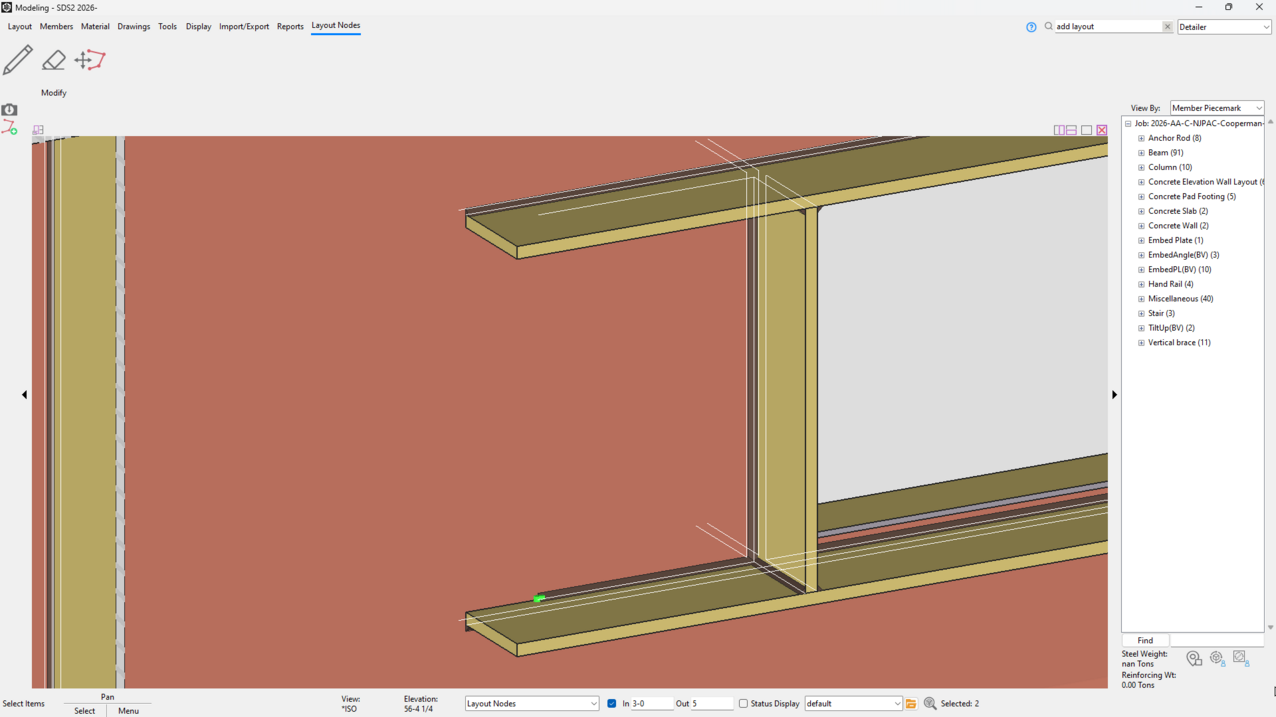
SDS2 2026 has been developed with this broader view of productivity in mind – not as a collection of isolated tools, but as a way to reduce friction across the entire steel detailing workflow.
Automation plays a central role, particularly where repetitive manual effort traditionally consumes the most time. Intelligent connection design, grouping, and review workflows allow similar conditions to be handled consistently at scale, reducing the need for detailers to rework or recheck the same information repeatedly. Improvements to drawing management and batch operations help teams maintain revision consistency across large drawing sets without introducing risk.
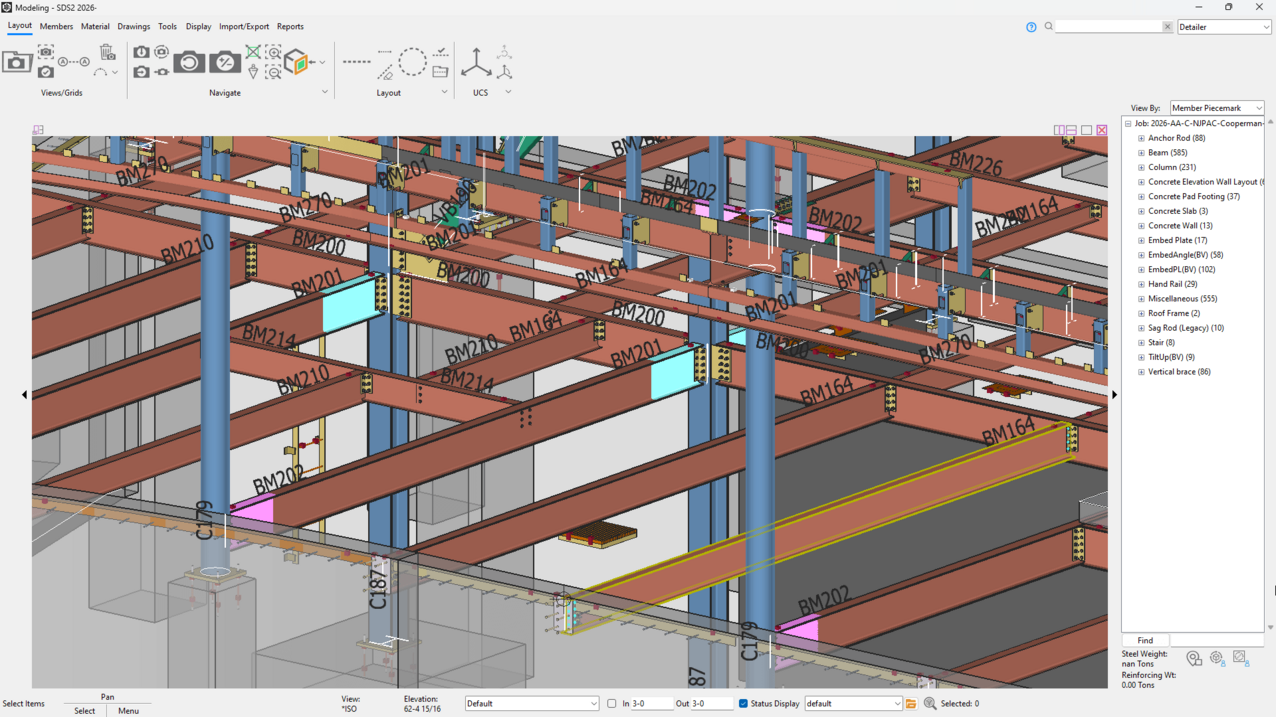
Productivity gains are also driven by stronger data continuity. In SDS2 2026, drawings, CNC data, and bills of materials information are directly tied to the 3D model, reducing the likelihood of discrepancies between what is modeled and what is issued. This model-centric approach supports cleaner handoffs to fabrication and coordination teams, helping to accelerate review cycles and reduce late-stage corrections.
At the same time, expanded support for custom materials and profiles allows teams to handle mixed-material and architecturally complex projects within a single environment. By avoiding workarounds or tool switching, detailers can maintain momentum while preserving accuracy.
Together, these capabilities shift productivity away from manual effort and toward repeatable, reliable workflows. This enables teams to spend less time managing information and more time applying engineering judgment where it adds the greatest value.
Productivity as ROI, Not Just Efficiency
Productivity improvements matter most when they translate into measurable business outcomes. In steel detailing, those gains are rarely confined to a single task or project phase. They accumulate across schedules, teams, and portfolios.
Reducing manual effort and rework shortens detailing cycles, but the impact extends further. Faster, more consistent documentation supports earlier approvals. Cleaner data handoffs reduce downstream questions and corrections. And by embedding intelligence directly into workflows, teams can make better use of experienced detailers’ time – focusing their effort on coordination and problem-solving rather than administration.
Insights from the SDS2 ROI Report reflect this broader effect. Many users report being able to take on more work, deliver larger or more complex projects, and improve customer satisfaction without a corresponding increase in headcount. Others highlight faster payback periods, with productivity gains emerging within months rather than years.
Seen in this light, productivity is not simply about doing the same work faster. It is about creating capacity, improving predictability, and strengthening margins across the business – benefits that become more pronounced as project demands continue to rise.