How AI Is Already Changing Architecture and Engineering Workflows
How do hotbeds of architectural innovation such as Zaha Hadid Architects work with AI? Ulrich Blum provides exciting insights into co-creations between humans and machines.
In summary: > Zaha Hadid Architects are considered pioneers not only in architecture but also in the use of AI: The firm has been developing its own tools for years and consistently integrates artificial intelligence into its design processes. > AI serves as a creative partner that sparks designs, generates variations, and makes ideas visible and discussable more quickly. > At the same time, AI enables more informed decisions by simulating complex relationships such as light, sightlines, movement, or usage, thereby supporting evidence-based planning. > Particularly valuable is the ability to analyze and evaluate thousands of variations in a short time, resulting not only in more efficient but often also surprisingly expressive solutions. > Despite all the technological support, creative responsibility remains with humans: AI expands the range of possibilities but does not make its own design decisions. |
When it comes to creating innovative architecture using technological innovations, Zaha Hadid Architects (ZHA) has been at the forefront of its field for decades. It should come as no surprise that the firm, which still embodies the pioneering spirit of its iconic founder, is also one step ahead of most of its colleagues when it comes to artificial intelligence. In a recent keynote delivered as part of db 360°, the online event series hosted by Deutsche Bauzeitung, Professor Ulrich Blum of ZHA demonstrated how far the intellectual heirs of the “queen of curves” have already advanced into the realm of future technologies. Below is a concise overview of the main insights.
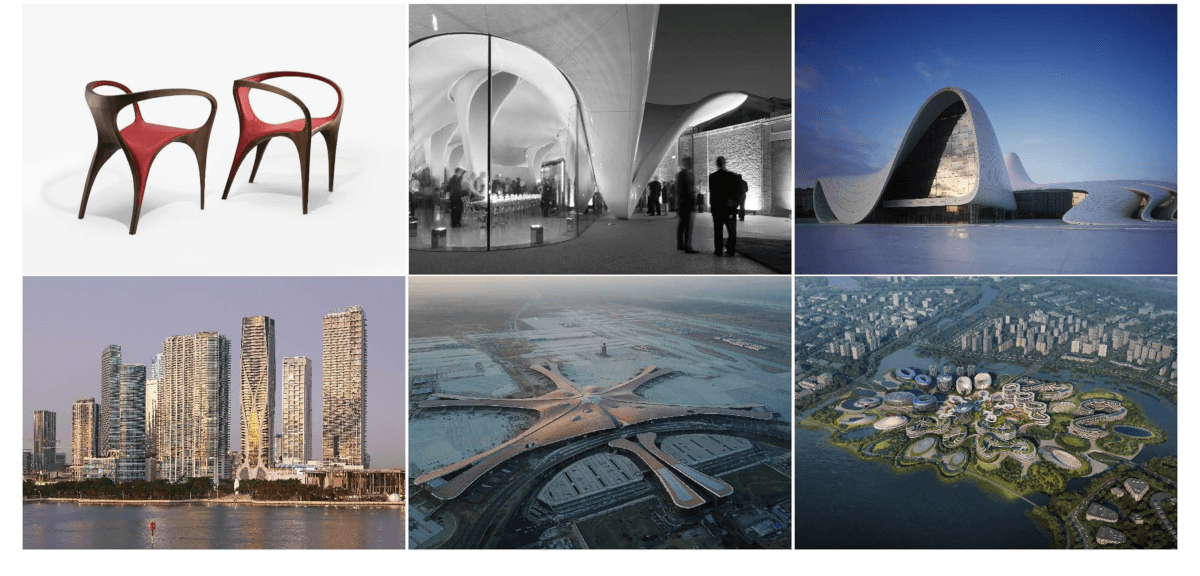
Ulrich Blum is Senior Associate and Head of Analytics Insights at Zaha Hadid Architects London and Professor of Design and Construction at the Münster School of Architecture. In both roles, he is intensively involved with artificial intelligence. According to the architect, algorithms and AI inform design at every level at ZHA – from furniture to urban planning. The firm mainly exploits two potential applications of the technology: using AI as a catalyst for innovation and as a problem solver.
AI as a catalyst for innovation in various design phases
“Large language models (LLMs) act like a collective intelligence fed by the knowledge and ideas of billions of people,” says Ulrich Blum. Viewed in this light, they are not creative themselves, but they make creativity accessible. ZHA has been making use of this creative power for several years now. At an exhibition by artist Refik Anadol at the Dongdaemun Design Plaza (DDP) in Seoul, for example, tens of thousands of images, sketches, and renderings from the office were used as training data for an AI that developed a kind of visual memory of Zaha Hadid Architects.
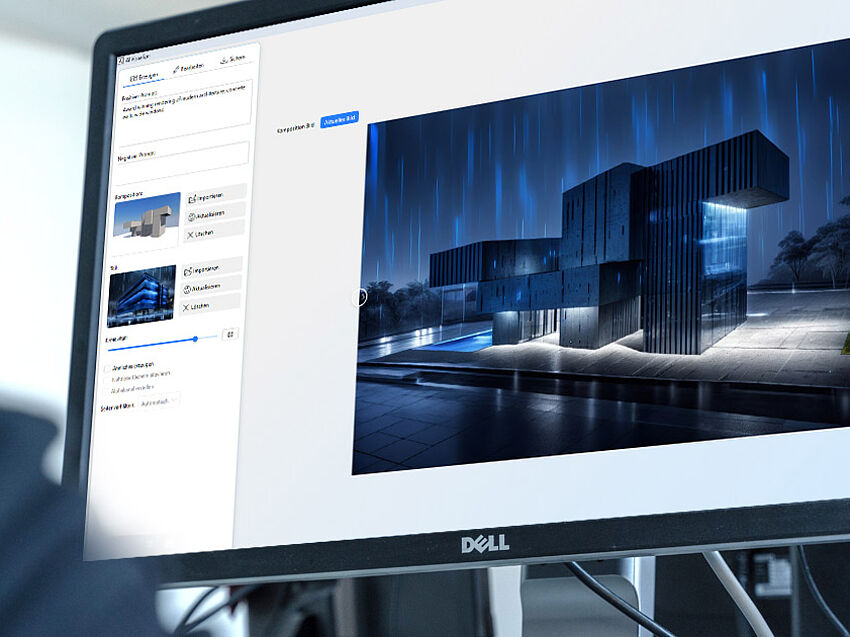
“We used to collect mood boards and references,” explains Ulrich Blum, “but today, many designs start with a prompt.” It is important to note that AI shows possibilities, but it does not make decisions. “We control the form, but the variety is much, much greater than ever before.” This is not just about initial ideas. AI is also consulted in later stages of the design process, for example when searching for the right roof. Artificial intelligence delivers a wide variety of options within seconds.
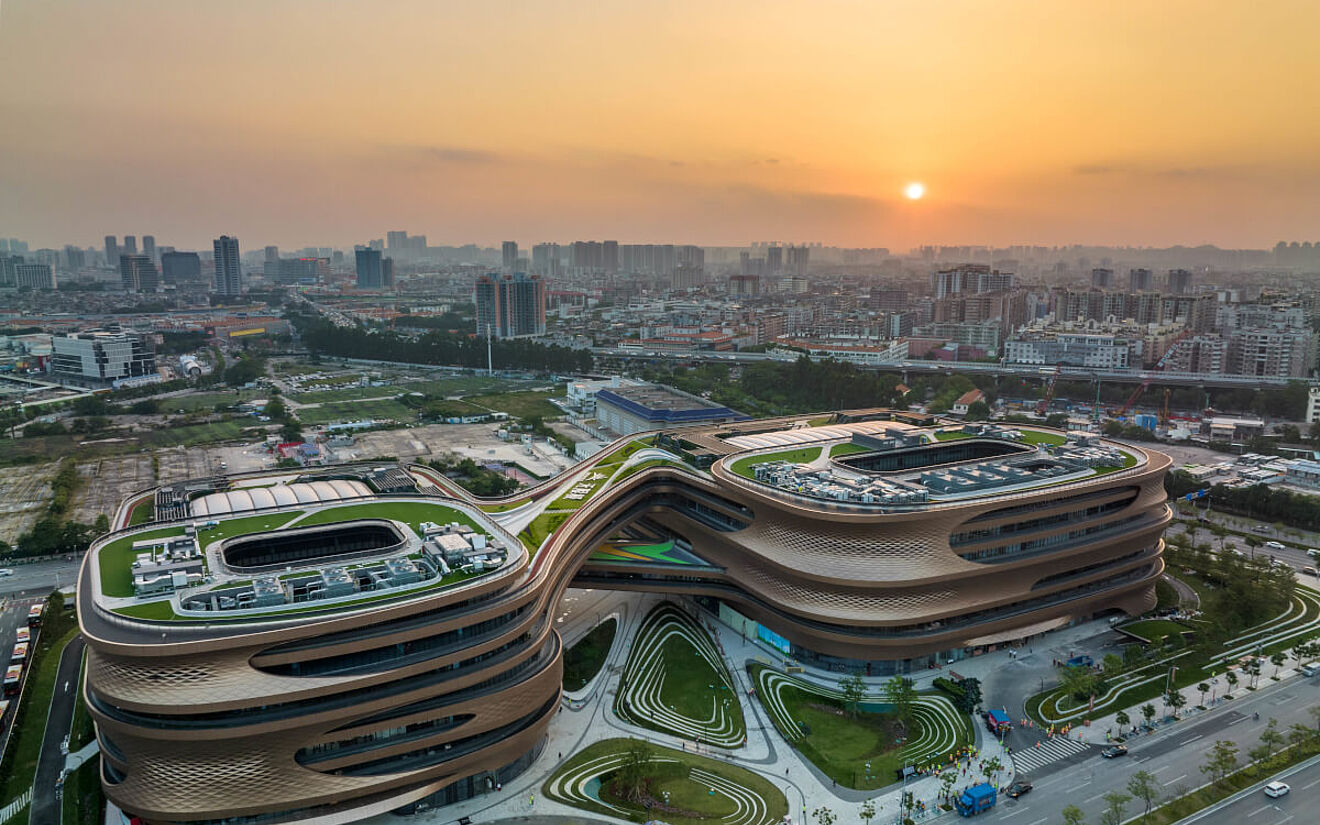
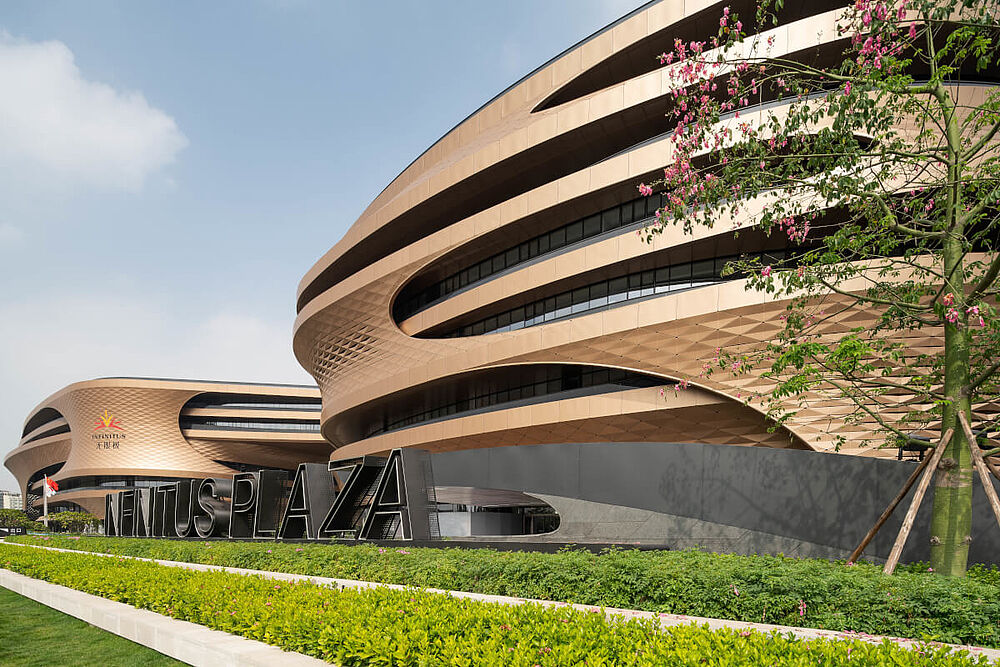 Infinitus Plaza in Guangzhou. Copyright: Liang Xue
 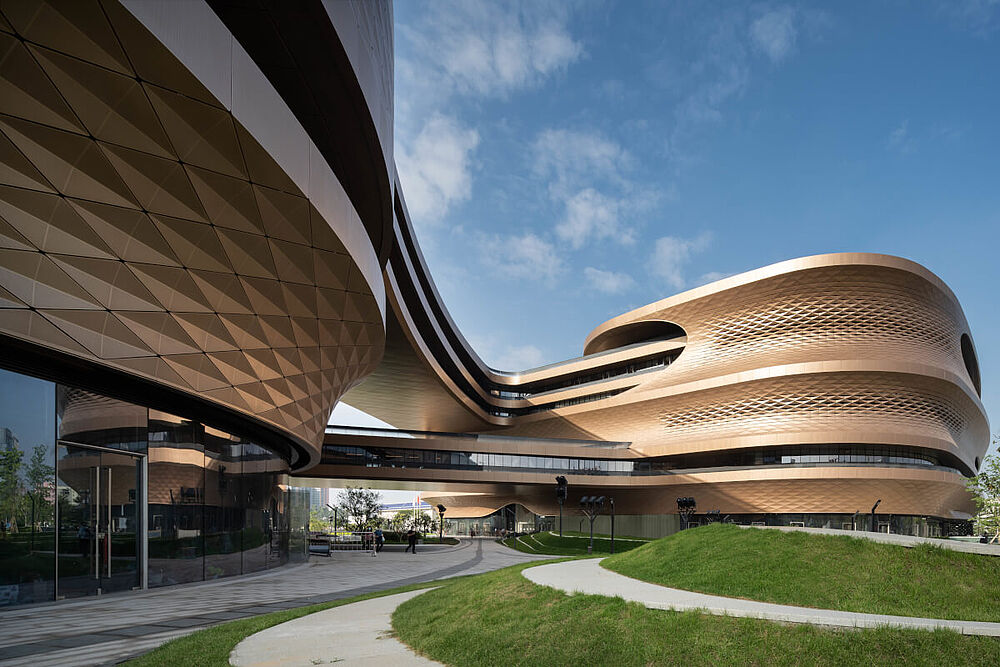 Infinitus Plaza in Guangzhou. Copyright: Liang Xue
 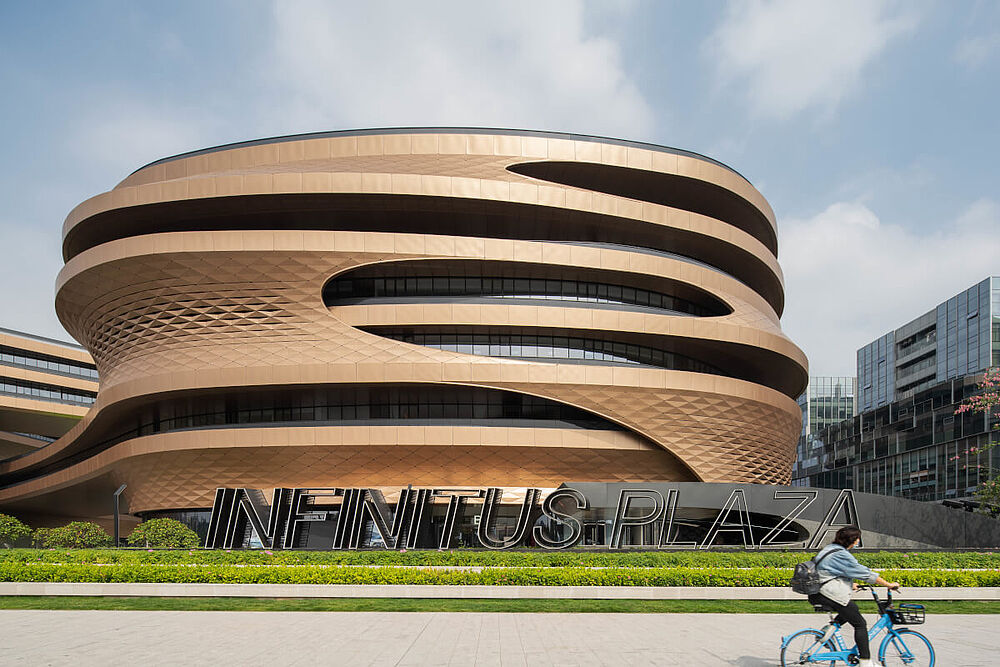 Infinitus Plaza in Guangzhou. Copyright: Liang Xue
 In addition, sketches can be worked with in a completely new way. For example, ZHA’s AI, trained in urban planning, understands context. It knows that the color blue means water, green means forest, and brown means buildings. With this knowledge, it responds to rough inputs (simple colored areas) and gives them form, making ideas visible, tangible, and discussable more quickly. This generates not only buildings, but also situation-specific, atmospheric environments – backgrounds that might have taken the office a week to create in the past.
AI as a problem solver: evidence-based decision-making
However, this creative support is only one aspect of working with AI at ZHA. Architects still tend to make many decisions based on gut feeling rather than hard facts. Not necessarily because they want to, but because until now they simply lacked the technical capabilities and resources to tackle certain problems in an evidence-based manner. ZHA now uses AI assistants in such situations to overcome the limitations of human intuition and create co-creations from the collaboration between humans and machines.
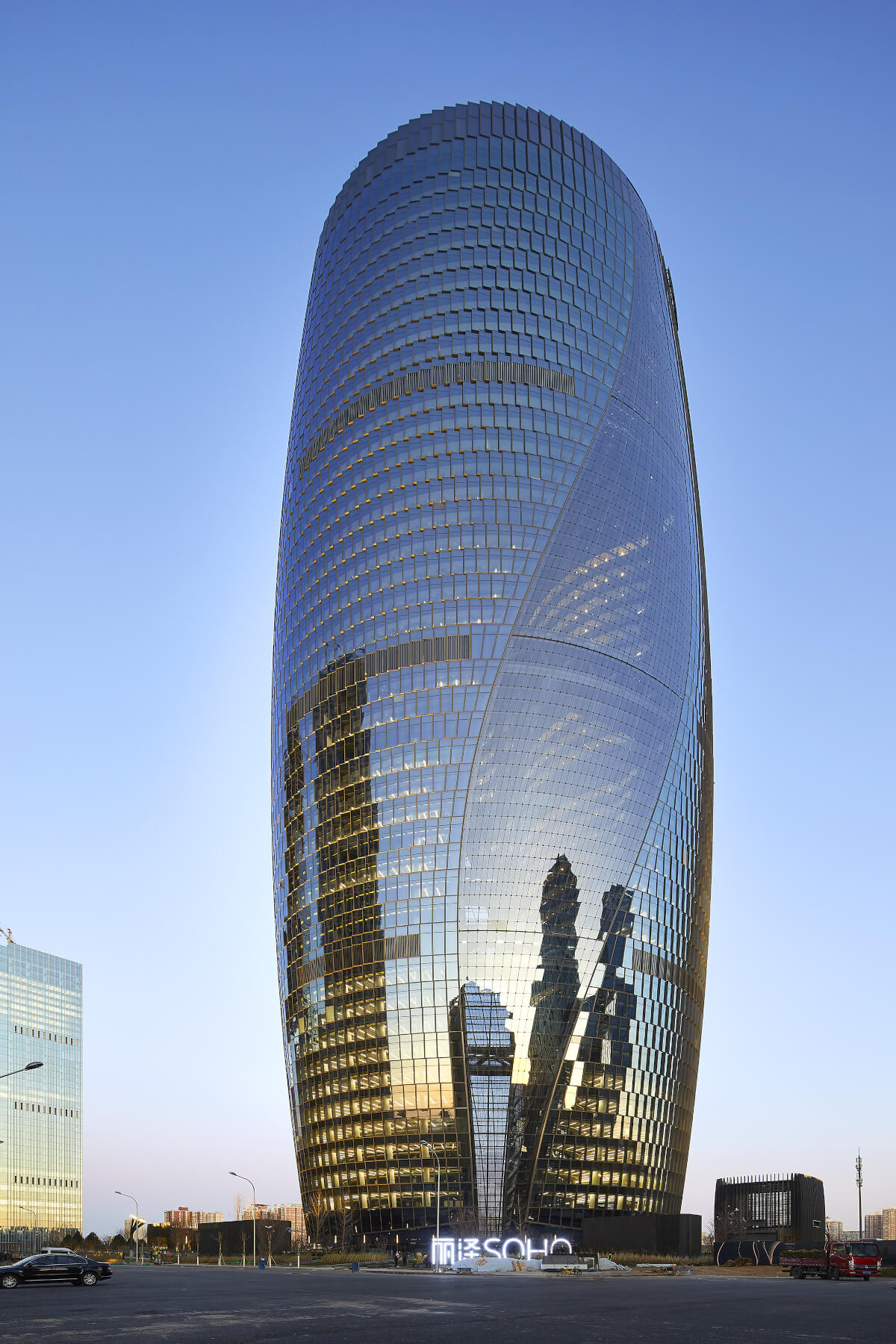
Ulrich Blum cites several examples of this. For example, sightlines and movement flows can be simulated and compared in different floor plans. This clearly reveals any conflicts of interest between highly communicative areas and privacy, retreat and overview, or efficiency and experience, and allows them to be optimally balanced. In a high-rise building recently completed in Hong Kong, for example, it was determined that a side core configuration yielded the best results. The nice (and thoroughly reassuring) thing about this is that, in the end, it is still humans who make the decisions, but AI clearly helps them make better decisions by revealing the strengths and weaknesses of ideas and their variants.
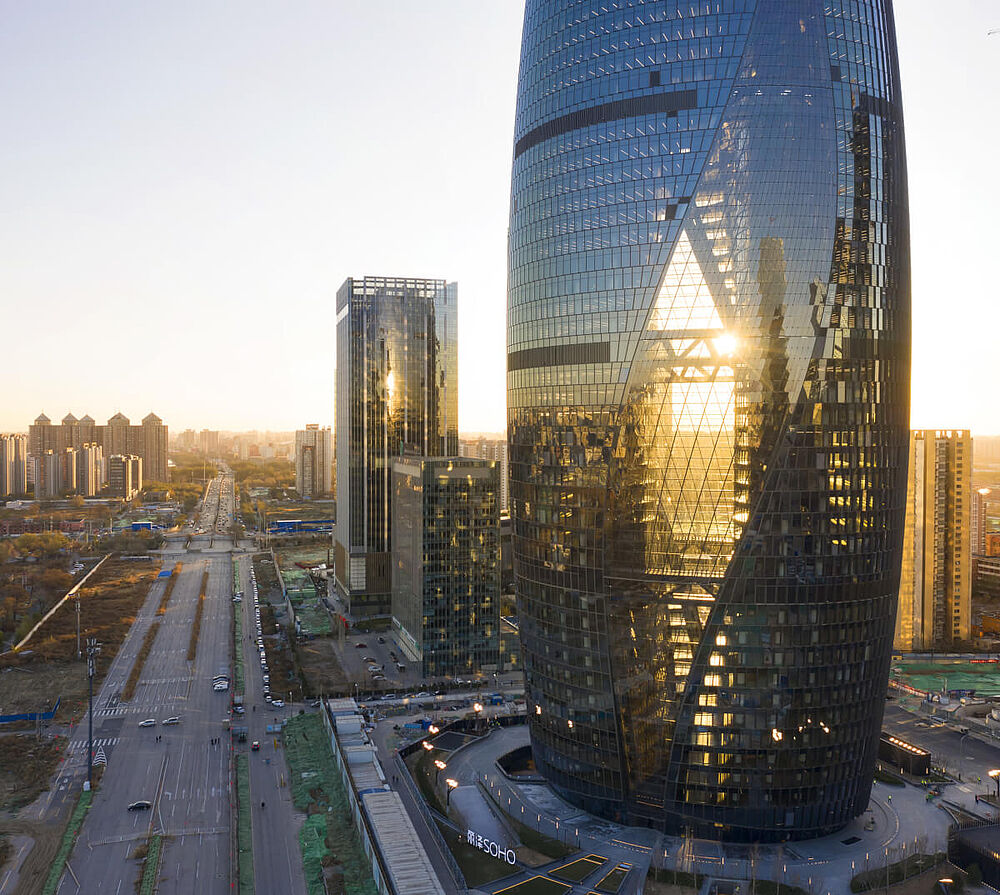 Leeza SOHO; Copyright: Hufton+Crow
  Leeza SOHO; Copyright: Hufton+Crow
 Zaha Hadid Architects have also developed a tool for study purposes that simulates all possible positions of cores in terms of natural lighting and sightlines on a square floor plan. A computer calculated approximately 100,000 variants in around 27 hours. A human being, who might have drawn and analyzed 40 possibilities in a day, would have taken about ten years to do so.
AI-supported form-finding generates strong building designs
ZHA also uses AI for data-based form-finding. For example, ellipsoidal typologies were developed in an iterative process for the master plan for Unicorn Island in Chengdu. An AI simulated thousands of possible distributions of ellipses on the individual plots and evaluated them according to light, view, and floor space. Surprisingly, the results with the best values did not prove to be design compromises at all, but were architecturally convincing with new, strong building forms such as a symmetrical, bird-like figure or a chain of ellipses.
Designing spaces with AI: placing atriums and building cores
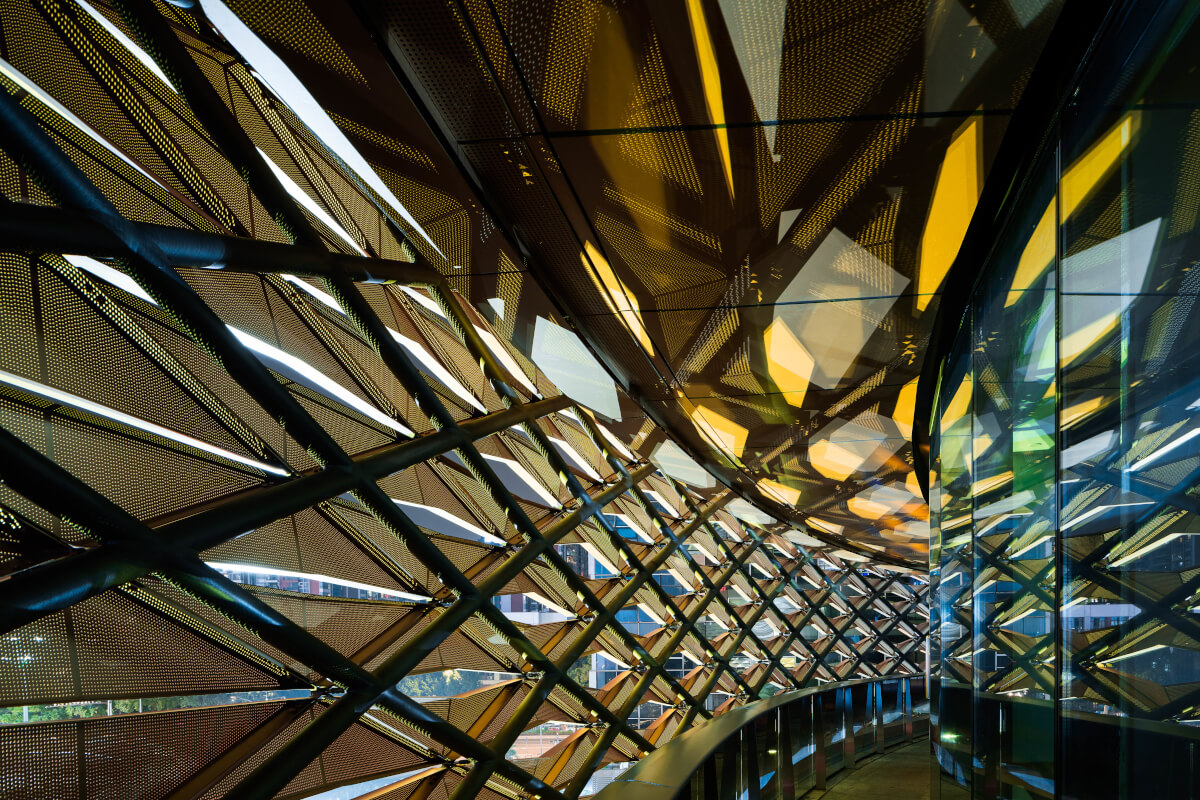
Another example of the strengths of AI in decision-making is INFINITUS Plaza, also located in Chengdu. Here, an AI tool was used to find the optimal placement of atriums and building cores. The program revealed which areas were particularly suitable for communication and exchange, and which were more conducive to concentration and retreat. Each room shape is also derived from data, so that light, visibility, acoustics, and use shape the floor plan. At the same time, artificial intelligence helps to run through different variants of room programs with their advantages and disadvantages, using heat maps, among other things.
Looking to the future: AI that understands supporting structures
ZHA is by no means satisfied with the value it has created so far from the possibilities offered by artificial intelligence. For example, its development department is currently training AI to develop a feel for supporting structures. These AI models recognize load paths, suggest load-bearing forms, and respond to climate, materials, and manufacturability. Among other things, they are intended to help develop load-bearing structures that are as material-efficient and therefore as sustainable as possible.
Incidentally, he advises his students to approach AI in a positive and fearless manner. “If you build up a fear threshold, you won’t make any progress,” says the expert in digital design. Openness, a willingness to experiment, and a positive outlook are therefore particularly important when dealing with this future technology.