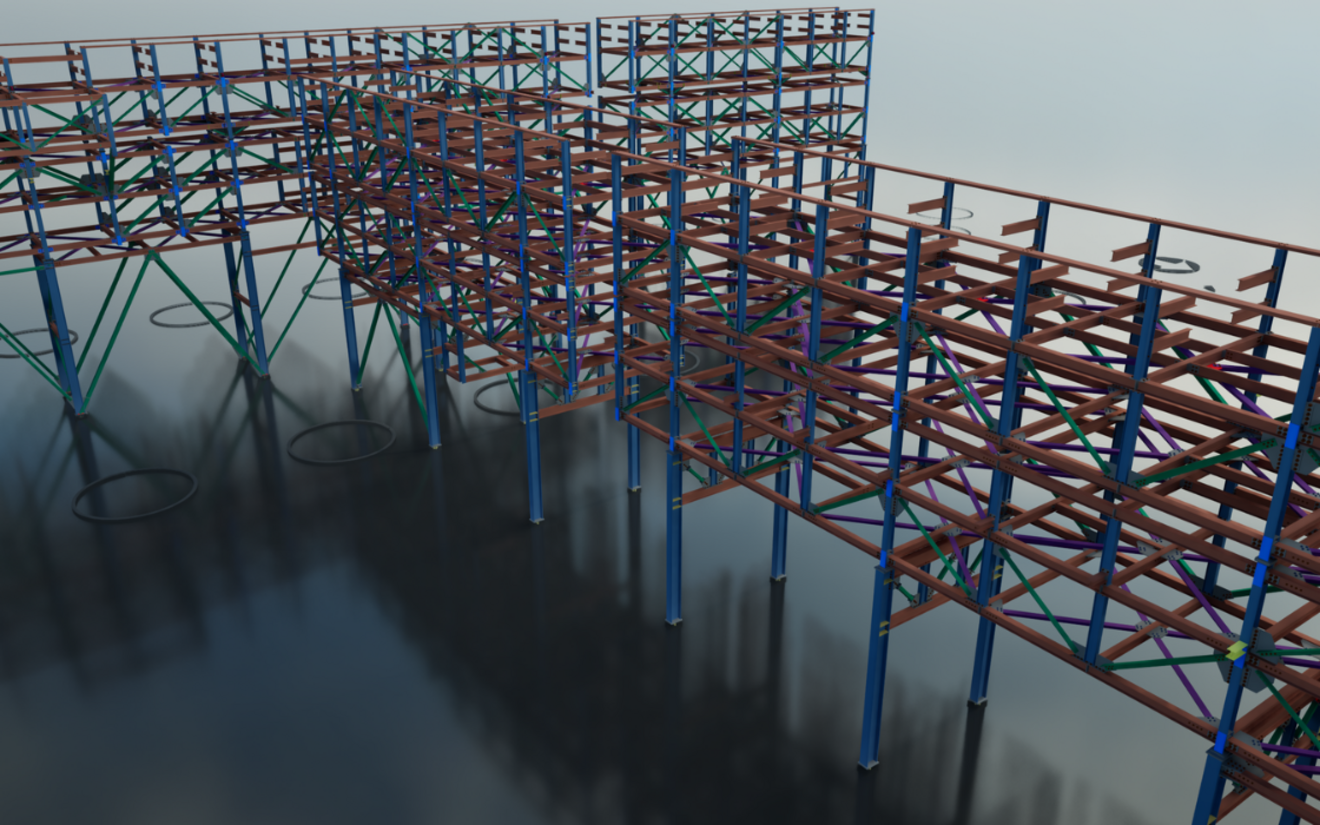

Steel Estimating Explained: Why It’s Still Manual and How AI Helps
Author: David Zabka, Detailing and Fabricating Product Manager
Disclosure: This article contains promotional content about Steel Genie, a product of Allplan. It is provided for general informational purposes. Product features, compatibility, pricing, and results may vary depending on the project, drawing set, configuration, workflow, and other factors. Descriptions of third-party products are based on information publicly available at the time of writing and may change; readers should verify current capabilities, limitations, compatibility, and pricing directly with the relevant provider.
Structural steel estimating has traditionally depended on a highly manual process: reviewing drawing sets, identifying members, calculating quantities, interpreting connections, checking revisions, and transferring information into downstream estimating and fabrication systems.
Artificial intelligence is already reshaping that process.
A growing category of AI-powered structural steel estimating software can analyze drawings, automate takeoff, generate quantities, compare revisions, and in some cases create 3D models or support connection estimating. The potential benefit is significant: less time spent on repetitive drawing interpretation and more estimating capacity without adding headcount.
But as more solutions enter the market, choosing the right one is becoming more complicated.
Not all AI steel estimating software works the same way. Some products focus primarily on accelerating takeoff. Others extend into connections, revisions, 3D visualization, bid qualification, or fabrication workflows. Some are purpose-built for structural steel, while others apply broader multi-trade AI technology to steel estimating.
So the question is no longer simply whether AI can make takeoffs faster. It is what kind of intelligence sits behind the automation, what the estimator can do with the results, how well the software fits the rest of the steel workflow, and whether the platform has the foundation to keep evolving with the industry.
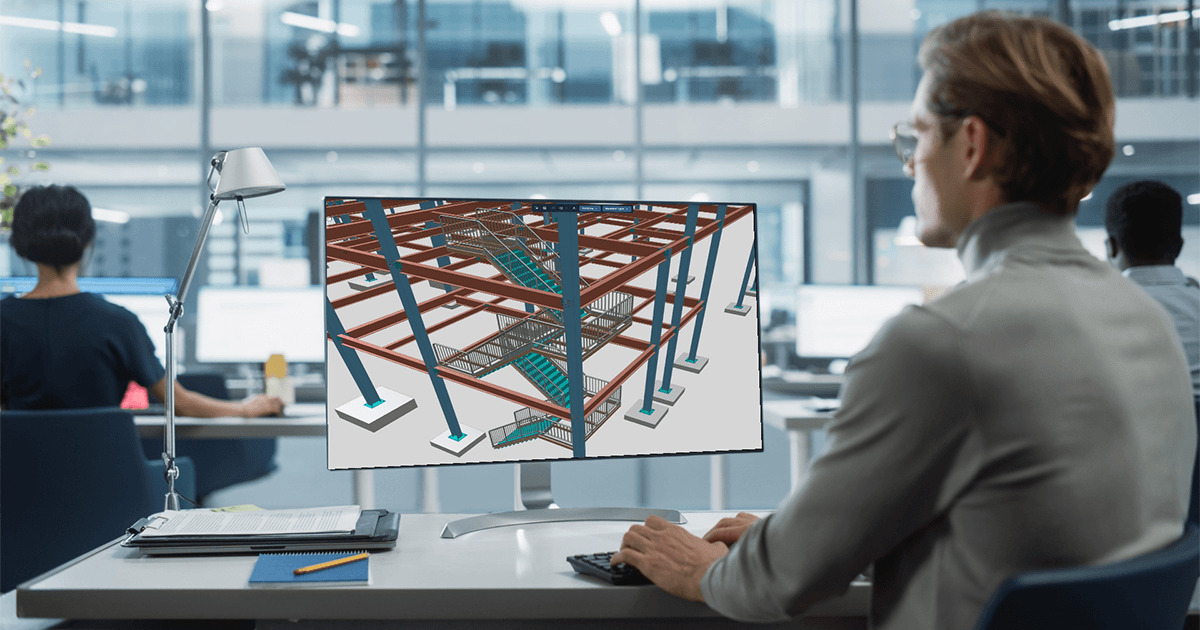
Traditional vs. AI Structural Steel Estimating Software
Before comparing products, it helps to distinguish AI estimating software from the broader category of structural steel software. Traditional estimating and fabrication platforms can support pricing, material management, detailing, production planning, procurement, and other critical processes. AI estimating tools generally address an earlier and particularly labor-intensive part of the workflow: extracting usable estimating information from project drawings.
That distinction matters because an AI estimating solution does not necessarily need to replace the systems a fabricator already uses. Increasingly, these tools act as an intelligence layer at the front of the estimating process, interpreting drawing sets, identifying structural scope, creating takeoff information, and moving that data into the systems where estimators, detailers, and fabricators already work.
The more useful question may therefore be not, “What software should we replace?” but, “Where can AI remove manual work while improving the information our estimators already use?”
Not All AI Estimating Platforms Take the Same Approach
The market is separating into two broad types of AI estimating solutions:
- Steel-native AI platforms: Solutions such as Steel Genie, LIFT, Ferra, SteelFlo, Alkali, and VizeEst are built specifically around structural steel workflows. Their capabilities vary, but they apply automation to the information and decisions steel estimators manage every day.
- Multi-trade AI platforms: Solutions such as Beam AI apply AI takeoff technology across a wider range of construction trades, with structural steel as one supported discipline. Beam AI, for example, offers both self-service automated takeoff and human-reviewed takeoff services for structural steel.
Neither approach is inherently better. A contractor estimating many scopes may value the breadth of a multi-trade platform, while a structural steel fabricator may place greater emphasis on steel-specific logic, connection information, model context, and fabrication integrations. The important question is what the AI is designed to understand and what happens after it identifies something on a drawing.
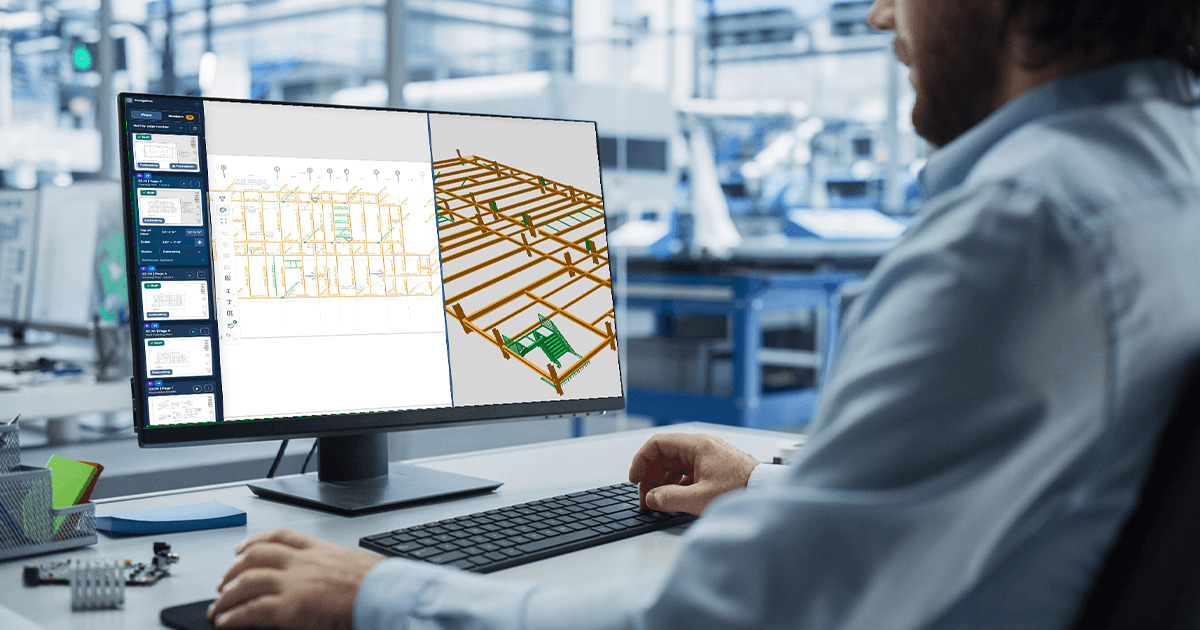
Leading AI Structural Steel Estimating Software Compared
No single platform is right for every business. These AI-powered solutions take different approaches to structural steel estimating, from steel-specific takeoff and connection intelligence to revision management, 3D validation, and multi-trade automation.
Steel Genie by Allplan
Notable focus: Structural steel fabricators seeking deeper estimating intelligence across takeoff, connections, 3D validation, and fabrication workflows.
Steel Genie combines AI-powered drawing analysis with steel-specific rules, calculations, and estimating logic. It identifies structural members, generates quantities, and creates an estimating-level 3D model for validating and adjusting scope. An AISC-based connection engine supports connection estimating, while outputs including Excel, marked-up PDF, IFC, KISS, and Tekla PowerFab help connect estimates with downstream workflows.
LIFT by SketchDeck.ai
Notable focus: Fabricators and erectors seeking steel-specific AI takeoff with strong BOM and revision workflows.
LIFT automates structural steel identification, measurement, and counting to generate bills of materials for estimator review. It also supports connection analysis and multiple steel-industry exports. Its LIFT-Delta revision workflow compares drawing sets member by member, identifies additions, deductions, and modifications, and preserves previous estimating work.
Ferra
Notable focus: Fabricators prioritizing bid qualification, revision intelligence, and interactive 3D scope review.
Ferra combines structural steel takeoff with broader preconstruction capabilities. Its Bid Intelligence functionality analyzes project documents for factors such as scope, schedule, phasing, and constraints, while its revision tools identify structural changes between drawing sets. Validated takeoff information can also be reviewed in an interactive 3D model.
SteelFlo
Notable focus: Fabricators focused on rapid takeoff, schedule interpretation, member verification, and material workflows.
SteelFlo combines AI-based detection with steel-specific parsing to identify structural members and interpret drawing information. Its capabilities include steel schedule processing, member verification, connection information, material quantities, and downstream estimating data.
Alkali
Notable focus: Steel teams seeking AI-assisted takeoff alongside collaborative estimating, document search, and material optimization.
Alkali combines AI-assisted steel takeoff with project collaboration, revision workflows, material information, document search, and connections to existing steel tools. Its broader estimating environment is designed to carry takeoff information into additional preconstruction workflows.
VizeEst
Notable focus: Estimating teams prioritizing estimator control, visual verification, and interactive model review.
VizeEst combines AI-based drawing interpretation with structural-steel-specific logic and an interactive 3D environment. Its workflow emphasizes visual verification and the estimator's ability to inspect, modify, and control the information generated by the software.
Beam AI
Notable focus: Companies seeking multi-trade AI takeoff or the option to combine automation with human-reviewed takeoffs.
Unlike the steel-native platforms above, Beam AI supports structural steel as part of a broader multi-trade offering. Its steel capabilities include framing, schedules, connections, revisions, and material and labor estimating, making it an option for contractors estimating across multiple scopes.
How to Choose the Right AI Steel Estimating Software
A feature comparison can help narrow the options, but the right software ultimately depends on how it performs within your estimating environment. Consider these seven factors when evaluating AI steel estimating solutions.
1. Look Beyond the Accuracy Percentage
Accuracy matters, but a percentage means little without context. What was measured: member detection, quantities, weight, or connections? What types of drawings were tested, and at what quality? Instead of relying on a headline number, consider how easily your estimator can verify what the AI produced, including traceability to the drawings, visual validation, and editable results.
2. Determine What the AI Actually Understands
Detecting a W-shape label is one thing; understanding the structural and estimating context around it is another. Look beyond member recognition to whether the software interprets schedules and notes, applies steel-specific rules and calculations, and understands relationships between members. The goal is not simply automated detection, but domain intelligence that helps turn drawing information into a usable estimate.
3. Understand How Connections Are Handled
“Connection functionality” can mean very different things. A platform might recognize a connection, extract details shown on the drawings, apply labor codes, or calculate likely assumptions for estimating. Steel Genie, for example, uses an AISC-based connection engine and can generate brace and seismic-brace assumptions to help anticipate material and labor requirements.* Rather than simply asking whether a platform handles connections, understand exactly what it does with that information.
*AI-generated outputs and connection calculations are intended for estimating purposes only and are not a substitute for final engineering, fabrication design, construction documents, or project-specific professional judgment. Outputs must be reviewed and verified by qualified personnel.
4. Ask What 3D Actually Adds
3D is becoming increasingly common, so simply having a model or viewer is no longer enough to differentiate a platform. Consider how the model supports the estimating process: Can estimators use it to validate scope, investigate individual members, identify potential errors, and make corrections? The better question is not “Does it have 3D?” but “How does 3D help us build a better estimate?”
5. Evaluate the Revision Workflow
Several platforms can now compare drawing revisions, but the depth of that automation varies. Look at how the software identifies additions, removals, and modifications, preserves previous estimating work, and communicates the impact of changes. Ultimately, ask: How much manual work remains when a revised drawing set arrives?
6. Keep the Estimator in Control
Human review is increasingly common across AI estimating platforms, but the quality of that interaction matters. Experienced estimators understand fabrication methods, project risk, labor implications, and the assumptions behind a bid. AI should make that expertise more productive by providing clear, verifiable, and editable information, not by removing judgment from the process.
7. Consider What Happens After Takeoff
AI estimating should not become another data silo. Consider where takeoff information needs to go next, whether that's pricing, detailing, BIM/model workflows, procurement, or fabrication planning, and how easily the platform connects with those systems. The best fit is often the solution that removes manual work across the workflow, not just during takeoff.
8. Consider the Platform Behind the Product
Implementing new estimating software requires more than a technology investment. Training estimators, adapting workflows, and building confidence in a new platform all take time, so buyers should consider its long-term foundation as well as its capabilities today. Look at the company's commitment to continued development, its industry expertise, and the broader technology ecosystem supporting the product.
Why Steel Genie Takes a Different Approach
Steel Genie was developed around the idea that faster takeoff is valuable, but takeoff alone is not the entire estimating problem. It combines AI-powered drawing interpretation with structural-steel-specific rules, calculations, and estimating logic, then connects that intelligence with connection assumptions, 3D validation, and estimator review.
The result is a connected estimating workflow rather than an isolated AI tool. It reflects a broader principle of full-stack AI in engineering: AI delivers greater value when it works with the right domain context, data, and tools while keeping human expertise at the center of the process.
Steel Genie was built with input from professionals across the structural steel industry, including detailers, structural engineers, estimators, fabricators, erectors, and software engineers. Its capabilities are grounded in real project challenges and workflows, designed to address the practical needs of steel estimating rather than applying AI in isolation.
Steel Genie is also designed to fit into existing steel workflows. In addition to Excel and marked-up PDF outputs, it exports an industry-standard IFC model that can be used with IFC-compatible platforms across detailing, fabrication, and BIM workflows, including Tekla Structures, Tekla PowerFab, Revit, KISS, Advance Steel, SDS2, Bentley ProStructures, and StruMIS.
Steel Genie is also backed by Allplan and SDS2 as part of the Nemetschek Group, bringing together deep structural steel expertise with the resources and technology ecosystem of a global AEC software organization. That foundation supports continued investment in the platform as structural steel estimating and AI continue to evolve.
In a customer case study, Master Steel reported a 67% increase in estimating throughput using Steel Genie. This reported result is customer-specific, is not a guarantee or typical result, and may vary depending on project mix, drawing quality, workflows, configuration, and other factors.
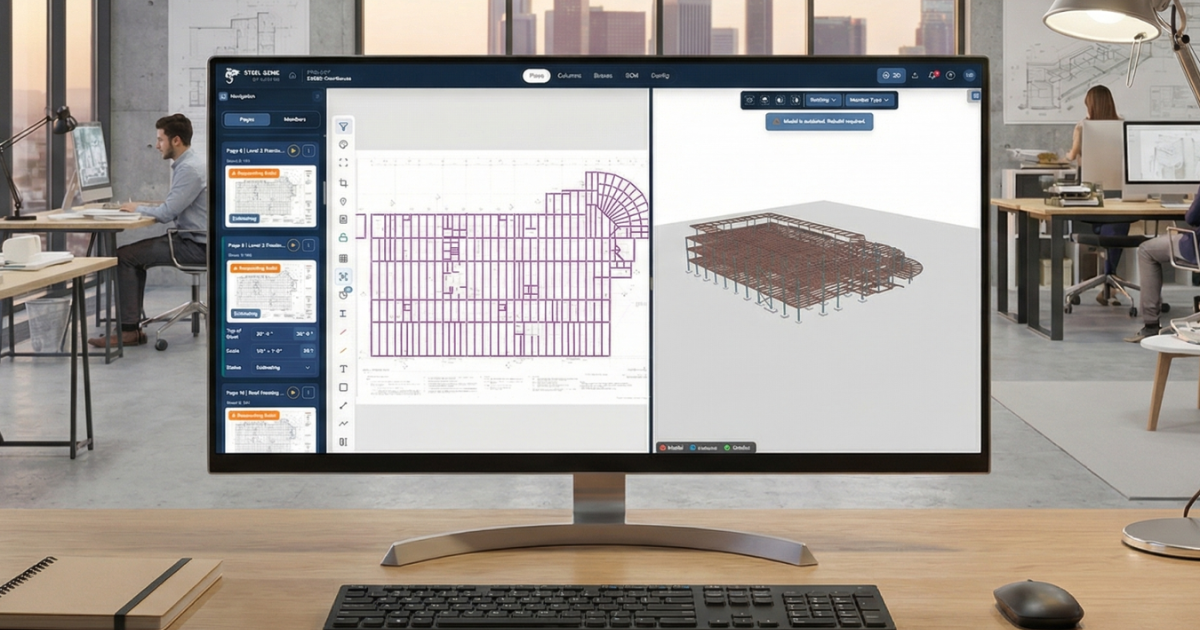
The Best Test Is Your Own Drawings
Feature lists and product demonstrations can tell you a lot about structural steel estimating software. But the best solution should prove itself on the drawings and workflows your team encounters every day.
Give each solution a representative drawing set. Look at what it detects and what it misses. See how easily your estimator can verify and correct the output, how it handles the connections and revisions your team encounters, and how smoothly the information moves downstream.
AI can help accelerate structural steel estimating, but speed alone is not the measure of success. The better question is whether the software may help your estimators work faster while retaining the context, visibility, and control they need to build a confident bid.
Ready to put Steel Genie to the test on your own drawings?
FAQs

About the Author
David Zabka has worked in the steel detailing software industry for nearly two decades. He began his career in technical support and customer enablement, later expanding into training, onboarding, pre-sales consulting, and leadership roles. Today, David focuses on product strategy and modernization initiatives spanning detailing, prefabrication, and production workflows — helping teams improve efficiency from model to shop to site.