Common Structural Steel Estimating Mistakes and How to Avoid Them
How a Kansas City-area steel fabricator is reducing manual work, improving estimating confidence, and creating more opportunities to bid on new projects.
Customer: Doherty Steel Inc.
Industry: Structural steel fabrication and erection
Location: Kansas City area, Kansas
Solution: Steel Genie by Allplan
In summary: > Cut takeoff time by at least 50%: Doherty estimates saving 4–8 hours on a typical estimate, with one 5,000-ton project completed in three days instead of an estimated 1–1.5 weeks. > Evaluate 3–5 more bids per month: The time savings give Doherty's five-person estimating team more capacity to pursue additional projects. > Catch missed members with 3D models: Estimators use Steel Genie models to spot gaps, verify quantities, and identify mistakes in their interpretation of complex structures. |
At a Glance:
> 50% reduction in takeoff time
> 4–8 hours saved on a typical estimate or takeoff
> 3–5 additional bid opportunities evaluated per month
THE CHALLENGE
Manual Takeoffs Were Consuming Valuable Estimating Time
Preparing a competitive structural steel bid requires estimators to interpret drawings, understand structural connections, account for project requirements, and verify that nothing has been overlooked. On large or complex projects, these activities can consume significant time and resources.
For Doherty Steel Inc., a Kansas City-area structural steel fabricator and erector, the challenge was becoming increasingly difficult to manage. The company handles projects ranging from smaller renovations to major commercial and institutional structures, supported by an estimating department of five estimators and a director of estimating. As Doherty pursued larger opportunities, the team needed a more efficient way to manage its workload without compromising takeoff quality.
Before adopting Steel Genie, Doherty relied on a largely manual process. Estimators reviewed drawings in Bluebeam, marked individual steel members, and entered quantities and other information piece by piece into Tekla PowerFab. The process demanded hours of repetitive work, particularly on larger projects with extensive structural steel requirements.
Completing the initial takeoff was only part of the challenge. Every estimate required additional review to confirm quantities, identify missing members, and verify that structural conditions had been interpreted correctly. For less-experienced estimators, understanding complex connections and geometry often required guidance from senior team members.
"It was just a repetitive process of takeoff to review, to takeoff to review," recalls Allen Cunningham, estimator at Doherty Steel.
With a relatively small team managing increasingly large projects, Doherty began looking for technology that could reduce manual takeoff work while maintaining the visibility and control needed to prepare confident bids.
THE SOLUTION
Bringing Speed and Visual Clarity to Structural Steel Takeoffs
Doherty evaluated several options before selecting Steel Genie. Some alternatives relied on external services to process drawings and return takeoff information, but the company wanted greater control over the process. Cost was another consideration. For larger projects, Doherty had occasionally outsourced estimating-level modeling at a cost of $2,000 to $10,000 per model. According to Cunningham, the cost of a Steel Genie license was comparable to outsourcing just one large model. Steel Genie offered a more cost-effective way to bring that capability in-house, allowing estimators to review structural information, verify results, and manage work according to their own schedules.
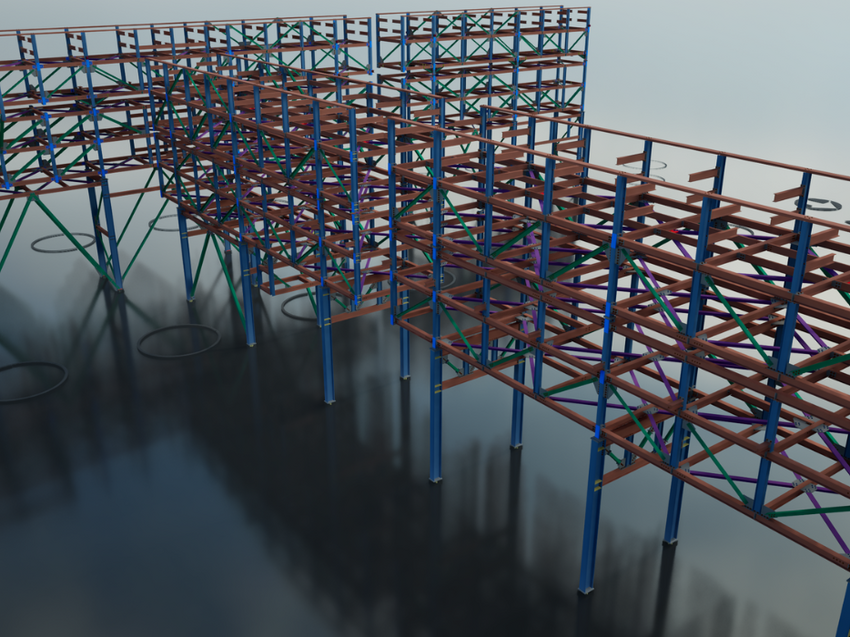
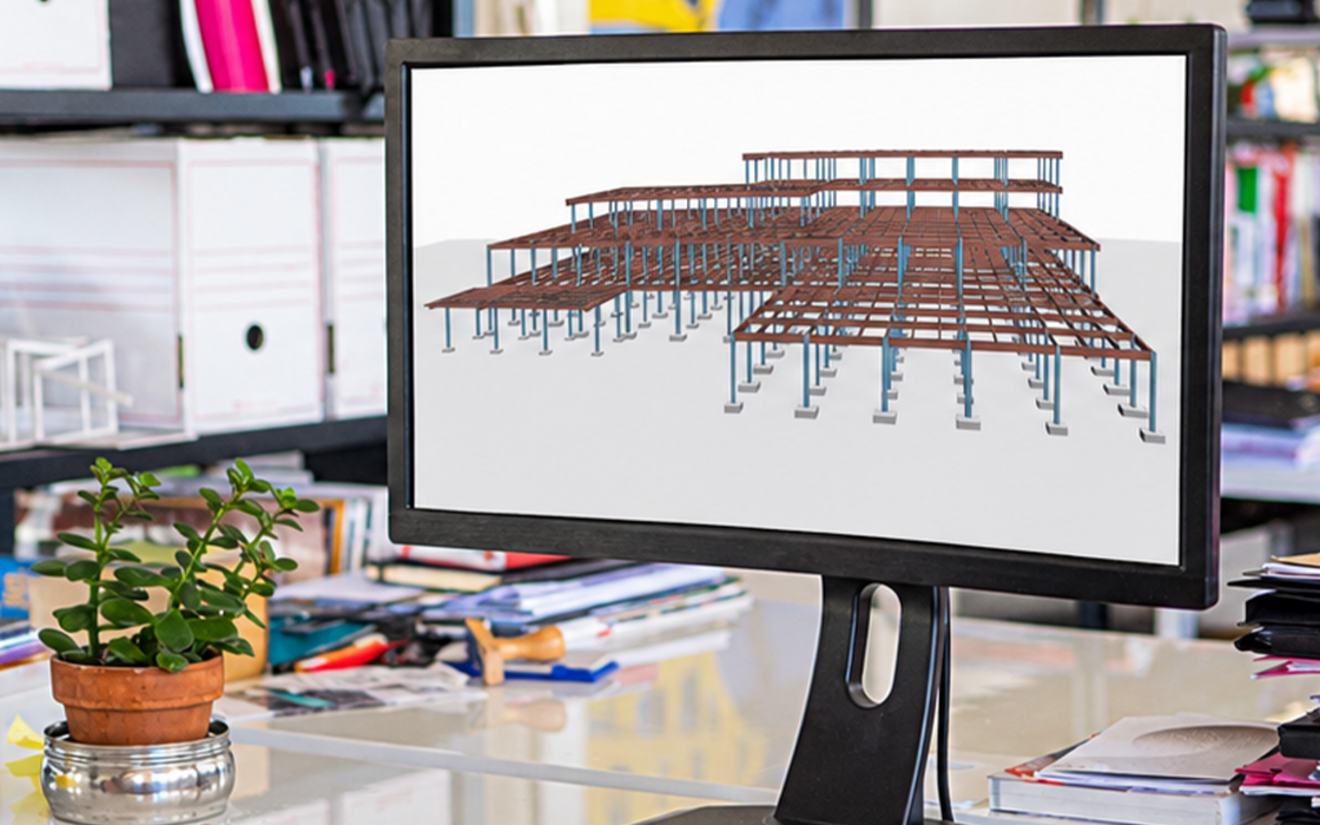
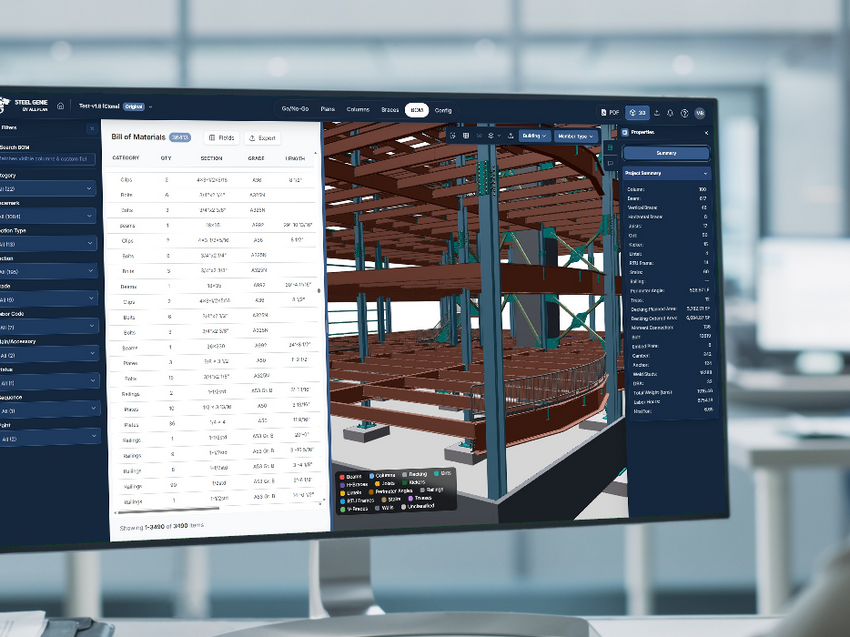
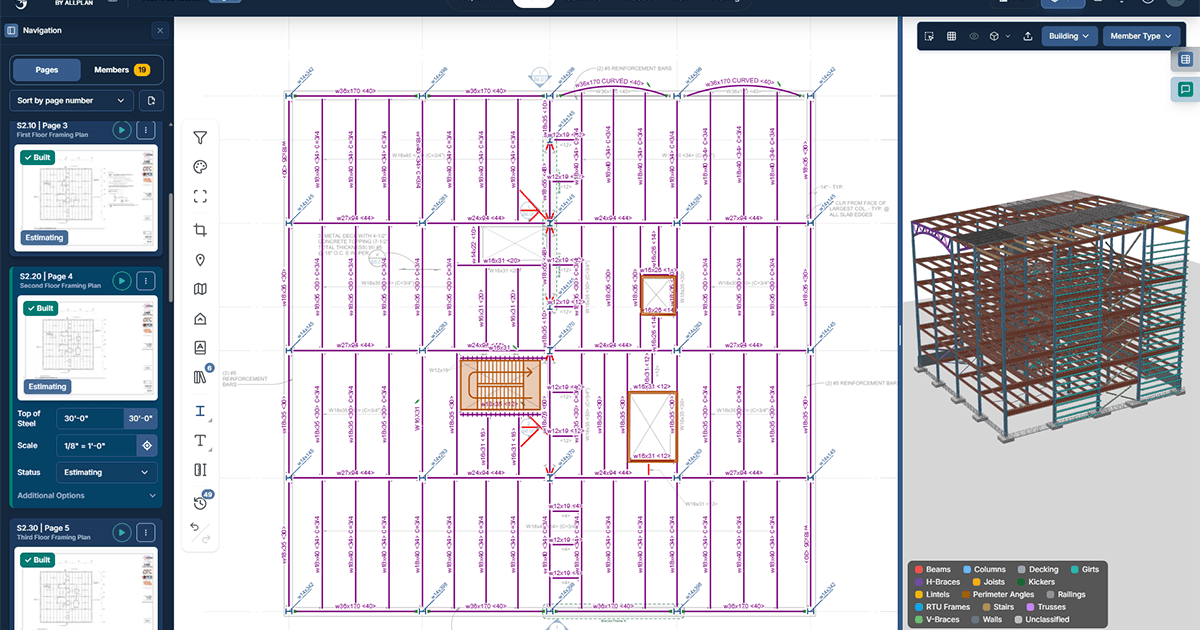
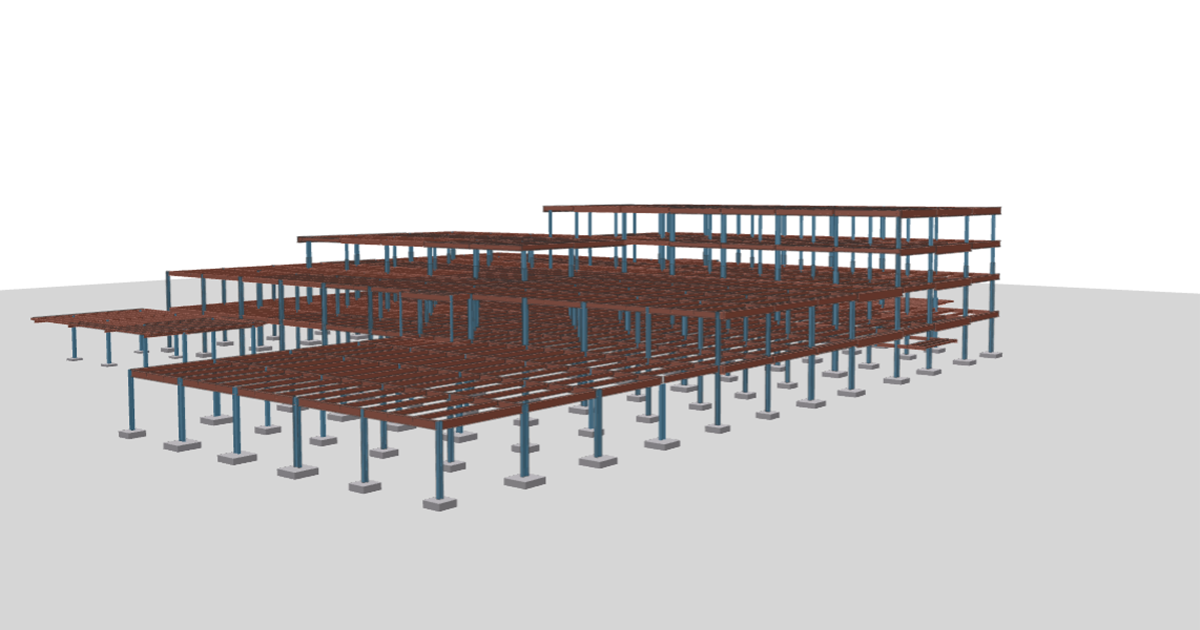
Steel Genie offered that approach by combining AI-powered structural steel takeoffs with an estimating-level 3D model. Instead of manually identifying and entering every member, Doherty's estimators can use Steel Genie to generate quantities and a visual representation of the structure, then review and refine the results before continuing with the estimating process.
For Cunningham, the 3D model has become one of the most valuable aspects of the technology because it makes potential omissions easier to identify and gives the team a clearer understanding of the structure.
"That's our biggest benefit right off the get-go, being able to see the model and see where we made mistakes," he explains. “You can visually see that gap in the building.”
The model has also become a useful resource for helping less-experienced estimators interpret complex structural conditions. Cunningham described working with a younger estimator who was struggling to understand a complicated structure from 2D drawings. After reviewing the project in Steel Genie, the estimator recognized mistakes in his interpretation, allowing the team to resolve questions without repeatedly checking the same information.
Connecting Takeoffs to Existing Workflows
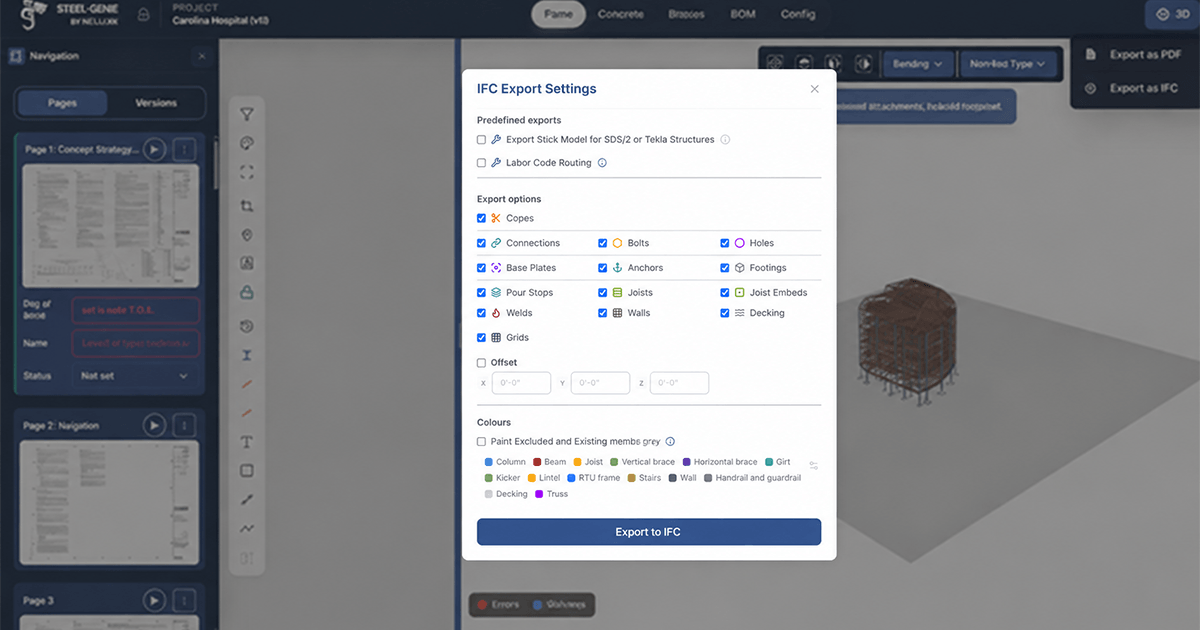
Steel Genie supports Doherty's established estimating process through its connection with Tekla PowerFab. Previously, estimators manually entered steel member information into the system. Today, they can export information from Steel Genie through an IFC file, reducing repetitive data entry while retaining access to model information for review.
"I used to manually put a lot in Tekla PowerFab. Now I just export it as an IFC file," Cunningham explains.
Doherty continues to use its existing tools and internal processes for other estimating activities, including reviewing specifications, applying labor information, and preparing final bid pricing. Steel Genie does not replace those responsibilities. Instead, it reduces the time spent on manual takeoffs and provides a more visual starting point for the work that follows.
The benefits also extend beyond the estimating department. Doherty's management team can review the 3D model and summary information when evaluating project scope, while the erection planning team can reference member weights and locations to help assess crane requirements and installation considerations. By making structural information easier to visualize and share, Steel Genie supports communication across different stages of a project.
THE RESULTS
Faster Takeoffs, Greater Confidence, and More Bidding Opportunities
Cutting Takeoff Time by 50%
One of the most immediate benefits for Doherty has been a significant reduction in takeoff time. Cunningham estimates that Steel Genie has reduced the time required for structural steel takeoffs by at least 50%, allowing the team to complete work that previously demanded days of manual effort in considerably less time.
On one large project involving approximately 5,000 tons of structural steel, Cunningham completed the takeoff and estimating-level model in three days. He estimated that the same work would previously have taken one to one-and-a-half weeks using the company's former manual process.
Cunningham also reports saving approximately four to eight hours on a typical estimate or takeoff. For a five-person estimating team balancing multiple projects and competing deadlines, those time savings create valuable capacity to focus on other aspects of bid preparation and project planning.
Greater Confidence in Every Takeoff
Beyond speed, Steel Genie has changed how Doherty reviews and communicates takeoff information. Rather than relying entirely on marked-up drawings and repeated manual checks, estimators can use the 3D model to investigate potential omissions, confirm structural members, and answer questions from colleagues and management.
"That's the confidence in the takeoff that really helps," Cunningham says. "Our boss can ask, 'Did you get all of those beams?' But you show them a 3D model, and they're there."
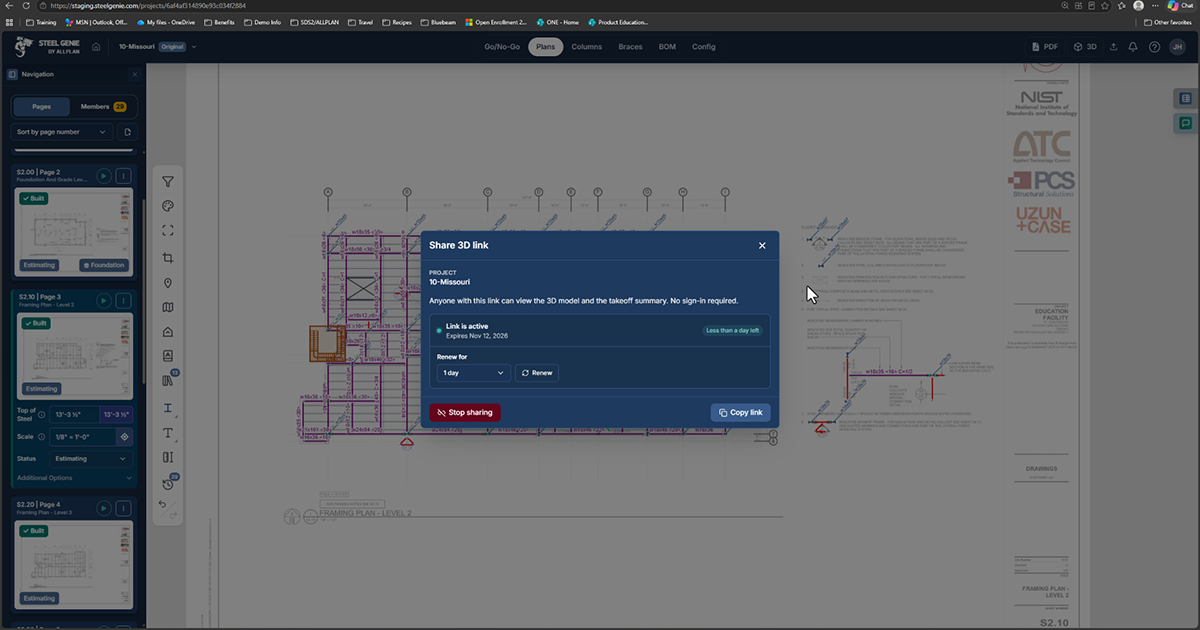
That confidence extends to conversations with general contractors and other project stakeholders. Cunningham explained that Doherty can share the model alongside its takeoff information, giving project teams a clearer picture of the structure and helping them move forward with greater confidence in the information provided.
Creating Capacity for More Bid Opportunities
Faster takeoffs have given Doherty greater flexibility to pursue new business. Cunningham reports that Steel Genie enables the team to evaluate approximately three to five additional bid opportunities per month, expanding its capacity without adding more manual takeoff work.
Just as importantly, completing takeoffs sooner helps Doherty maintain control over project schedules and respond more quickly to changing priorities. By keeping more of the process in-house, the company can reduce its dependence on outside resources and provide information to project stakeholders sooner.
"We're in control. We're not depending on somebody else to set the timeline," Cunningham says. "We're very driven to stay on schedule, on time around here, and it has really helped us with that."
LOOKING AHEAD
Building on a More Efficient Workflow
Doherty is continuing to expand its use of Steel Genie as more estimators become familiar with the technology. Cunningham has taken a leading role in applying the software across projects and sharing his knowledge with colleagues, while the company has added a second license to support broader adoption.
For Cunningham, the benefits now extend well beyond the faster takeoffs that initially motivated the investment. From greater confidence in estimating information to more control over schedules and additional opportunities to bid, Steel Genie has become a valuable part of Doherty's estimating process.
"I can spend an hour explaining to you all the things that it is good at, that it helps with," Cunningham says. "The list is very long of the benefits."