
Sustainability certifications for buildings: requirements, benefits, and funding opportunities
Concrete is indispensable—but also highly problematic. The Institute for Lightweight Structures and Conceptual Design (ILEK) at the University of Stuttgart is developing solutions to make it more sustainable.
In summary: > Concrete is the most widely used building material, but it causes significant CO₂ emissions. > At ILEK, Prof. Lucio Blandini is conducting research on solutions for the sustainable use of concrete together with his colleagues Dr.-Ing. Daria Kovaleva and David Nigl, M.Sc.. > The focus is on the R principles of the circular economy (reduce, reuse, recycle). > The recyclable solutions range from optimized designs to cement-based hollow bodies, reusable sand formwork, and cement-free binders, all the way to corrosion-resistant reinforcement made of basalt fiber composites. |
With an annual consumption of 30 billion tons, concrete is the most widely used building material worldwide. However, this massive use also makes it a huge burden on the climate and the environment, as concrete production alone accounts for eight percent of global CO₂ emissions. The Institute for Lightweight Structures and Conceptual Design (ILEK) at the University of Stuttgart is researching solutions for sustainable construction with concrete. In this interview, Institute Director Prof. Lucio Blandini and his colleagues Dr.-Ing. Daria Kovaleva and David Nigl reveal how optimized designs, cement-based hollow bodies, reusable sand formwork, cement-free binders, and basalt fiber reinforcement can significantly reduce the ecological footprint of this essential building material.
At the Institute for Lightweight Structures and Conceptual Design (ILEK), you have been exploring how to achieve “lightweight construction with concrete” for more than 20 years. In your view, what are the biggest challenges right now, and where does the potential lie in the areas of sustainability and the circular economy?
Prof. Lucio Blandini: To meet the goals of the Paris Climate Agreement, the entire construction industry must offset its emissions by 2045 through the implementation of new strategies at all levels of the value chain. The use of concrete plays a special role in this. Implementing the principles of the circular economy is essential to achieving a sustainable transformation in the concrete industry. By applying the three primary R principles (Reduce, Reuse, Recycle), we are calling for a complete rethink of the planning, construction, and use of structures. With this in mind, we have set various research priorities, all of which aim to minimize a building’s environmental footprint throughout its entire lifespan.
First and foremost, we aim to reduce the consumption of primary raw materials and the associated embodied emissions as much as possible. To this end, we optimize the designs themselves (lightweight structural design) and the materials from which they are made (sustainable lightweight material design). In the next step, we examine whether further emissions or waste during production can be reduced through the use of sustainable, waste-free production methods (such as reusable sand formwork). In doing so, we always consider the possibility of single-material recycling (mineral hollow bodies and mineral basalt reinforcement) as well as the direct reuse of components.
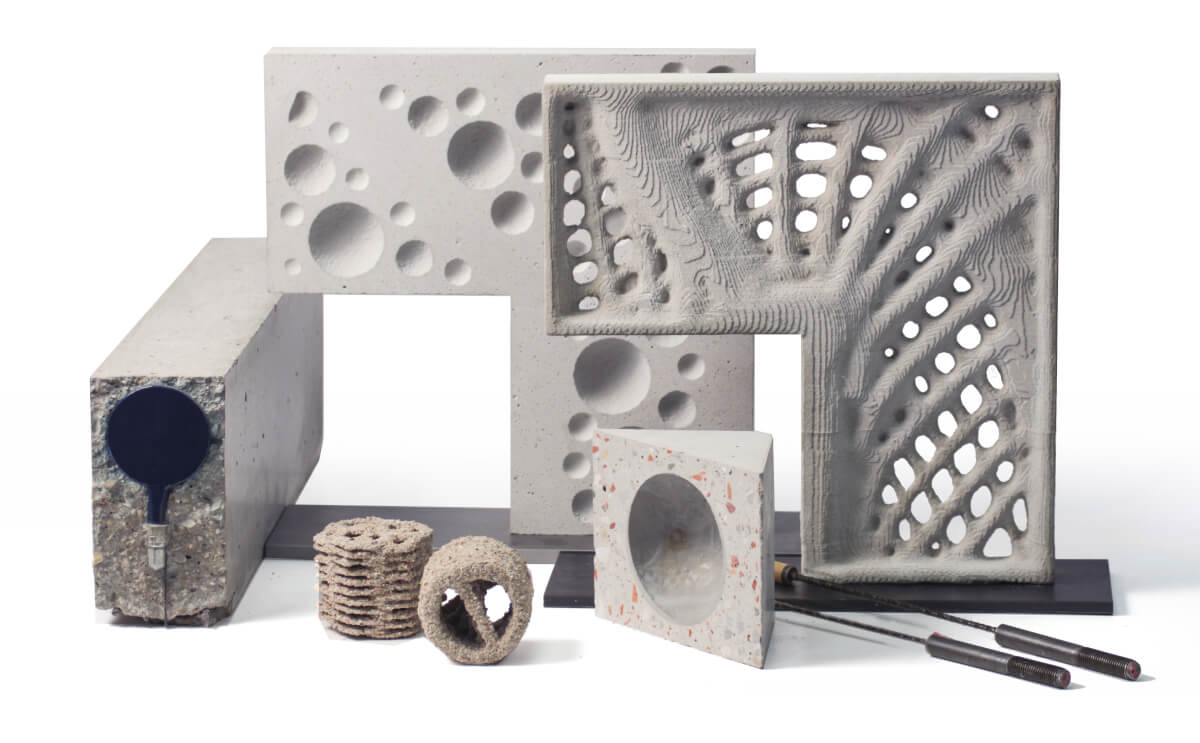
Lightweight concrete structures often also place higher demands on structural analysis. Are there new simulation methods in research that help engineers calculate complex structural systems?
David Nigl: Numerical methods have existed for decades to assist engineers in the planning and design of both simple and geometrically complex structures. The application itself is often not the problem. It is time that acts as the limiting factor, because the amount of work increases with the degree of complexity of a structure. From a cost perspective, it is therefore not surprising that people prefer to resort to simpler and less efficient alternatives. However, we are convinced that the latest developments in the field of digital design and manufacturing methods can change this situation.
What role do digital technologies such as robotics or AI play?
Dr.-Ing. Daria Kovaleva: Additive manufacturing, including robotics, encompasses precisely the technical solutions that enable the rapid and precise production of geometrically complex structures, thereby replacing traditional manufacturing methods. Numerous research projects on the additive manufacturing of concrete structures, as well as initial pilot projects, confirm the applicability of these technologies on a construction scale and the great potential for broader use of lightweight and efficient concrete structures in the future.
Prof. Lucio Blandini: In the future, AI will play a decisive role in supporting planning and construction processes, as well as in managing existing buildings. What will be important is how the collaboration between human and artificial intelligence will look. We are still at the very beginning of this process: this is where our research is focused, and we see great potential for the future.
How much concrete could be saved by optimizing the floor slab design using the technologies you are researching, but without compromising quality?
David Nigl: Over the past ten years, we have researched various production technologies that enable the implementation of optimized concrete structures, particularly in the area of functionally graded components. In this process, the mechanical properties of the material or their distribution are manipulated according to the load profile within the given design range.
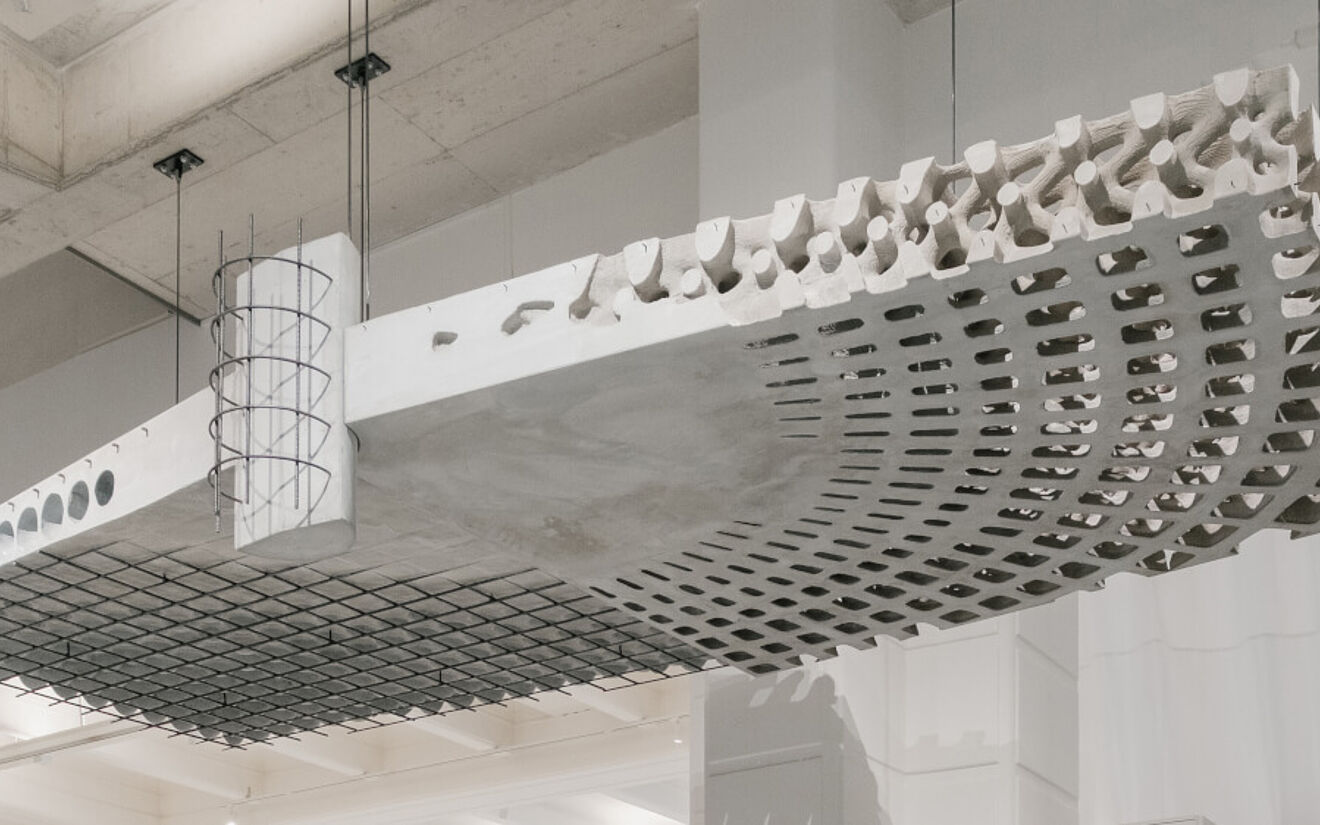
Tests on prototype beam and floor structures with various spans have shown that, when considering load-bearing capacity alone, material savings of up to 50 percent can be achieved. Mesograding technology (i.e., the creation of voids using mineral hollow spheres) is now being used for the first time in the construction of a real building—the new IntCDC building at the University of Stuttgart. In addition to load-bearing capacity, fire safety requirements (F90) were also taken into account for the underlying case-by-case approval. Despite the complex floor plan and all requirements, material savings of approximately 30 percent were achieved for the ceiling elements.
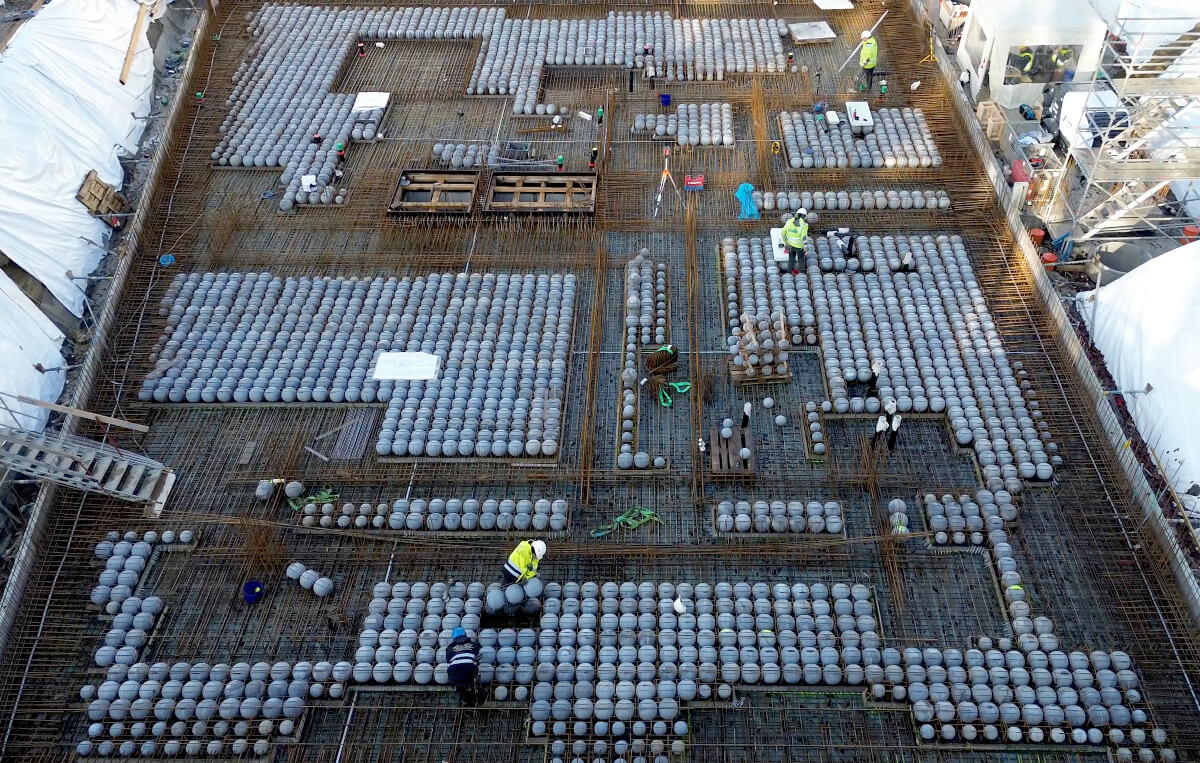
The hollow spheres you mention are cement-based. What are the advantages over hollow bodies made of plastics?
David Nigl: A key advantage is the use of a monomaterial technology and, consequently, the recyclability of the resulting building component in an end-of-life scenario. No complex separation processes are required for single-material recycling.
The “Marinaressa Coral Tree” vividly demonstrated at the 2023 Venice Architecture Biennale how filigree structures can help reduce the amount of concrete required. What other current research projects on sand formwork, filigree structures, or new manufacturing processes are you currently pursuing?
Dr.-Ing. Daria Kovaleva: Sand formwork technology has now reached a level of maturity that allows for its use in initial construction projects. In this context, we are currently planning a technology transfer project to test it under real-world conditions. This is complemented by our current research on reinforcing lightweight and complex concrete structures with mineral fiber composites made from basalt. In addition, we are investigating the accelerated carbonation of filigree concrete structures to offset the residual emissions associated with cement production.
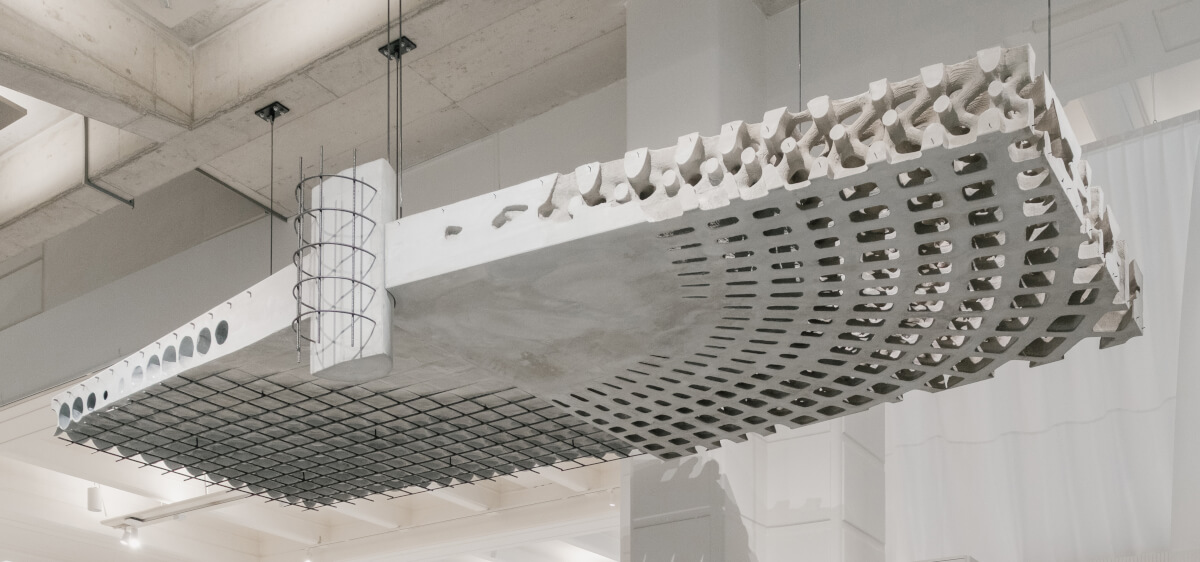
What is the current state of research on CO₂-free concrete?
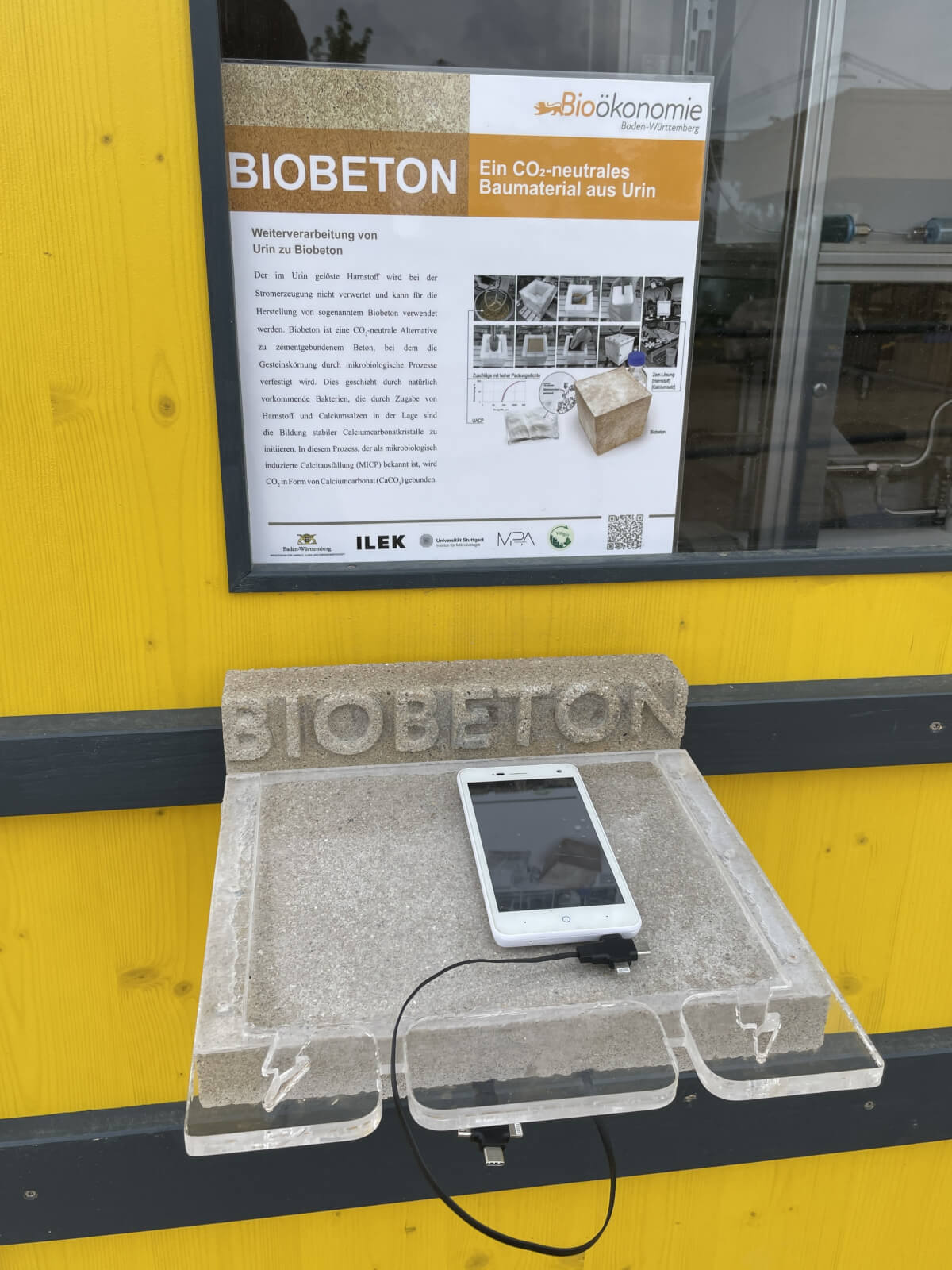
Prof. Lucio Blandini: We are working on complementary building materials that may offer alternatives in the future. We refer to it as “bioconcrete” because we are the first research group worldwide to achieve strengths of up to 60 MPa. The production process is based on biomineralization. In this process, living organisms use chemical reactions to produce calcium carbonate crystals, which serve as a binder for sand grains. The material can potentially be produced entirely from waste materials in a CO₂-neutral manner. This is currently being researched. This is exactly what I mean by sustainable lightweight construction: materials with a very low ecological footprint.
The possibility of reusable ceiling segments is also particularly exciting. What are your key insights regarding recyclable concrete ceiling structures?
Prof. Lucio Blandini: As a rule, we achieve the lowest ecological footprint when we don’t have to manufacture any new components at all, but can reuse existing ones instead. This requires that the components be manufactured as individual elements so that they can first be assembled and later disassembled. With this goal in mind, we have been working on digital planning methods and have developed detachable connections that make this possible. The initial results are promising, but there is still a long way to go.
In research, moment-reduced construction methods such as suspended roofs or shell structures are highly relevant. In practice, however, they play no role. Will sustainable construction change that?
Dr.-Ing. Daria Kovaleva: Thin concrete shells are a perfect example of lightweight construction achieved through shape optimization. Due to their extremely low material consumption, they were very popular in the mid-20th century. After about two decades, however, interest waned due to the enormous difficulties involved in their production. The production of their formwork was extremely labor-intensive and time-consuming and could account for up to 80 percent of the construction budget. Fortunately, this status quo is currently changing. Thanks to the renewed priority on resource-efficient solutions and, above all, the availability of sustainable and competitive production and construction methods, shape- and topology-optimized lightweight structures will certainly receive more attention again in the near future.
What other ILEK research is relevant to sustainable concrete?
Prof. Lucio Blandini: In addition to the examples already mentioned, ILEK is researching the use of basalt fibers as a basis for mineral-based and corrosion-free reinforcement alternatives. These fibers have a lower ecological footprint than carbon or glass fibers and are easier to recycle into the material cycle. We demonstrated the potential for using them as flexible reinforcement in our “TMW Coral Slab” prototype for the Vienna Technical Museum. However, we are also investigating the possibility of prestressing using basalt fiber composite bars or the advantages of short fibers.