From large-scale bridge and tunnel projects to railway modernization, digital twins, and lifecycle asset management, this year’s ALLPLAN Global Infrastructure Digital Summit 2026 brought together infrastructure leaders from across Europe and Asia to share how they are applying digital workflows to real-world projects.
In summary: > Infrastructure leaders shared real-world BIM and digital delivery workflows from projects around the world. > Presentations highlighted the growing importance of connected data across design, construction, and asset management. > Speakers demonstrated how parametric modeling, automation, and interoperability improve project efficiency and quality. > Several sessions explored the role of BIM beyond design, including digital twins, inspection, and lifecycle management. > The event showcased practical examples of how digital technologies are transforming infrastructure delivery today. |
The seven presentations showcased a diverse range of challenges, including complex bridge geometry, multidisciplinary collaboration, railway asset management, advanced structural analysis, and BIM implementation on some of the world’s most demanding infrastructure projects. Despite their differences, each session demonstrated how connected data, parametric modeling, Open BIM workflows, and integrated design processes are helping engineers deliver infrastructure more efficiently and with greater confidence.
If you were unable to attend the live event, here’s a recap of the key themes and takeaways from each presentation.
Session 1: End-to-End Bridge & Tunnel Design with ALLPLAN
Presented by Zeki Harputoğlu & Ümit Korkunç – YÜKSEL PROJE A.Ş.
YÜKSEL PROJE showcased how it used ALLPLAN to manage the design of bridges and tunnels on Romania’s Sibiu–Pitești Motorway, one of the country’s most challenging infrastructure projects. The presentation demonstrated how a single BIM platform can support multiple bridge types, varying ground conditions, and complex construction constraints while maintaining consistent engineering quality across the entire route.
The engineers explained the practical application of parametric modeling for both bridge and tunnel design, including TBM and NATM tunnels. Attendees were given a behind-the-scenes look at how YÜKSEL PROJE developed custom PythonPart tools to automate complex modeling and detailing tasks, dramatically reducing design time while improving accuracy.
Session 2: Complex Bridges, Complex Workflow – Collaboration Between ALLPLAN and Other Design Software in Bridge Design Projects
Presented by Ádám Skultéty – CÉH Planning, Developing and Consulting Inc.
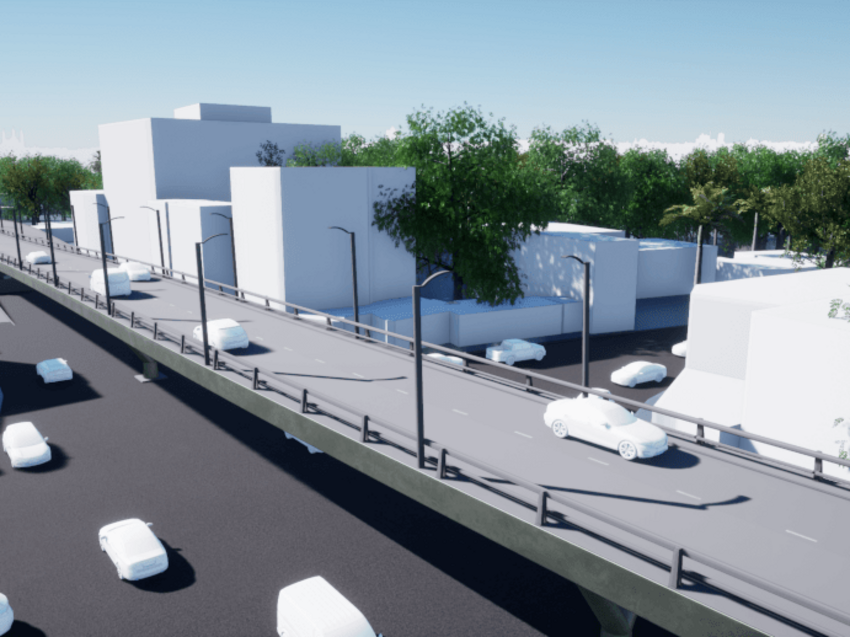
Through two international composite bridge projects, CÉH demonstrated how successful bridge delivery often depends on a carefully planned digital workflow. The presentation focused on a particularly challenging Y-shaped urban flyover, where complex geometry, changing road alignments, and strict fabrication constraints demanded a highly flexible design approach.
Ádám Skultéty showed how ALLPLAN Civil was used to create a fully parametric model that could adapt quickly to design changes while maintaining geometric accuracy throughout the project. He also explored how data was exchanged with other specialist tools, including Tekla Structures, to support detailed steel fabrication and construction planning.
Rather than presenting software in isolation, the session highlighted the practical realities of multidisciplinary bridge design and the importance of assigning the right task to the right tool.
Session 3: SCIA Engineer: A Key Partner in BESIX Engineering Project Design
Presented by Xavier Gamme, Hasan Ismail, Nathan Simons, Eva Dero & Marie Vandamme – BESIX
BESIX Engineering demonstrated how SCIA Engineer supports the analysis and design of some of the world’s most demanding infrastructure and building projects. Rather than focusing on a single case study, the presentation explored four very different projects, including the iconic Triangle Tower in Paris, the Oosterweel Link tunnel in Belgium, the renovation of the Krammersluizen lock complex in the Netherlands, and the ViA15 highway project.
Through these examples, the speakers showed how advanced structural analysis, construction stage modeling, parametric workflows, and interoperability help engineers manage complex geometries, long-term structural behavior, and challenging site conditions. The session also highlighted the growing role of automation and data-driven design, including links between SCIA and downstream design tools.
Session 4: ALLPLAN Implementation for Critical Detailing of Special Bridges in India
Presented by Mohammed Adil Shaikh – SPECTRUM Techno Consultants Pvt. Ltd.
SPECTRUM Techno Consultants shared its journey of implementing ALLPLAN for the design and detailing of complex bridge structures in India, using the Banas River Extradosed Bridge as a real-world case study. Although relatively new to ALLPLAN, the team demonstrated how parametric modeling and BIM workflows are already helping them tackle some of the most challenging aspects of bridge engineering.
The presentation explored how ALLPLAN Civil was used to model the bridge’s variable geometry, while ALLPLAN supported the detailed development of pylons, stay cable systems, prestressing layouts, and reinforcement. Particular attention was given to areas where traditional 2D workflows can struggle, such as heavily reinforced cable saddle zones and complex pylon connections.
Beyond the current project, the session also provided a glimpse into SPECTRUM’s wider digital transformation strategy, including automation, digital twins, and BIM-enabled asset management.
Session 5: From Client’s Commission to Implementation – Experiences from the Lammschlucht Project
Presented by Greta Switalla – Bänziger Partner AG; Raphael Kappeler & Franz Hürlimann – Canton of Lucerne (vif)
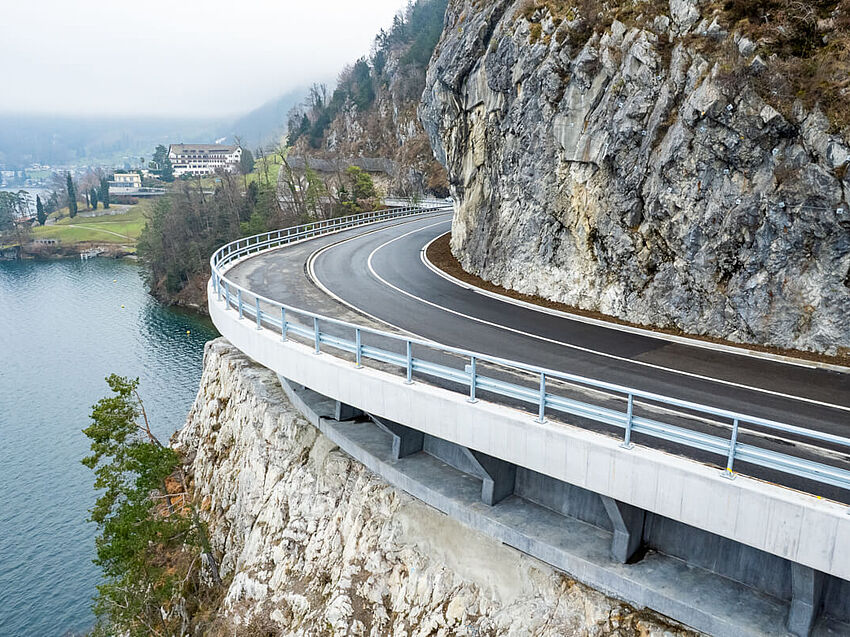
This presentation offered a rare perspective from both the project owner and the design team, exploring how the Canton of Lucerne is using pilot projects to develop a practical, long-term BIM strategy. Using the challenging Lammschlucht road improvement project as an example, the speakers demonstrated how BIM can support collaboration not only during design and construction, but throughout an infrastructure asset’s entire lifecycle.
Set within a geologically complex mountain environment, the project combines road widening, retaining structures, bridge construction, and extensive rock excavation. The session showed how detailed geological models, point cloud data, and model-based planning were used to support decision-making and reduce project risks.
Rather than focusing solely on technology, the session highlighted the organizational processes, standards, and client requirements needed to make BIM work in practice. For infrastructure owners, designers, and contractors alike, it provided valuable insights into moving from traditional delivery methods toward model-based project execution and BIM-to-field workflows.
Session 6: From Drawings to Data: Delivering Railway Infrastructure with BIM
Presented by Marius Hazaparu – ISPCF; George-Teodor Călin – ALLBIM NET
This session explored how BIM can help address one of infrastructure’s most persistent challenges: the lack of reliable information about existing assets. Using a pilot railway modernization project in Romania, ISPCF and ALLBIM NET demonstrated how they are working to create a structured digital information layer for railway infrastructure, moving beyond traditional drawings and disconnected records.
The presentation focused on the Grădinari Station project, where multiple engineering disciplines collaborated within a BIM workflow centered on ALLPLAN and Bimplus. While coordination and clash detection formed part of the story, the discussion quickly expanded to a broader question: how can infrastructure data be captured, maintained, and used throughout an asset’s lifecycle?
This session offered a thought-provoking look at digital asset management, inspection workflows, and the foundations of future digital twins.
Session 7: BIM Across the Infrastructure Lifecycle
Presented by Marcel Imbach – Equi Bridges Ltd.
Closing the summit, Marcel Imbach explored a broader question that affects every infrastructure owner, designer, and contractor: how can BIM deliver value throughout an asset’s entire lifecycle, rather than only during design and construction?
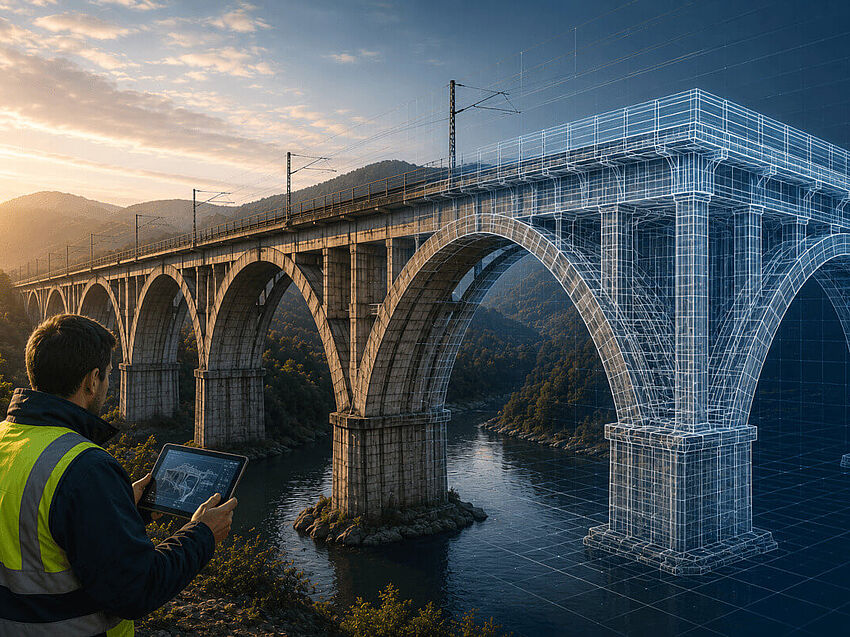
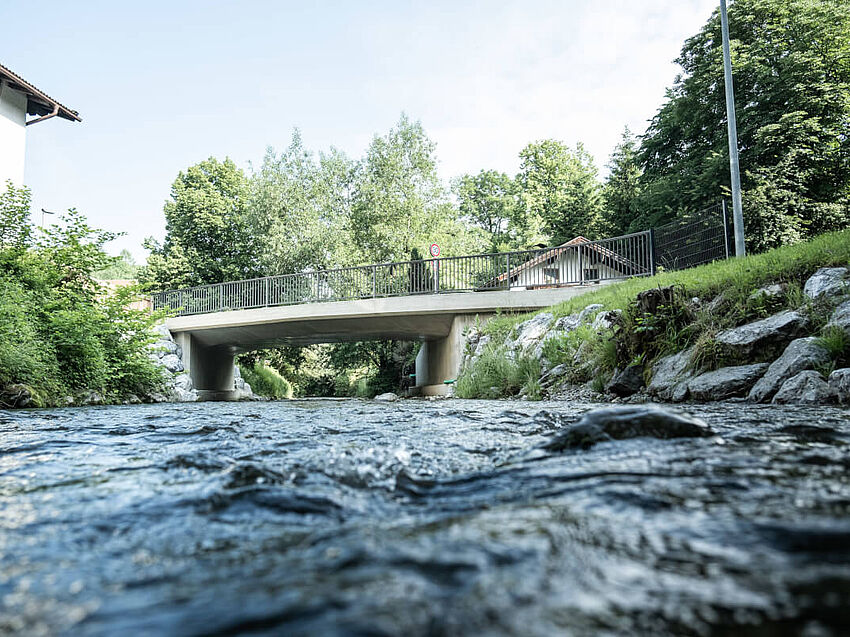
Drawing on bridge engineering projects from Switzerland, the presentation examined how BIM can connect planning, design, construction, operation, maintenance, rehabilitation, and eventual replacement through a shared digital information model. Practical examples included early-stage option studies, scan-to-BIM workflows for existing structures, digital twins for bridge management, paperless construction sites, and model-based reinforcement detailing.
A recurring theme was the importance of structured, machine-readable data and open standards such as IFC to support long-term asset management. The session also challenged some traditional assumptions, suggesting that future infrastructure projects may rely far less on drawings and increasingly on rich digital models.
The Future of Infrastructure Is Connected
While the projects featured at this year’s Global Infrastructure Digital Summit varied widely in scale, geography, and complexity, they shared a common theme: the growing importance of connected digital workflows throughout the infrastructure lifecycle.
This recap only scratches the surface of the insights shared during the event. If any of these topics resonate with your work, we encourage you to watch the sessions on demand to hear directly from the project teams and explore the workflows, challenges, and lessons learned in greater detail.
Watch the Global Infrastructure Digital Summit 2026 on demand and discover how leading organizations are transforming infrastructure delivery through digital innovation.