Seamless Steel: How SCIA & SDS2 Power a Complete Design-to-Detail Workflow
Designing an efficient steel frame involves more than just checking whether the final members pass their code checks. Engineers need to understand how the structure behaves, how changes affect the analysis, and how their design decisions will ultimately translate into something that can be detailed and fabricated.
In summary: > A connected steel frame workflow can reduce repetitive modeling, manual data transfers, and disconnected calculations. > Integrating modeling, loading, analysis, design, and documentation helps the workflow evolve efficiently as the structural design changes. > Stability assessment, second-order analysis, and imperfections help engineers better understand how slender steel frames will behave. > Transferring analyzed models from SCIA Engineer to SDS2 via SAF can maintain continuity between structural design, detailing, and fabrication. > SCIA’s three-part webinar series demonstrates the complete workflow in practice – from initial steel frame design through to fabrication-ready drawings. |
Yet the digital workflow supporting those decisions can easily become fragmented. Geometry changes, calculations need updating, analysis assumptions must be revisited, documentation regenerated, and eventually the structural information has to pass from engineering into detailing. Every manual transfer or duplicated model creates additional work – and another opportunity for inconsistencies to creep in.
A more connected steel design workflow tackles the problem differently. By maintaining continuity from the initial structural model through analysis, stability assessment, design, and fabrication detailing, engineers can spend less time managing information and more time understanding and optimizing the structure itself.
Build an Analysis Workflow That Can Evolve with the Design
Steel frame design is iterative. Member sizes change, geometry develops, loads are refined, and design decisions made in one part of the structure can affect another. The analysis workflow therefore needs to evolve alongside the design rather than becoming a series of calculations that must be manually revisited whenever something changes.
Keeping modeling, loading, analysis, and steel design within a connected workflow helps reduce this repetitive work. Instead of transferring forces into spreadsheets or rebuilding calculations as the geometry evolves, engineers can automate repetitive modeling and design tasks while maintaining a transparent and traceable design process.
Documentation is another important part of that continuity. Generating clear, code-referenced documentation directly from the engineering workflow reduces the effort involved in reporting while making it easier for reviewers and clients to understand and verify the basis of the design.
However, an efficient analysis workflow needs more than automation. The objective is to remove unnecessary manual work while retaining the engineer’s visibility and control – leaving more time to consider whether the analytical model accurately represents how the structure will behave.
Modeling the Frame Is Only the Beginning
For slender steel frames in particular, a successful member check does not necessarily tell the whole story. Engineers also need to consider the stability of the structure and whether the assumptions used in the analysis adequately represent its real behavior.
An important starting point is the critical load factor, which helps assess the structure’s susceptibility to buckling. This in turn informs whether a first-order analysis provides an adequate representation of the frame or whether second-order effects need to be considered.
Imperfections are another important part of this assessment. Real structures are not perfectly straight or perfectly positioned, so these effects need to be represented appropriately within the analysis. Depending on the chosen approach, imperfections can be introduced using fixed values, code-based formulas, or buckling mode shapes.
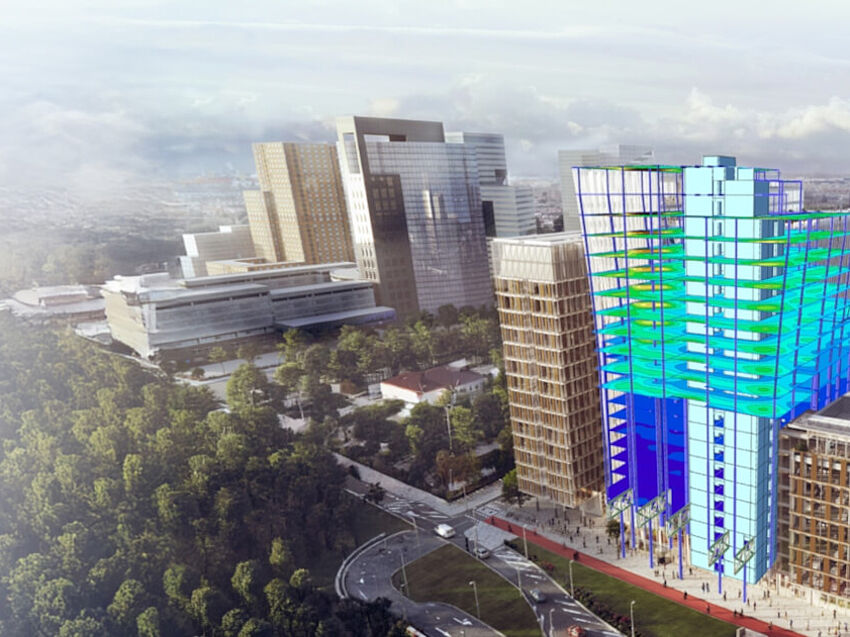
Bringing stability assessment, second-order analysis, and imperfections together provides a more complete picture of structural behavior. Just as importantly, engineers can visualize buckling and stability behavior and produce code-referenced output that helps demonstrate and justify the assumptions behind their analysis.
Keep Engineering Intent Connected to Detailing
Completing the structural design is not the end of the steel frame workflow. The analyzed and verified structure still needs to be translated into the connections, details, and drawings required for fabrication. If this involves recreating the structure in separate detailing software, time is spent modeling information that already exists – while introducing another opportunity for inconsistencies between the engineering design and fabrication model.
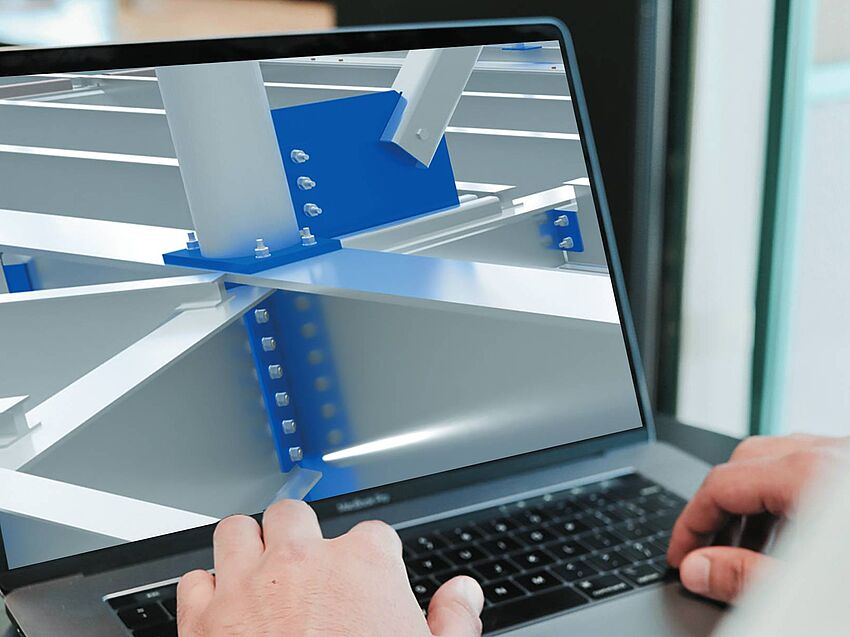
A connected model-based workflow can avoid this duplication. For example, a SCIA Engineer model can be exported using the Structural Analysis Format (SAF) and imported into SDS2. The imported analysis model can then provide the basis for connection detailing and the generation of fabrication-ready drawings.
This creates continuity between two distinct but closely related disciplines. Structural engineers retain visibility into how their design progresses downstream, while detailers can work from information derived from the analyzed model rather than starting again. For engineering and fabrication teams, that can help streamline the handoff while keeping analysis, design, and detailing consistent from one stage to the next.
More Engineering, Less Information Management
Taken together, these stages demonstrate what a more connected steel frame workflow can look like. The model created for structural design becomes the basis for analysis. More advanced analysis can then be used to investigate stability and structural behavior where necessary. Finally, that engineering information can continue downstream into detailing and fabrication.
The value this workflow offers goes beyond performing individual tasks faster. It is in reducing the repeated modeling, manual transfer of information, and disconnected calculations that can consume engineering time and introduce opportunities for error.
Automation can take care of repetitive modeling and design tasks, while integrated analysis keeps engineers closer to the behavior of the structure. Model-based data exchange can then help preserve that work as the project progresses toward fabrication. The result is a workflow that gives engineers and detailers more time to concentrate on the decisions where their expertise adds the greatest value.
See the Complete Steel Frame Workflow in Action
Want to explore each stage in more depth? SCIA’s three-part steel frame webinar series takes you through the workflow step by step, with practical demonstrations in SCIA Engineer and SDS2.
From Concept to Design: Create Steel Frame Structures Easily starts with the fundamentals, demonstrating a complete steel frame workflow from modeling and loading through analysis, design, and documentation. The webinar is now available to watch on demand.
Design with Confidence: Steel Frame Stability, Imperfections and Second-Order Analysis takes a deeper look at structural behavior, including buckling, critical load factors, imperfections, and deciding when second-order analysis is required. The webinar takes place on October 6, 2026.
Finally, SDS2 for Steel Detailers: From Model to Fabrication Drawings follows the model into SDS2 to explore connection detailing and fabrication drawing generation, completing the journey from structural model to fabrication-ready information. Join us for the final webinar on October 20, 2026.
Together, the three sessions provide a practical look at how SCIA Engineer and SDS2 can support a more connected approach to steel frame design, from the first analytical model through to fabrication.