
Seamless Steel: How SCIA & SDS2 Power a Complete Design-to-Detail Workflow
Structural engineering has always involved balancing accuracy, efficiency, and judgment. Engineers have long understood the importance of effects such as moving loads, vibration, torsion, staged construction, and code compliance. The challenge has been bringing those considerations together in a way that is both practical and transparent within everyday project delivery.
In summary: > Structural analysis is shifting from simplified models to integrated, real-world simulation > Engineers need clearer insight into what truly governs structural behavior, not more analysis > Modern tools reduce complexity by intelligently handling loads and key design scenarios > Performance and lifecycle behavior are now assessed earlier in the design process > Evolving codes require flexible workflows that support comparison and confident decision-making |
That is beginning to change. As projects become more demanding and expectations around performance, serviceability, and traceability continue to rise, structural analysis software is moving beyond isolated checks and idealized models. Increasingly, the direction of travel is toward tools that help engineers simulate real-world structural behavior more coherently within a single analytical environment, without losing speed or control. SCIA Engineer 2026 has been developed specifically to support this broader shift toward more integrated, insight-led structural analysis. Here’s how.
Why real-world simulation is becoming the new benchmark
For many years, structural analysis has relied on simplified global models, with more complex behaviors checked separately. While effective, this approach introduces fragmentation. As projects become more demanding — with longer spans, lighter structures, and stricter performance expectations — effects such as moving loads, vibration, and construction stages are more likely to govern the design. Assessing these outside the main model makes it harder to maintain clarity and confidence in decision-making.
This is driving a shift toward more integrated analysis. Modern tools are bringing these behaviors into a single, coherent workflow, allowing engineers to evaluate real-world structural performance within the same model used for design. In practice, this shift is playing out in three key ways: more intelligent handling of complex loading, earlier assessment of real-world performance, and stronger alignment with evolving design codes. SCIA Engineer 2026 reflects this direction, supporting a more continuous and transparent process where engineers can focus on what truly governs the structure — and make decisions with greater confidence.
Smarter handling of complex loading and behavior
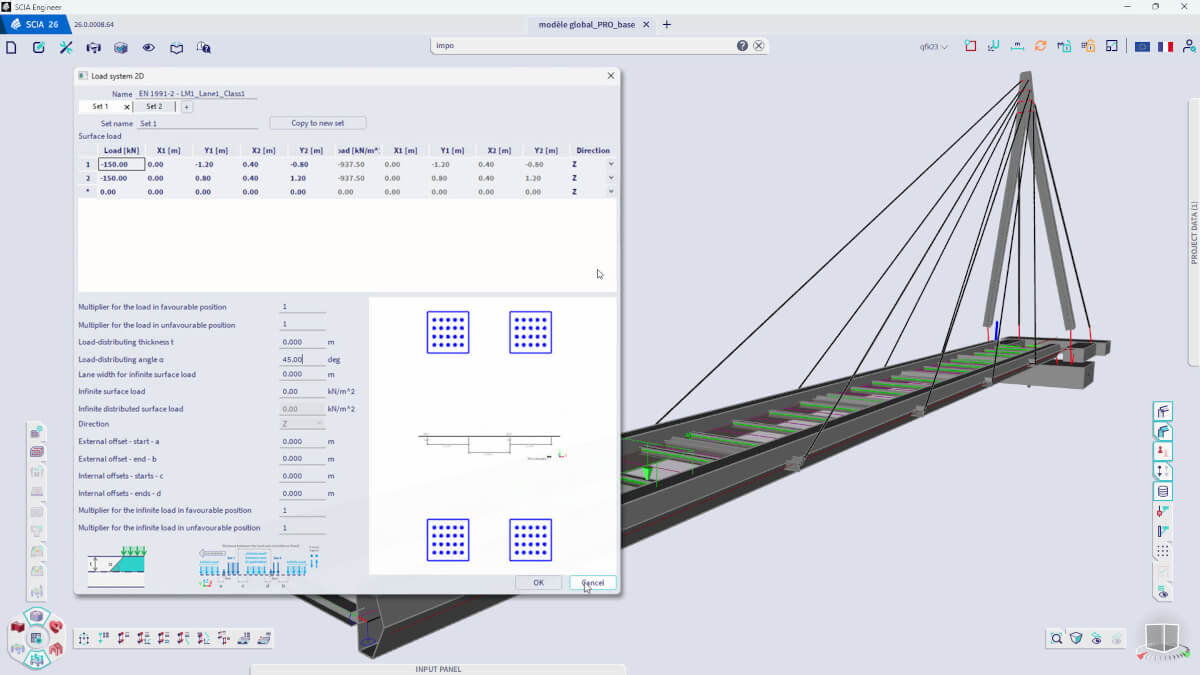
One of the clearest shifts in structural analysis is how complex loading is handled. Scenarios such as moving loads, wind, and torsional effects can generate a vast number of load cases, often requiring time-consuming manual setup or conservative simplifications. This not only increases effort but can obscure which conditions truly govern the design.
Modern analysis tools are addressing this by making load handling more intelligent. In SCIA Engineer 2026, for example, moving load systems can be evaluated through automatic identification of critical positions before calculation, reducing unnecessary combinations and focusing analysis on what matters most. Similarly, automated wind load generation and enhanced beam elements that account for torsion and warping allow engineers to capture complex behavior more accurately, without increasing model complexity. The result is a more efficient workflow, where engineers spend less time managing load cases and more time understanding structural performance.
Bringing real-world performance earlier into design
Serviceability has often been treated as a late-stage check, particularly for issues such as vibration and occupant comfort. While well understood, these assessments are typically carried out once key design decisions — such as spans, materials, and structural depth — have already been made. When problems emerge at that stage, resolving them can require significant redesign or compromise.
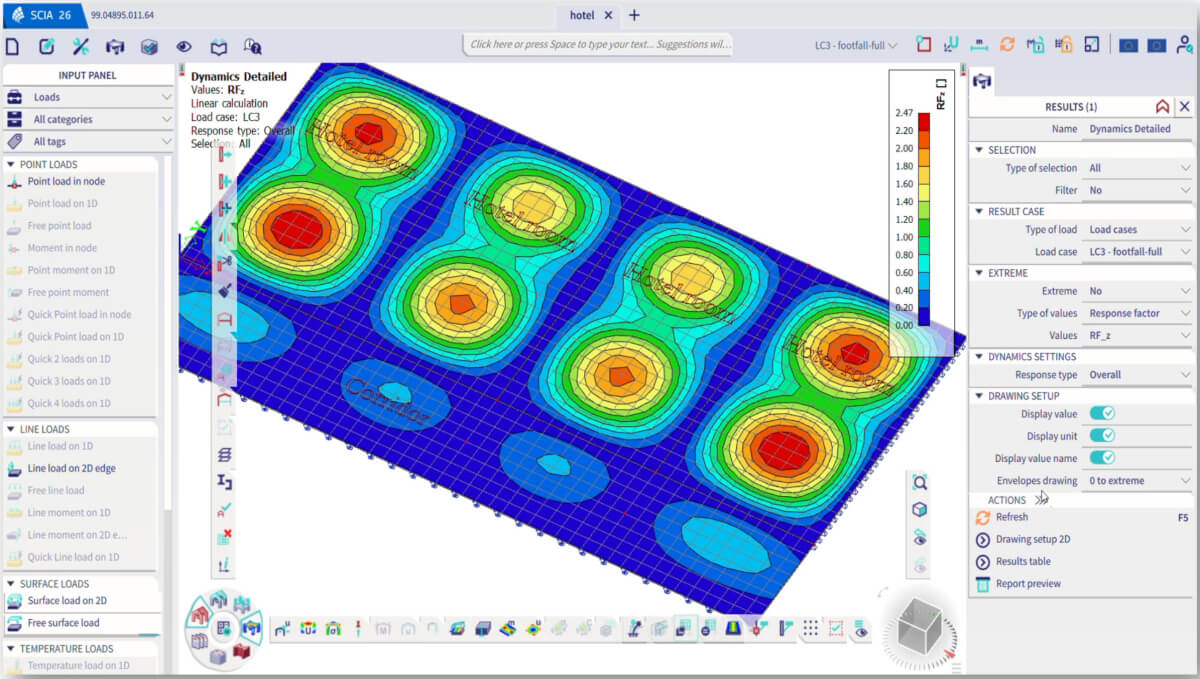
This is beginning to shift, with performance-based checks moving earlier into the design process. SCIA Engineer 2026 supports this by integrating footfall and vibration analysis directly into the core structural model, allowing engineers to evaluate dynamic response alongside strength and stiffness from the outset.
Crucially, this also extends to how structures behave over time. Features such as staged construction analysis and the modeling of external tendons enable engineers to simulate how loads, stresses, and deformations develop throughout the build process and into operation. By bringing both performance and lifecycle behavior into the same analytical environment, engineers can make more informed decisions while design flexibility is still high — reducing risk, avoiding late-stage changes, and delivering structures that perform as intended in practice.
Designing with confidence in a changing regulatory landscape
Structural design does not happen in a static regulatory environment. Standards evolve, projects span multiple years, and engineers are often required to demonstrate compliance against both current and emerging codes. Managing that transition can introduce uncertainty, particularly when comparisons between code versions require duplicate models or additional verification steps.
Modern analysis tools are beginning to address this by embedding code flexibility directly into the workflow. In SCIA Engineer 2026, support for the second generation of Eurocodes is integrated in a way that allows engineers to switch between code versions, compare results, and understand the impact of changes without rebuilding their models. This shifts compliance from a final check to an active part of the design process — helping engineers navigate change with greater clarity, reduce risk, and maintain confidence in their decisions as standards continue to evolve.
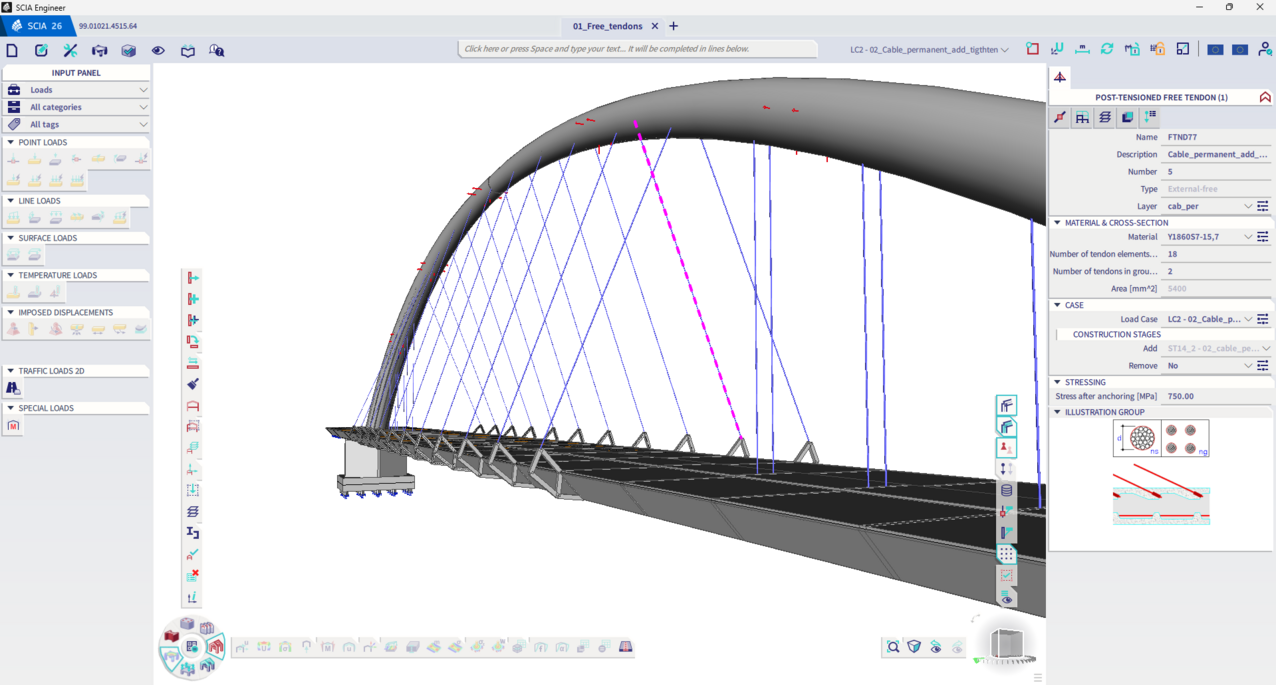
Confident, connected structural design
These trends show that it is not about adding more layers of analysis, but about making analysis more purposeful — focusing on what truly governs structural performance and bringing that insight into everyday design decisions. In order to do that, the ability to simulate real-world behavior within a single, coherent model is becoming essential.
SCIA Engineer 2026 illustrates how this shift is taking shape in practice. By enabling more intelligent handling of complex loading, earlier assessment of real-world and lifecycle performance, and greater clarity in navigating evolving design codes, it supports a more integrated and confidence-led approach to structural analysis. In that sense, it reflects a broader evolution in the industry — one where engineers are better equipped to connect design intent with real-world outcomes and deliver structures that perform as expected from concept through to construction and operation.