Seamless Steel: How SCIA & SDS2 Power a Complete Design-to-Detail Workflow
Heavenly relaxation based on a hellishly good design: The Alpin Panorama Hotel Hubertus entices guests with a sensational wellness area that impresses on many levels.
In summary: > Since 2022, the Alpin Panorama Hotel Hubertus has featured a spectacular wellness area that juts far out from the main building. > The structural design was carried out by IPM Engineering using ALLPLAN and FRILO. > The structural framework is a hybrid construction consisting of concrete, steel, and wood elements. > The materials used and the structural requirements of the design presented several challenges. |
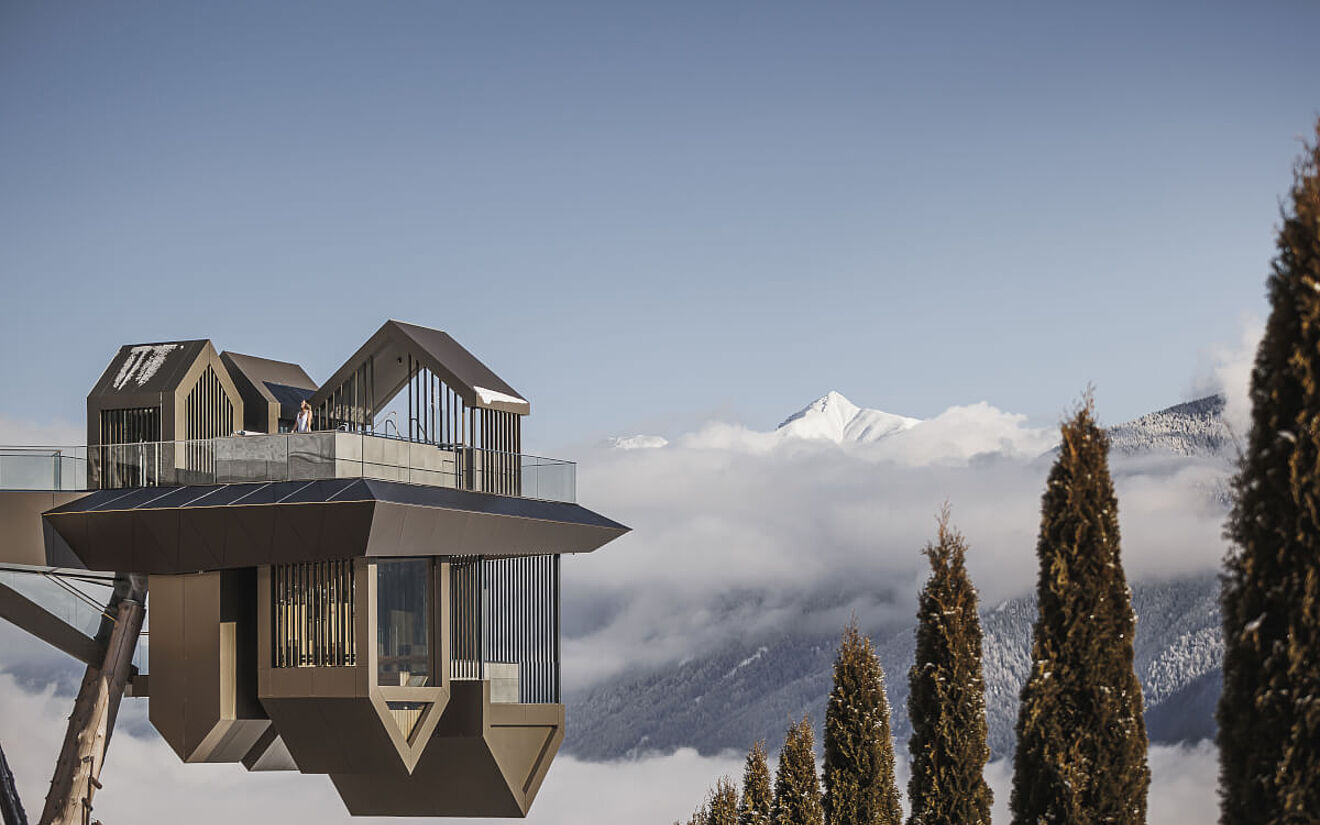
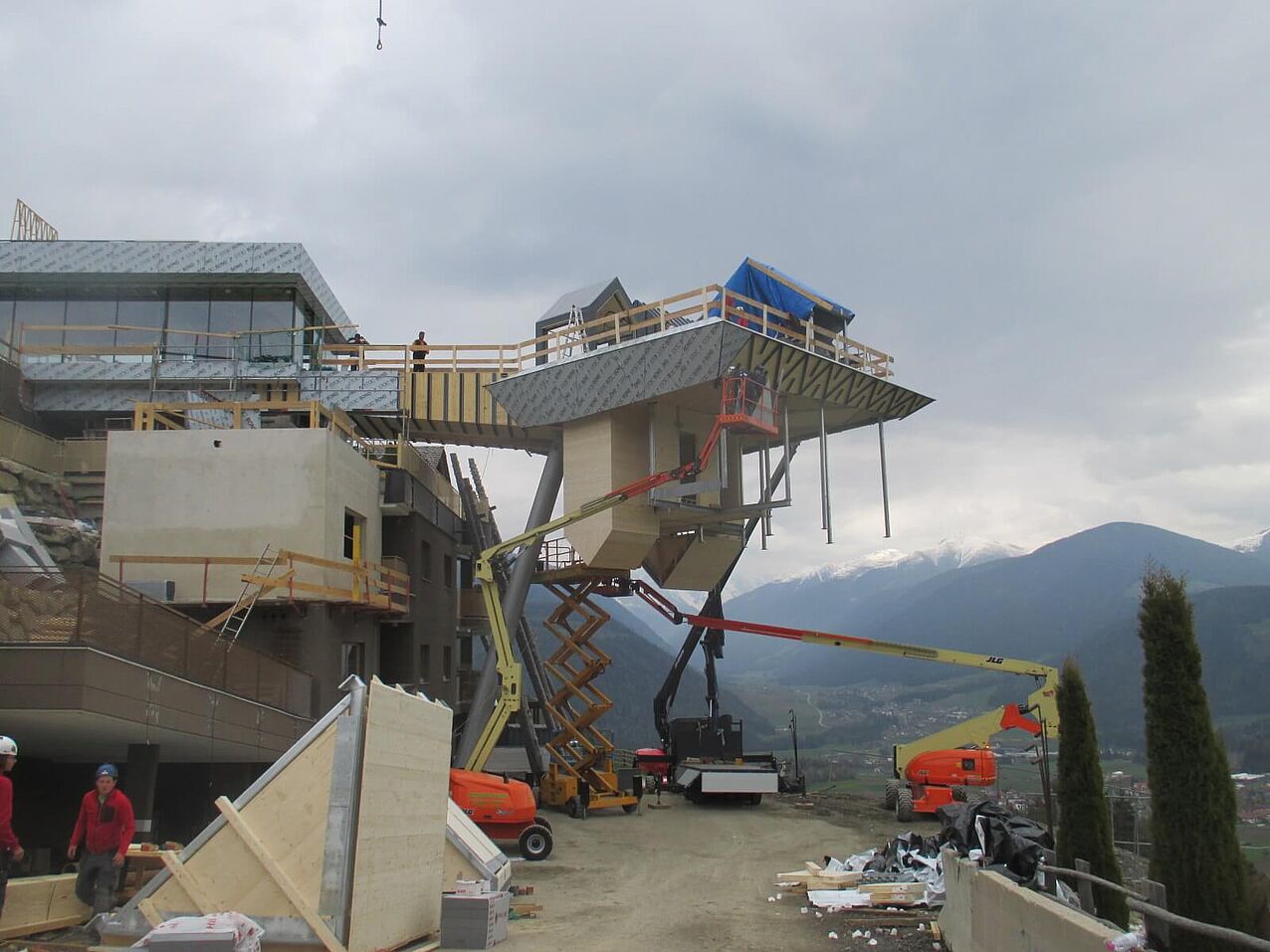
The Alpin Panorama Hotel Hubertus in Olang, South Tyrol, stands for relaxation and rejuvenation at the highest level. Surrounded by the picturesque mountains of the Puster Valley, the five-star hotel features, among other things, an award-winning, 7,000-square-meter spa area with various saunas, pools, and relaxation zones. Since mid-2022, this has also included a literally “outstanding” wellness area that is sure to delight both architecture enthusiasts and structural engineers alike: an annex cantilevering 11 meters from the main building, “floating” 14 meters above the ground. The spectacular design comes from the architectural collective NOA in Bolzano. The challenging structural engineering was developed by IPM Engineering using ALLPLAN and FRILO.
Floating annex turns wellness design upside down
The hotel calls its floating annex “Heaven & Hell”; a name that stems primarily from an architectural quirk. The wellness platform essentially houses an upper and a lower world, each resembling small huts with gabled roofs, though the “underworld” is turned upside down. Despite the higher temperature, it’s unlikely that this “hell” will be particularly torturous. After all, the 65 square meters of usable space features amenities such as two saunas, an outdoor pool (whirlpool), a shower stall, and an ice mist bath. The inverted roofs serve as additional space for the sauna seating steps and the pool’s water treatment system.
In this wellness dichotomy, “Heaven” offers further facilities for heavenly relaxation with a significantly larger usable area of 140 square meters. These include two whirlpools, as well as an equal number of panoramic showers and a changing room. Unlike the “Underworld,” the majority of this upper-level wellness area is located outdoors.
Coordinating a complex hybrid structural system
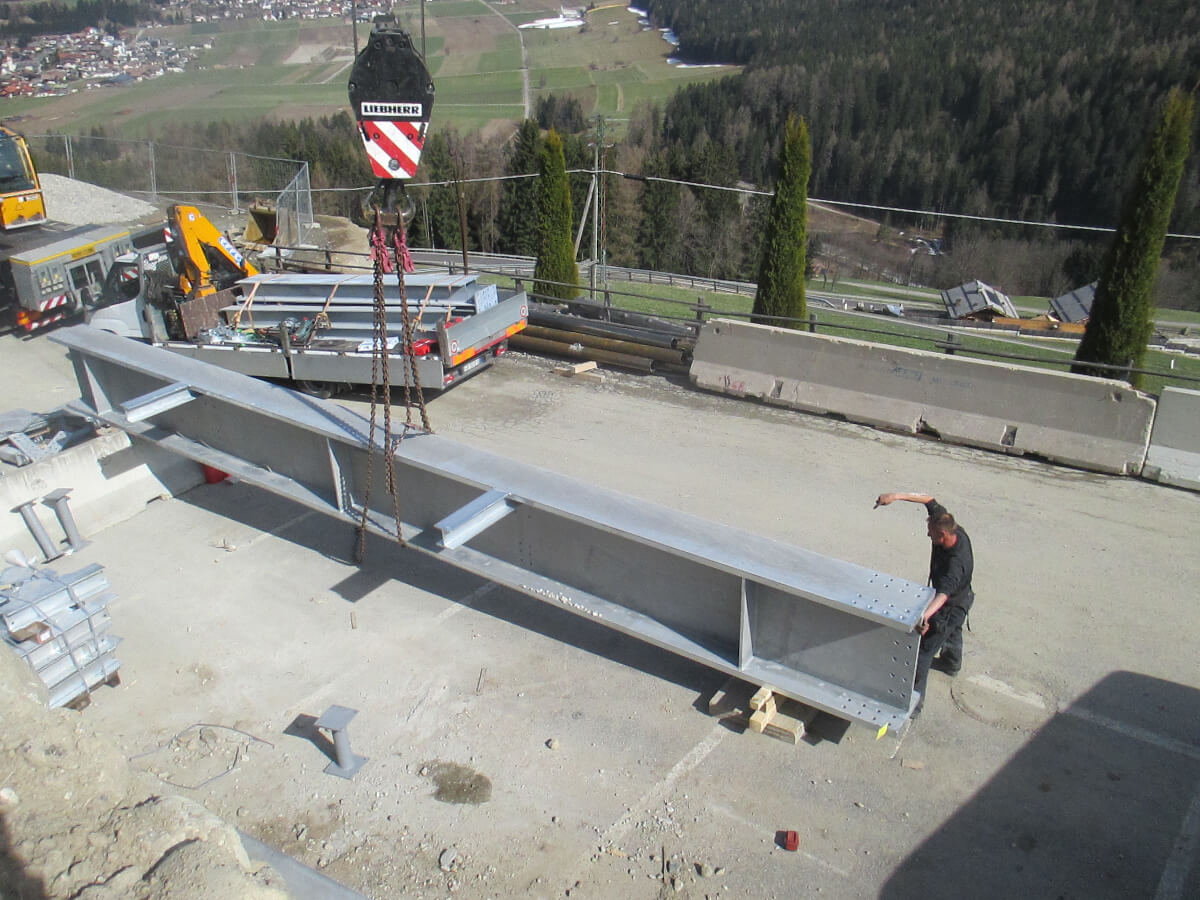
The structural framework of the annex combines various elements made of concrete, steel, and wood. Concrete foundations form the main load-bearing structure, which was extended up to the top of the rock. Where this was not possible, steel bored piles were used. The primary structural framework of the annex is also a steel structure, consisting of two 40-meter-long I-beams resting on two inclined steel columns made of steel tubes. The latter are additionally clad with larch logs. The platform itself is bolted to the main girders via I-beams, with the inverted cabins being suspended from these via an additional steel structure. Composite reinforced concrete slabs with load-bearing trapezoidal sheet metal form the platforms of the two levels, while the whirlpools were constructed using additionally decoupled reinforced concrete slabs. The walls were infilled with cross-laminated timber panels.
The construction of the various structural elements made of different materials was not without its challenges. Three specialist trades – masons, metalworkers, and carpenters – had to erect the supporting structure on the construction site almost simultaneously. This parallel execution by the specialist contractors required close coordination on site. The three whirlpools with infinity overflow channels also posed a particular structural challenge due to the exceptionally strict requirements for limit deformation.
 Copyright: IPM Engineering
 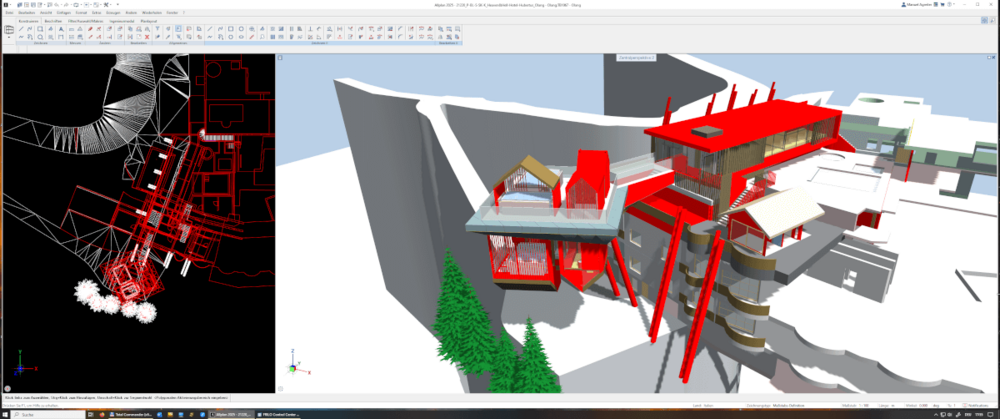 Copyright: IPM Engineering
 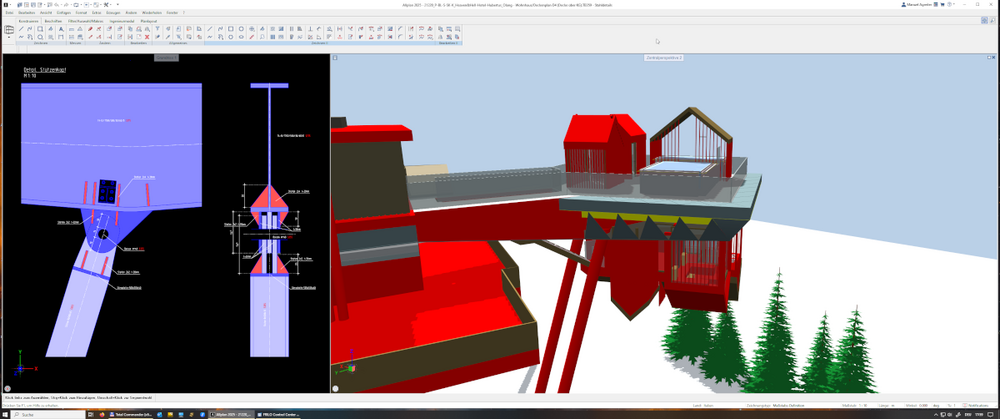 Copyright: IPM Engineering
 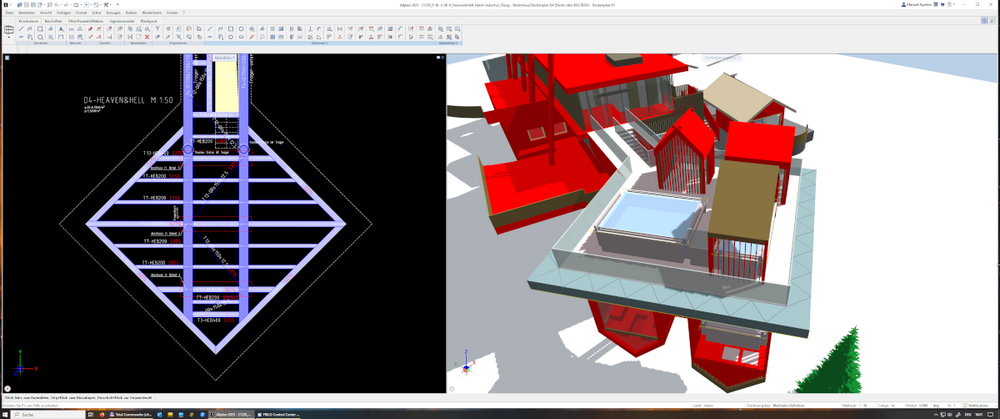 Copyright: IPM Engineering
 Structural design with ALLPLAN and FRILO
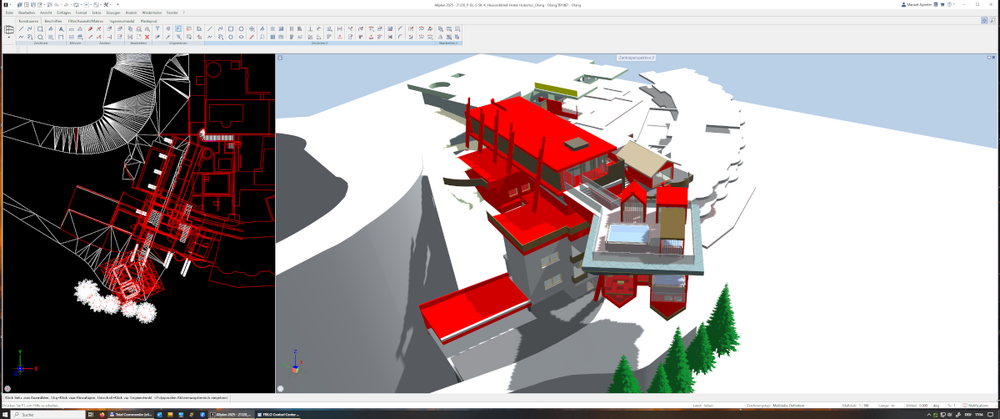
IPM Engineering used ALLPLAN and FRILO for the complex design of the hybrid structural system. While the former served as the working environment for the detailed design, the structural members made of concrete, steel, and wood were designed in the structural analysis software. Various structural systems were evaluated first. After selecting the preferred option, the calculations were performed element by element so that they could be quickly reviewed and adjusted at any time. IPM Engineering made extensive use of the wide range of features in FRILO, enabling them to solve the design challenges quickly and smoothly. Ultimately, the precise planning in ALLPLAN and FRILO allowed for accurate deformation analysis while minimizing material usage.