Why Agility Is Becoming the New Competitive Standard in Precast
Precast construction has always been about efficiency. But as project demands increase, the definition of efficiency is changing. These days, it is no longer just about producing elements quickly. Teams are now expected to deliver precise, production-ready documentation, coordinate seamlessly across disciplines, and meet increasingly ambitious sustainability targets, all within tight delivery schedules.
In summary: > ALLPLAN Precast 2026 helps precast plants streamline their workflows in all project phases—by reducing manual effort, improving documentation quality, and delivering more sustainable design results. > Automated, rule-based dimensioning reduces manual steps and increases the accuracy and consistency of production-ready drawings. > New local views and sections allow for more flexible editing of individual precast components—independent of the overall building model. > Integrated support for Unidome-XP hollow-core elements enables a reduction in concrete consumption of up to 25 percent without compromising load-bearing capacity. > Support for the IFC4precast format simplifies data exchange between CAD and ERP systems and improves collaboration between design and business departments. |
Meeting these demands requires more than incremental improvements. It calls for a rethink of how precast workflows are structured, from early design through to production and delivery. This challenge is the driving force behind a shift toward smarter, more connected workflows across the precast sector.
Reducing manual effort in production documentation
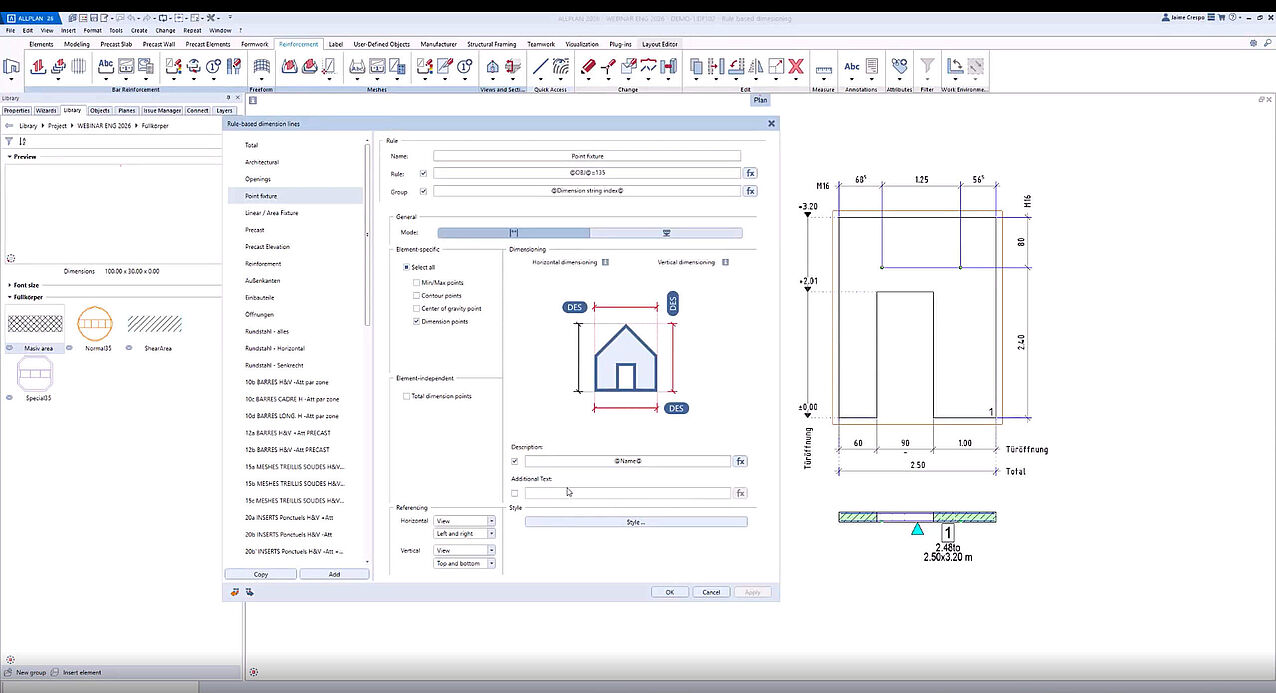
Production-ready drawings remain one of the most time-critical aspects of precast design. Yet many workflows still rely on manual dimensioning, where even small updates can trigger time-consuming revisions.
Automation is beginning to change this. Rule-based dimensioning allows teams to define what information is required within a plan and apply it consistently across drawings. Instead of placing dimensions manually, the system generates them automatically in line with predefined standards.
The impact is twofold. First, it significantly reduces the time required to produce and update drawings. Second, it improves consistency and reduces the risk of omissions, which can otherwise lead to costly errors during production.
At the same time, improvements in reinforcement visualization are making documentation clearer and easier to interpret. Automatically generated views, combined with more flexible display options for hidden reinforcement, help ensure that fabrication teams are working from accurate and unambiguous information.
Designing with greater flexibility at element level
As projects become more complex, the ability to work efficiently at the level of individual components is becoming increasingly important. In many traditional workflows, element drawings remain closely tied to the overall building model. This can create inefficiencies when designs evolve, particularly if components are repositioned.
A more flexible approach is now a possibility with recent software advances. By allowing local views and sections to be created independently of the overall model, designers can work on individual elements without being affected by wider changes. If an element moves within the building, its associated documentation remains stable.
This decoupling improves workflow reliability and reduces the need for rework. It also supports more efficient handling of repetitive elements. Database-driven approaches to identifying identical components, for example, make it easier to manage quantities and streamline production planning across multiple floors or project phases.
Embedding sustainability into everyday design decisions
Sustainability is now a central consideration in precast design, but it is often constrained by the practical realities of production. Reducing material use typically requires additional design effort, which can be difficult to justify under tight deadlines.
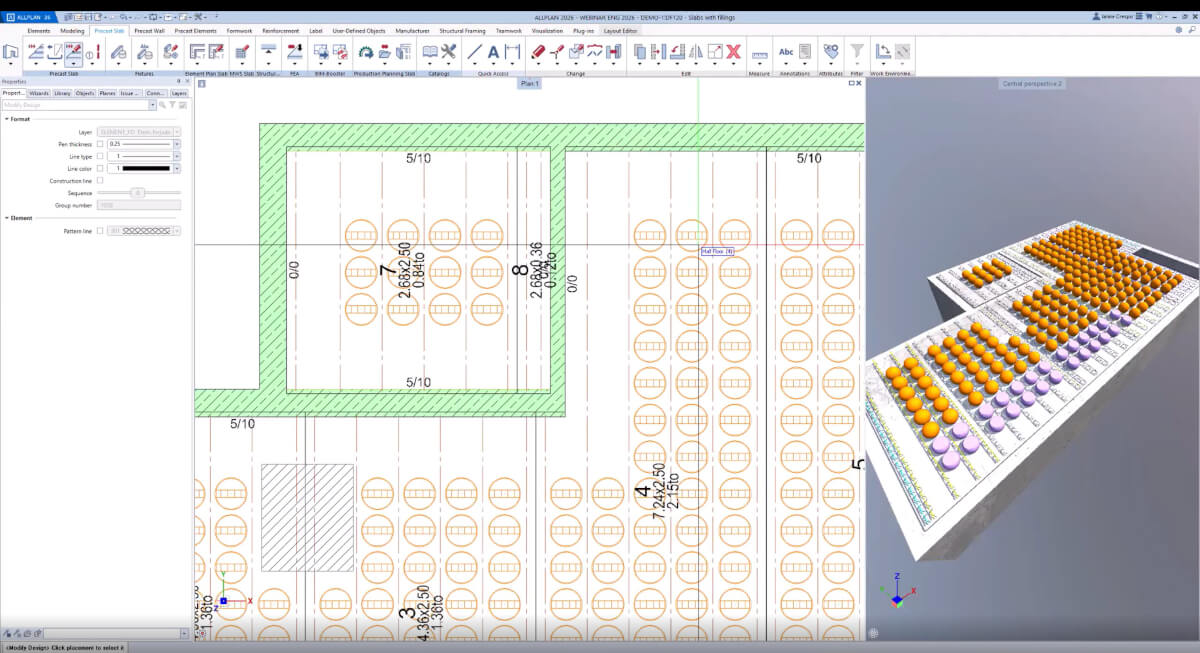
One area where this balance is shifting is the use of void former technology in precast slabs. By integrating hollow bodies within concrete elements, it is possible to reduce material usage significantly while maintaining structural performance.
Recent developments have made this easier to implement in practice. For example, integrating void former systems directly into design workflows allows them to be incorporated at the planning stage rather than treated as a separate process. This not only reduces concrete use – in some cases by up to 25 percent – but also lowers overall structural weight, enabling further savings in columns, foundations, and supporting elements.
The result is a more practical route to sustainability, where material efficiency becomes part of the standard workflow rather than an additional layer of complexity.
Connecting planning and commercial data
Effective precast delivery depends on reliable data flowing between design, production, and commercial teams. However, data exchange has traditionally been fragmented, with different systems handling geometry, quantities, and costing.
The increasing adoption of open standards is beginning to address this challenge. Formats such as IFC4precast allow both geometric and commercial data to be shared within a single model, improving consistency across the project lifecycle.
This has clear benefits for coordination. Quantity take-offs, production planning, and procurement can all be based on the same underlying data, reducing discrepancies and improving confidence in decision-making.
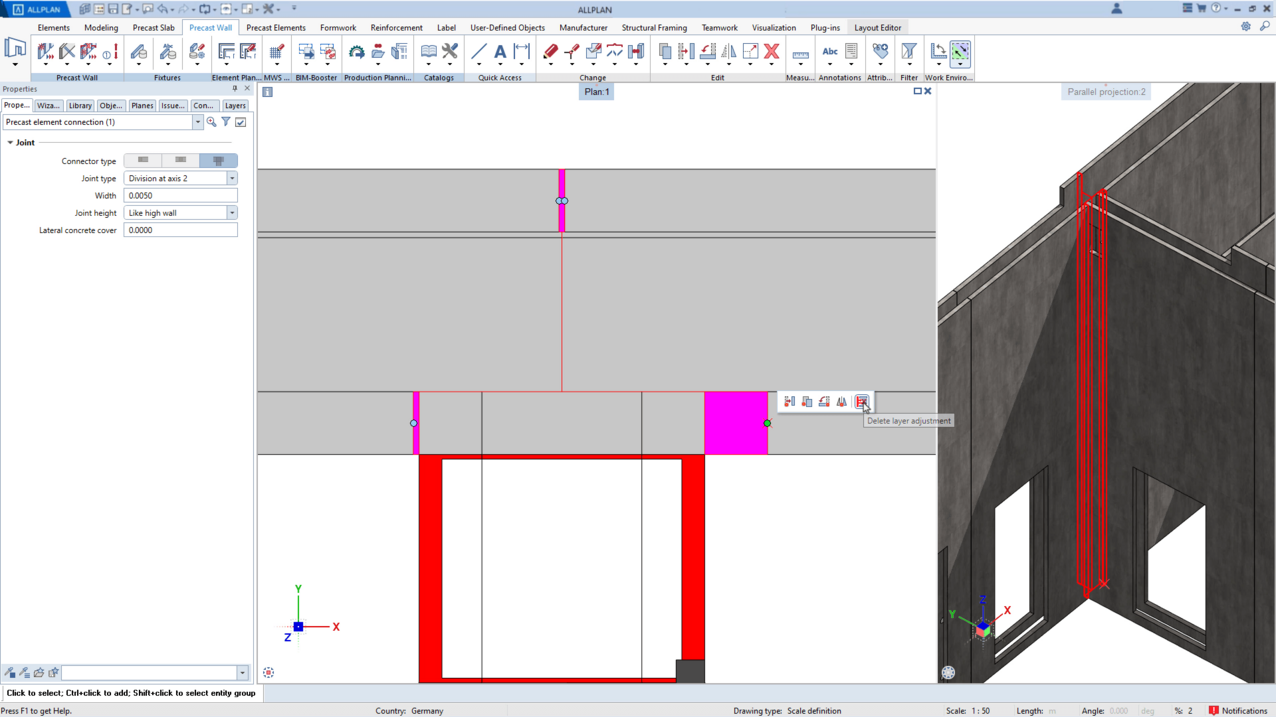
At the same time, improvements to everyday tools – such as more intuitive interfaces for connection design and automated generation of structural verification outputs – are helping to streamline workflows and reduce reliance on separate applications.
A more integrated approach to precast delivery
Together, these developments point to a broader shift in how precast projects are delivered. Rather than focusing on isolated improvements, the emphasis is moving toward integrated workflows that connect design, detailing, and production more effectively.
Automation is reducing manual effort in documentation. More flexible modeling approaches are improving resilience to design changes. Sustainability is being embedded directly into design decisions. And better data exchange is aligning teams around a single source of truth.
For precast manufacturers, this is less about adopting new tools for their own sake and more about creating workflows that can respond to increasing pressure on time, cost, and environmental performance.
See how these workflows work in practice
If you’re exploring ways to reduce manual effort, improve coordination, and embed sustainability into your precast projects, these developments are explained in more detail in our “ALLPLAN 2026: Innovations for Precast Design” webinar.