
Seamless Steel: How SCIA & SDS2 Power a Complete Design-to-Detail Workflow
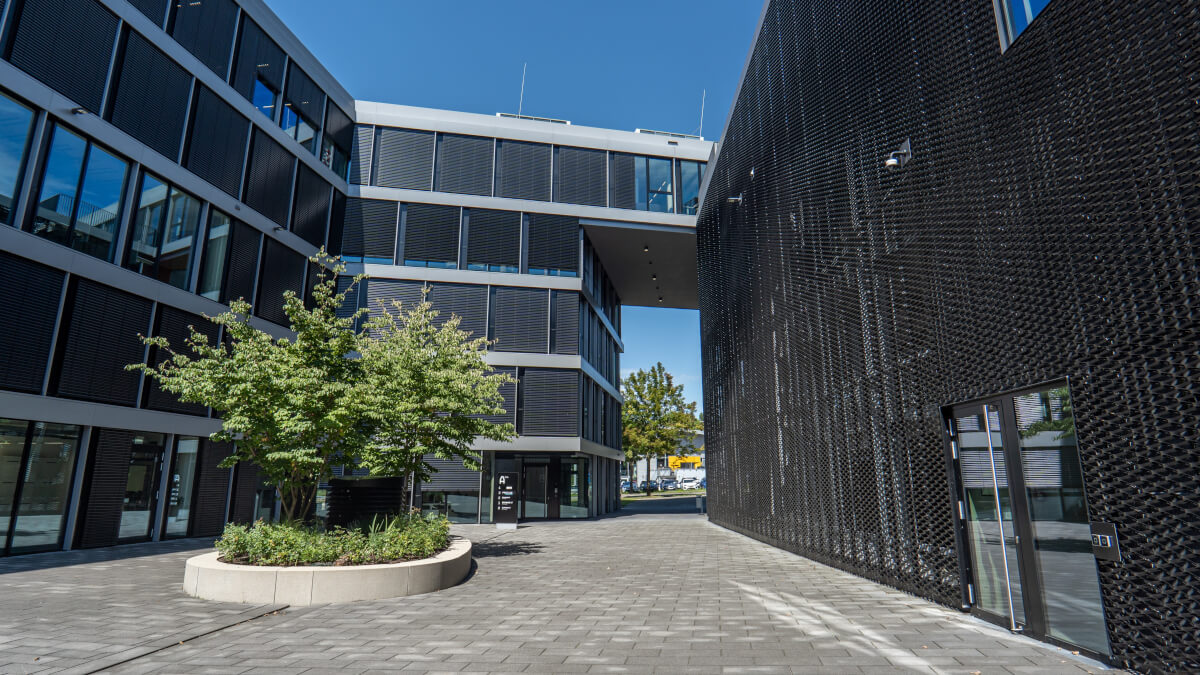
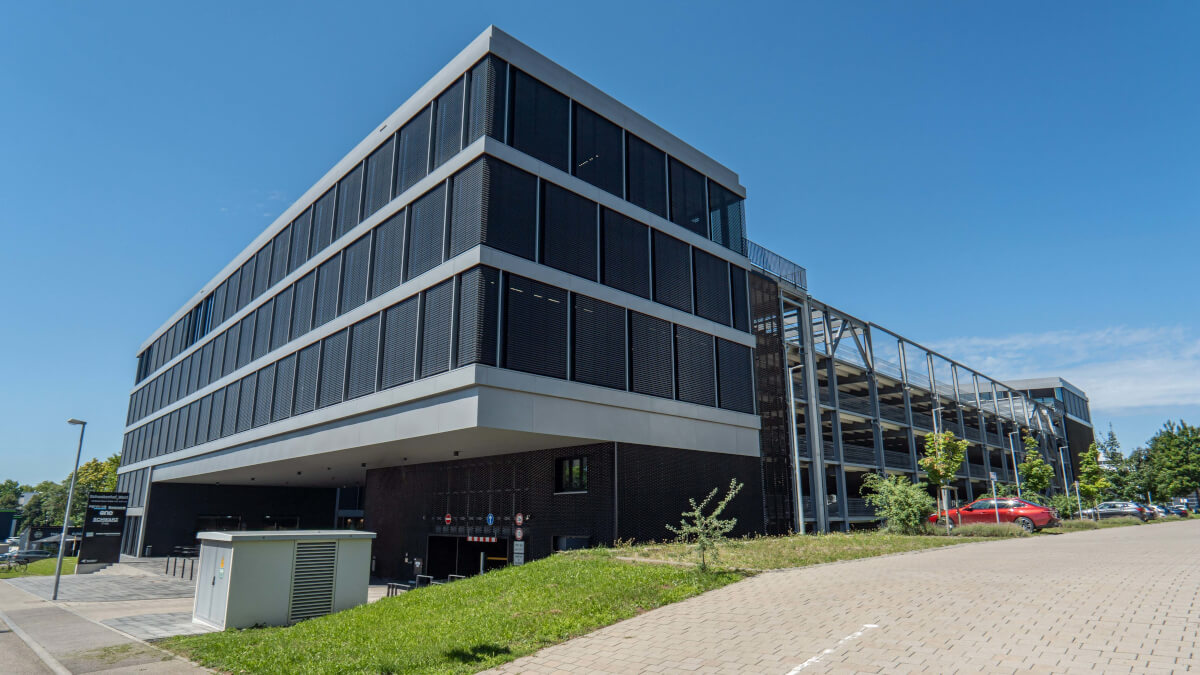
The Schwabenhof West office complex in Heilbronn draws attention with its bridge-like, load-bearing slab. Despite the large span of the slab, Wulle Lichti Walz, the engineering office responsible for the structural analysis and design, had to achieve this without using floor-to-ceiling, wall-like beams. Structural engineers Jürgen Walz and Zdenko Grgic explain which structural system they used to overcome this challenge and how FRILO supported them as their main structural analysis software.
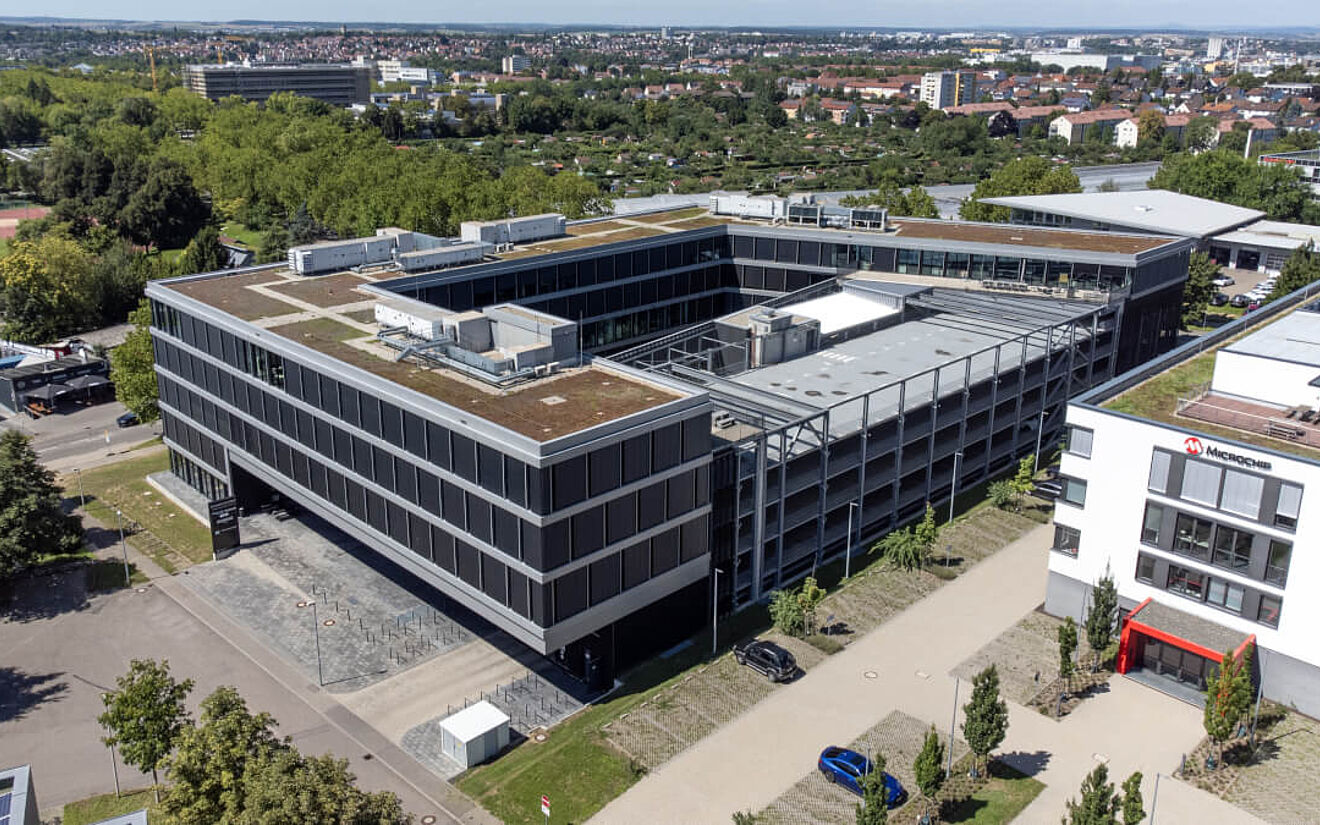
For decades, US armed forces shaped the cityscape of Heilbronn. From 1952 until the end of the Cold War, up to 10,000 American soldiers and their families were stationed at Schwabenhof on the southern outskirts of the city. However, with the withdrawal of troops in 1992, the Wharton Barracks had served their purpose and were demolished. The area where the barracks once stood was later repurposed in 1999, when the city began developing the Schwabenhof Business Park. In the years that followed, more and more companies settled in the industrial park. Schwabenhof West, a five-story office complex with a gross floor area of 21,487 m², has provided office space for commercial tenants since 2020.
The load-bearing structure of the building
The building is founded on a ground-bearing raft slab with elastic subgrade and has a single-story underground parking garage as its basement. An above-ground parking structure in composite steel-concrete construction is cleverly integrated into the architecture of the U-shaped building. Although the top floor also bridges the parking garage on the north side, its loads are transferred independently to the underground parking level via long concrete columns and wall pillars. The stairwells located in each section of the office building were designed as bracing concrete cores. On the south side of the building, a massive reinforced concrete slab supports the upper three floors.
Bridge-like transfer slab as challenge
Because the client, Geschwister Langer GmbH & Co. KG, demanded cost-effectiveness and an open, flexible room design from the planners, the structural design of the bridge-like, load-bearing slab presented the central structural challenge for the engineering office. “We used the FRILO programs early on in the project to test the behavior of various structural designs and thus find a suitable, economical structural system,” explains Jürgen Walz, managing partner at Wulle Lichti Walz. The transfer slab spans 24 m to the stairwell core at the underground car park entrance and also cantilevers forward. However, due to the usage requirements, the use of conventional floor-to-ceiling, wall-like beams was out of the question. Walz and his team concluded that an economical structural design could only be achieved through the sophisticated, iterative, nonlinear design of an elevated beam system, taking into account the construction phases.
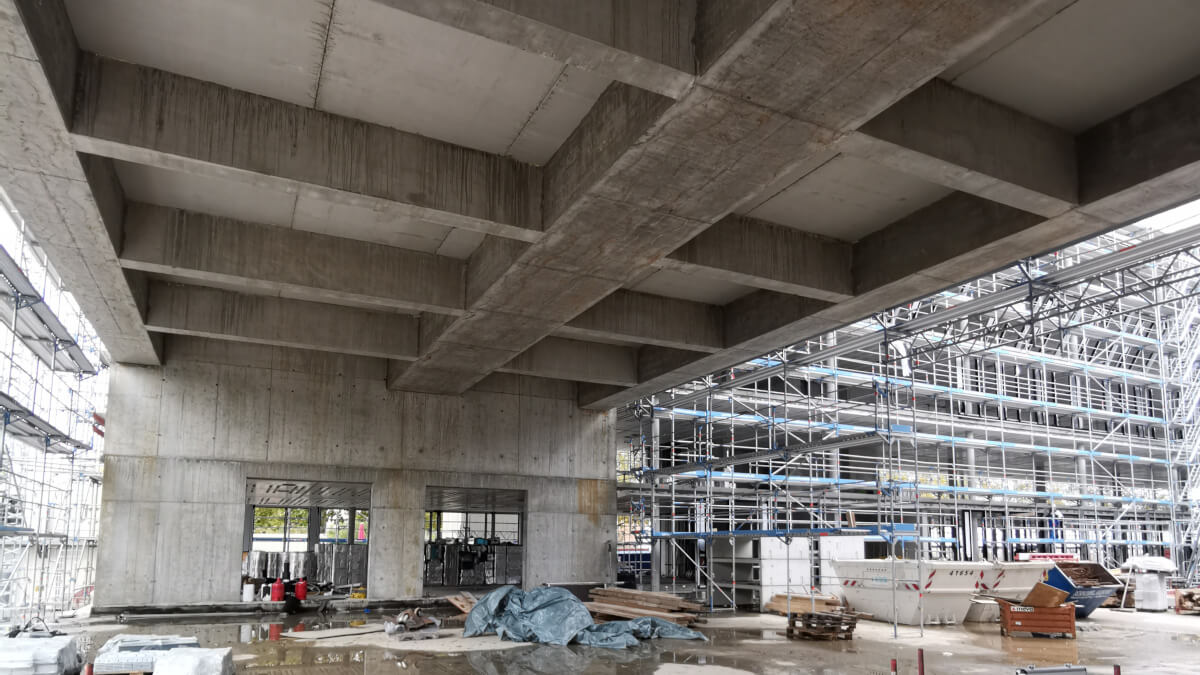
Structural camber as a remedy for buckling
To start the structural analysis, the engineers used the FRILO “Building Model” to determine the vertical and horizontal load transfer of the structure. Zdenko Grgic, structural engineer at Wulle Lichti Walz, then used FRILO’s finite-element slab analysis module to iteratively analyze the load-dependent deformation behavior of the bridge-like slab in its cracked state. “I looked at all the design values for the slab and then determined the extent and geometry of the structural camber, taking the construction phases into account in order to counteract the expected deformation behavior,” says Grgic, describing his solution concept. He also used the application to analyze the thickened solid strip within the slab which carries the largest share of the building's load, in order to determine the shear values and perform a punching shear verification with FRILO.
A comparison of the calculation results in the FRILO continuous beam module confirmed that the calculated bending behavior in the cracked section state (State II) was consistent with the preliminary analyses already carried out by Jürgen Walz. "FRILO is the best tool for achieving understandable results as easily and efficiently as possible. The structural analysis documentation provides the essentials and can be automatically compiled into a single well-structured – yet customizable – document using the Document Designer," Grgic praises.
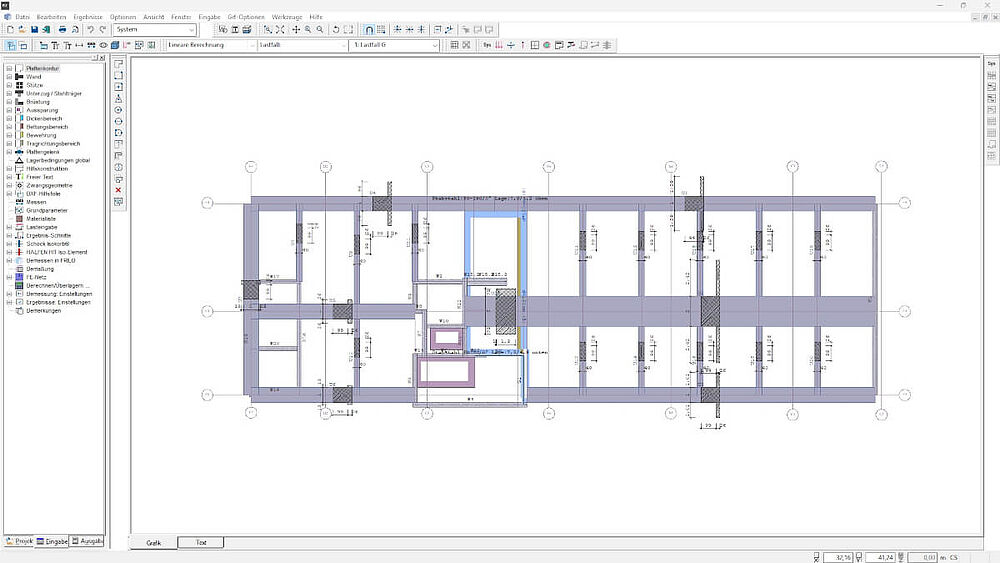 Copyright: Wulle Lichti Walz; The structural analysis for the support slab was performed using FRILO's slab analysis program.
 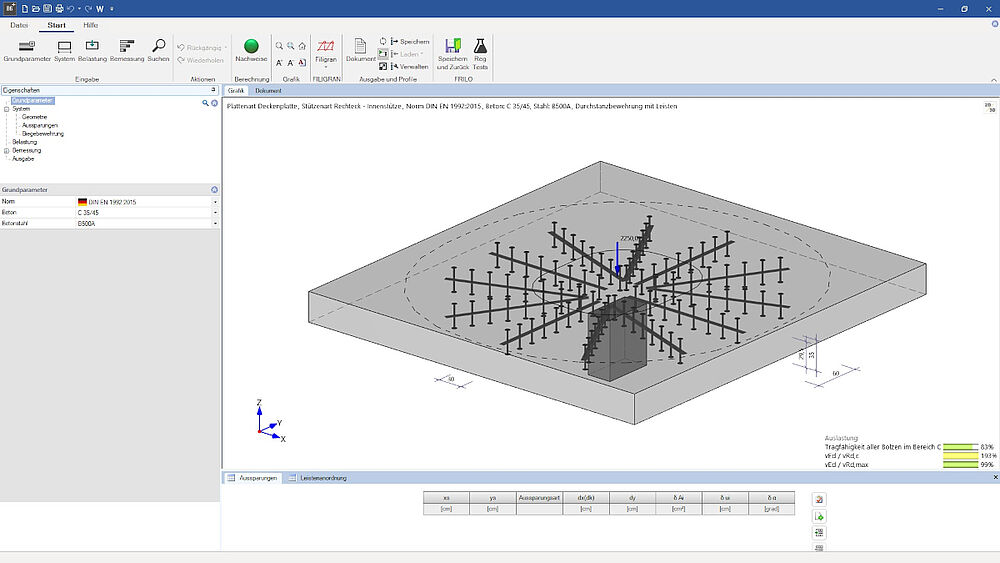 Copyright: Wulle Lichti Walz; The structural engineers performed the punching shear analyses using FRILO's “Punching” program.
 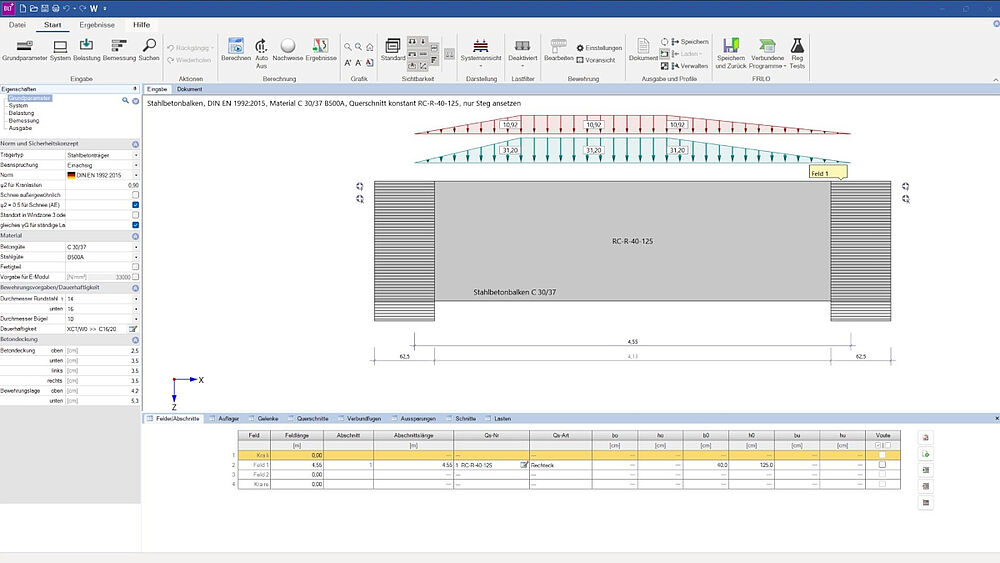 Copyright: Wulle Lichti Walz; The joists were designed using FRILO’s “Continuous Beam” program.
 Detailed design in 3D with ALLPLAN
During the approval planning phase, the designers at Wulle Lichti Walz used ALLPLAN CAD software to create general arrangement drawings. Once a test engineer had approved the structural analysis calculated using FRILO, the engineering firm's draftsmen began work on the implementation planning. The formwork and reinforcement plans were also created with ALLPLAN. Among other things, the designers transferred the calculated, realistic reinforcement distribution in the bridge-like slab to the 3D model. The reinforcement data for the beams provided by the continuous beam program was also entered into the ALLPLAN model. However, because the stiffness of the calculated deformation behavior changed with each load step, Grgic's work was not yet complete when he handed over the calculation results to the draftsmen.
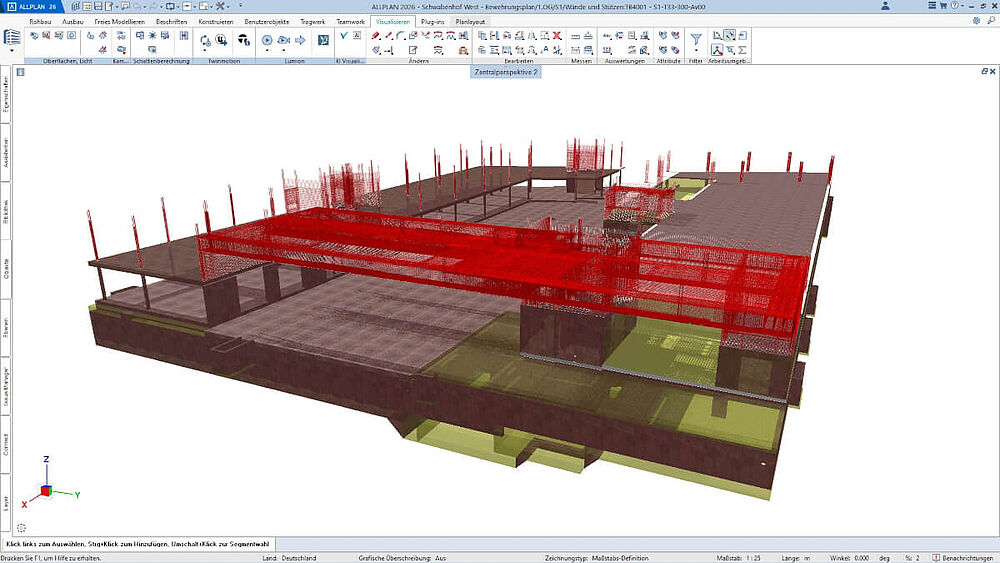 Copyright: Wulle Lichti Walz; The architectural drafters created the reinforcement drawings using the ALLPLAN CAD software.
 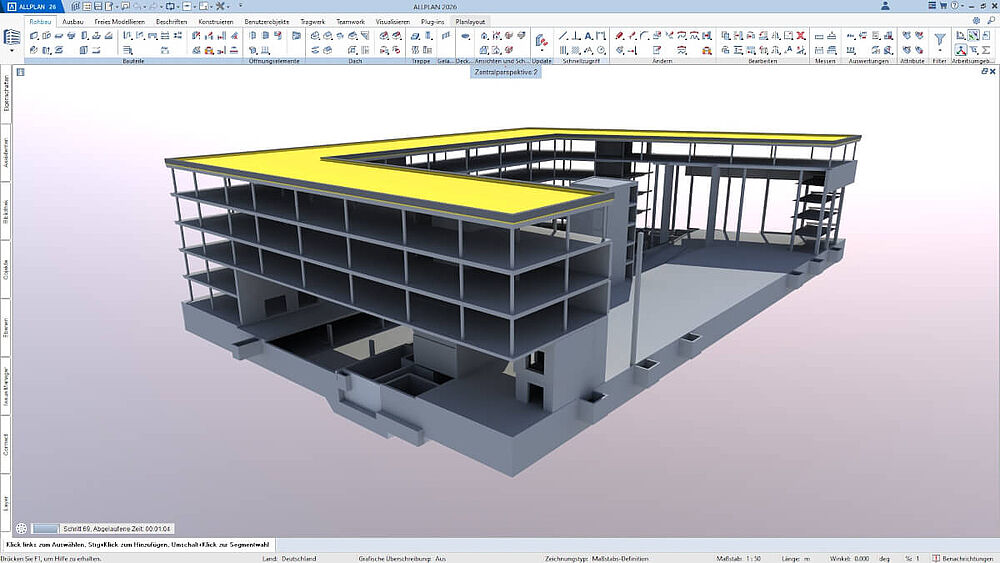 Copyright: Wulle Lichti Walz; The 3D model of the five-story building in the ALLPLAN CAD software.
 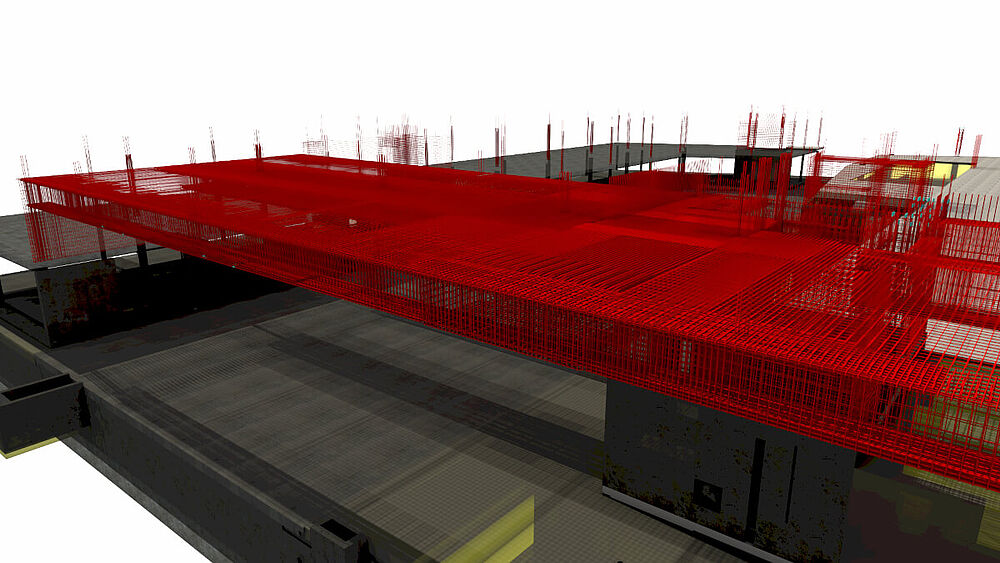 Copyright: Wulle Lichti Walz; A large amount of rebar had to be installed in the bridge-like support slab.
 Visible load-bearing behavior as feedback
In order to ensure the economic construction of the girder system using conventional reinforced concrete methods on the construction site, the temporary floor slab was lowered in a controlled manner in stages, depending on the material properties and construction phases. Two things were closely monitored on site. First, the building materials technologist produced test cubes to guarantee the desired concrete strength using a cube press and to time the striking of the concrete slab formwork precisely. Second, the surveyor regularly recorded the actual deformation behavior of the slab to ensure that the assumptions calculated by the structural engineer corresponded to reality for each load step. “By monitoring and documenting the visible deformation behavior of the concrete, I was able to confirm my calculations on site,” says Grgic, describing the unique appeal of the project from a structural engineer's perspective. And the result proves him right: thanks to the correctly planned camber and the thoroughly controlled formwork of the concrete, the bridge-like slab ultimately formed as desired without any unintended upward or downward deformation.