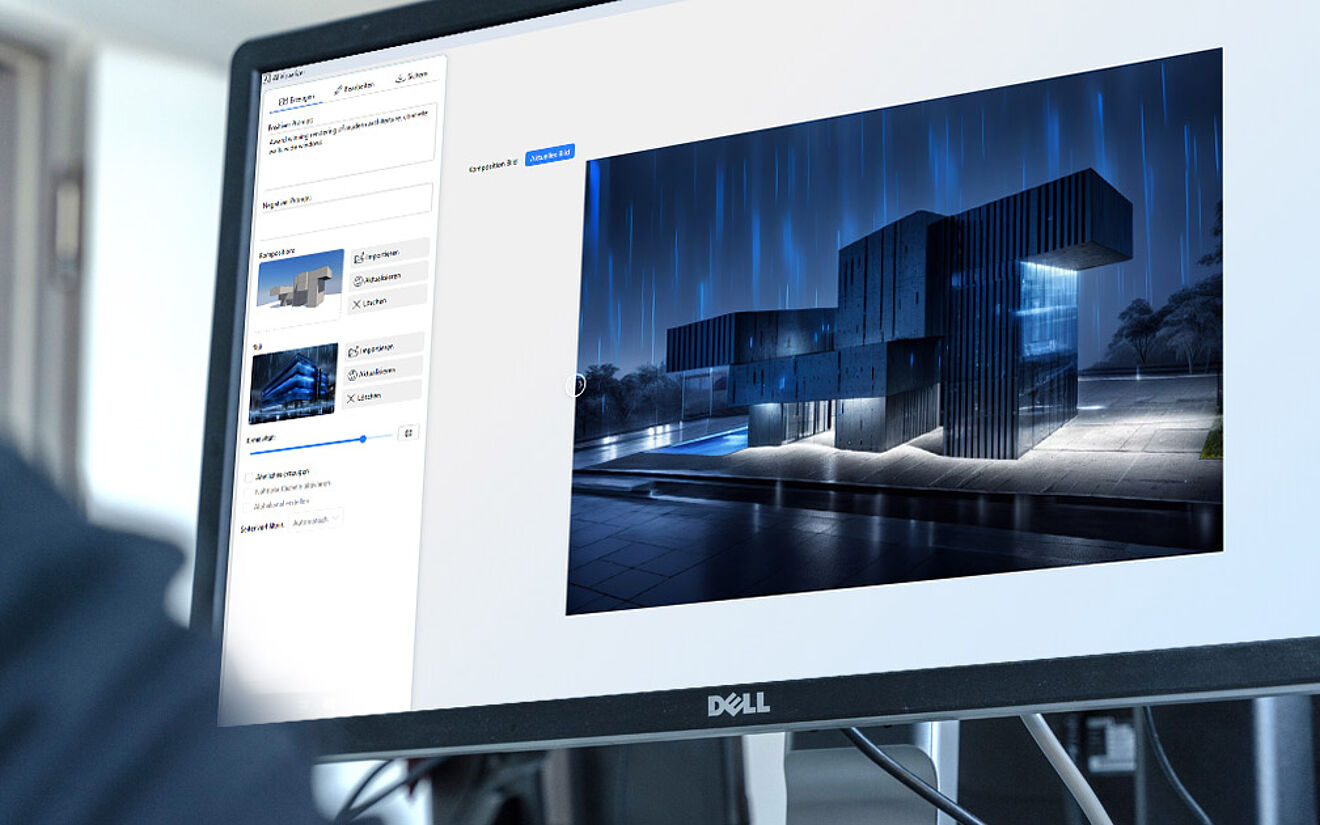
Artificial intelligence is no longer a future concept for the architecture, engineering, and construction (AEC) industry. From generating design concepts and automating repetitive tasks to supporting BIM workflows and parametric modeling, AI is already helping professionals work faster, explore more options, and make better-informed decisions. While the uses of this technology are still being explored, its impact is already being felt across every stage of the design process. Here’s some examples of how AI can be used on today’s architecture and engineering projects.
In summary: > AI is already helping architects and engineers visualize ideas faster and communicate concepts more effectively. > Generative AI enables rapid exploration of multiple design options during the earliest project stages. > Modeling automation is reducing repetitive tasks and improving productivity across project teams. > The combination of BIM and AI is creating opportunities for smarter, data-driven decision-making. > AI is evolving from a productivity tool into an intelligent design partner that supports better project outcomes. |
AI Visualization
Visualization has traditionally been one of the most time-intensive parts of the design process. Creating detailed 3D scenes, testing materials, and refining presentation images can take hours or even days.
AI is changing that. Modern image-generation tools can transform prompts, sketches, photos or model views into realistic visualizations in seconds, allowing designers to explore different styles, materials, lighting conditions, and façade concepts much earlier in a project.
The benefits go beyond speed. Faster visualization makes it easier to communicate ideas to clients and stakeholders who may struggle to interpret technical drawings or BIM models. Design options become easier to compare, helping teams gather feedback sooner and make decisions with greater confidence.
Tools such as the AI Visualizer in ALLPLAN demonstrate how AI can support this process, combining text prompts, reference images, and model data to generate realistic visuals while keeping designers firmly in control of the creative direction.
Early Stage Design Exploration
The earliest project decisions often have the greatest impact on cost, sustainability, and overall project success. Yet traditionally, the number of design options explored has been limited by the time required to develop and present them.
Generative AI helps remove that constraint. Architects and engineers can quickly test alternative design approaches, compare materials, evaluate different architectural styles, and explore multiple design directions before committing to a preferred solution.
This ability to iterate rapidly encourages a more exploratory design process. Stakeholders can review options earlier, discuss trade-offs more effectively, and identify potential issues before significant effort has been invested in detailed design.
Rather than replacing creativity, AI expands it. By reducing the time needed to visualize and evaluate ideas, design teams can focus more attention on solving problems, refining concepts, and delivering better outcomes for clients and project stakeholders.
Modeling Automation
Some of the most significant productivity gains are coming from automation. Across architecture and engineering, professionals spend countless hours on repetitive modeling, documentation, and data-management tasks that add little creative value.
By automating routine processes with AI, teams can spend less time on manual work and more time on design, coordination, and problem-solving. Tasks that once required specialist scripting knowledge are becoming accessible to a much wider audience.
For example, ALLPLAN’s AI-enabled Python workflow allows users to create their own parametric objects and automate recurring modeling tasks without extensive programming expertise. Rather than starting from scratch each time, teams can build reusable components that adapt automatically as project requirements evolve. This provides more consistent workflows and greater productivity across the entire project team.
BIM + AI
The real power of AI emerges when it is combined with structured project data. While image-generation tools can support visualization and concept development, BIM provides the information-rich environment that allows AI to deliver deeper insights throughout the project lifecycle.
AI is increasingly being used to support activities such as quantity takeoffs, compliance checking, structural analysis, and model generation. Rather than searching through large datasets manually, teams can use intelligent systems to identify issues, evaluate alternatives, and access information more efficiently.
As these capabilities mature, AI will become a natural extension of BIM workflows. Future systems will not only process project data but also help evaluate design decisions based on factors such as cost, material efficiency, and sustainability.
By combining BIM’s structured information with AI’s analytical capabilities, project teams can make faster, more informed decisions from the earliest design stages onward.
Parametric Workflows
Parametric design has already transformed the way many architects and engineers work, enabling models to adapt automatically when project requirements change. AI is now helping make these workflows even more accessible and powerful.
Instead of manually creating complex rules and formulas, designers can use AI to help generate the logic behind parametric components. This lowers the barrier to entry and allows more teams to benefit from intelligent, adaptable modeling workflows.
In ALLPLAN, AI can support the creation of parametric BIM objects that automatically respond to changes in geometry or project requirements. These dynamic objects help reduce repetitive updates, improve consistency, and streamline coordination across disciplines.
Together, AI and parametric design create a powerful combination: AI helps generate and refine the underlying logic, while parametric workflows ensure models remain flexible throughout the design and delivery process.
From Tool to Decision-Making Partner
Today’s AI tools are primarily focused on helping professionals work faster. The next generation will focus on helping them make better decisions.
As AI becomes more deeply integrated into design and BIM workflows, it will increasingly act as an intelligent assistant rather than simply a productivity tool. Future systems may be able to understand design intent, suggest alternative solutions, and evaluate options based on factors such as cost, material efficiency, constructability, and sustainability.
This shift has the potential to improve decision-making throughout the project lifecycle. Rather than replacing human expertise, AI will provide additional insights that help teams assess trade-offs and identify opportunities earlier in the process.
To realize this potential, however, organizations will need to focus on data quality, transparency, and governance. The better the underlying data, the more valuable AI-driven insights become.
While the technology continues to evolve, one thing is clear: AI is not replacing architects and engineers. Instead, it is becoming a powerful partner that enables teams to focus less on repetitive tasks and more on creativity, innovation, and delivering better project outcomes.