Why Agility Is Becoming the New Competitive Standard in Precast
Precast concrete has long been valued for its ability to improve quality, accelerate construction, and reduce disruption on site. Today, however, the role of precast extends far beyond manufacturing structural walls and floor slabs. Increasingly, precast elements are becoming intelligent building components, combining multiple functions – such as insulation, building services, and more – within a single factory-produced element.
In summary: > Modern precast elements integrate insulation, building services, façade finishes, and other features to increase the degree of prefabrication. > As precast becomes more intelligent, digital design and DfMA are essential for managing increasing complexity and improving coordination. > Connected BIM workflows help optimize design, manufacturing, and assembly while reducing errors, waste, and manual effort. > ALLPLAN Precast automates key design and production processes, enabling efficient delivery of increasingly sophisticated precast projects. > The award-winning Wientalterrassen development demonstrates how intelligent precast design supports more sustainable and efficient residential construction. |
This evolution brings significant benefits, yet it also introduces a new challenge. As each precast element becomes more sophisticated, so too does the design process required to coordinate every embedded component, connection, and manufacturing requirement. Meeting that challenge requires more than traditional CAD workflows. It demands an intelligent, connected design process that supports Design for Manufacturing and Assembly (DfMA) from the earliest stages of a project.
Modern precast is more than structural concrete
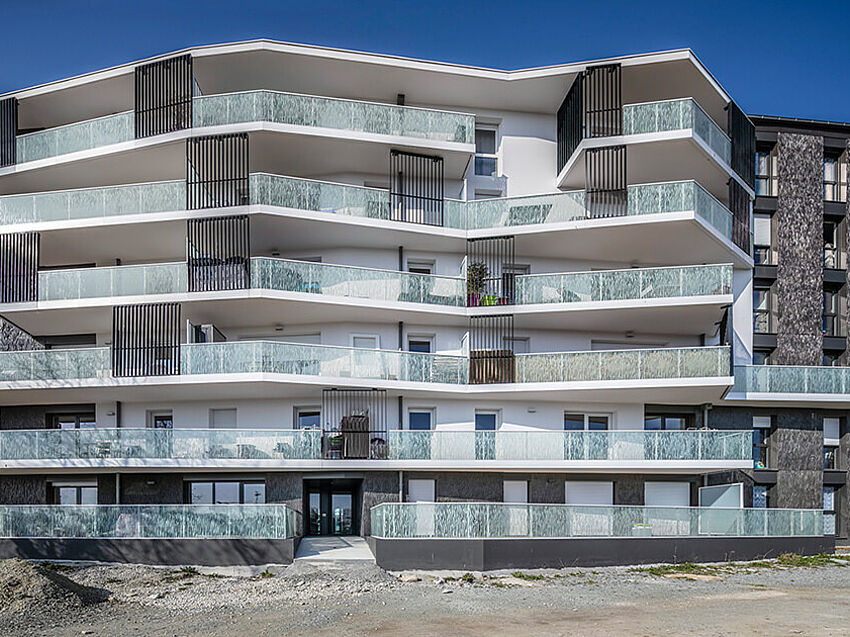
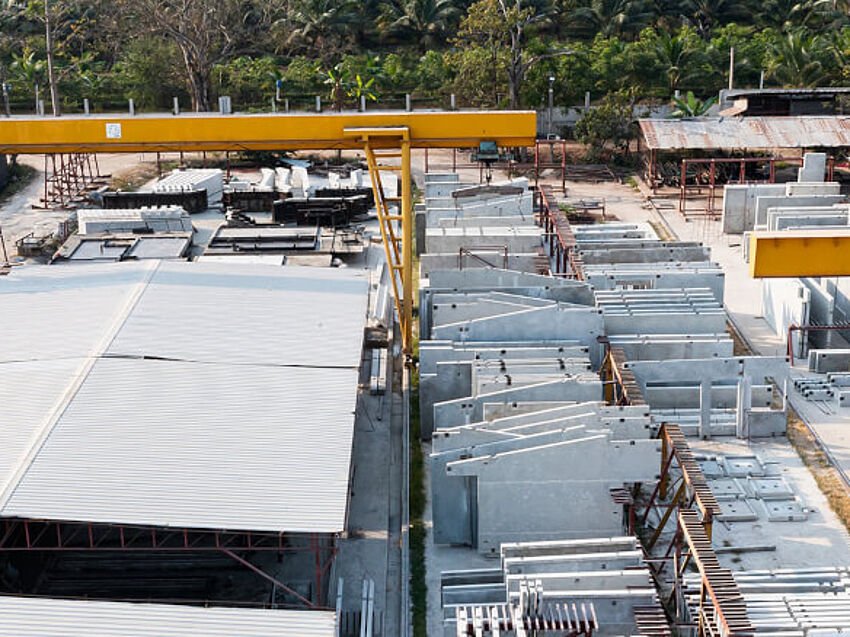
Modern prefabrication is transforming what a precast element can deliver. Rather than producing individual structural components, manufacturers are increasingly creating complete building elements that arrive on site ready to perform multiple functions from day one.
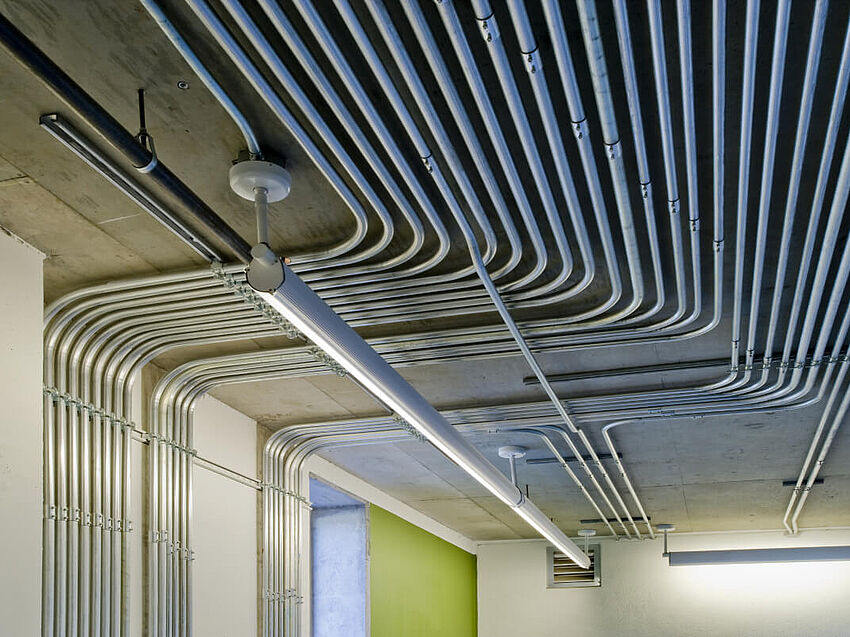
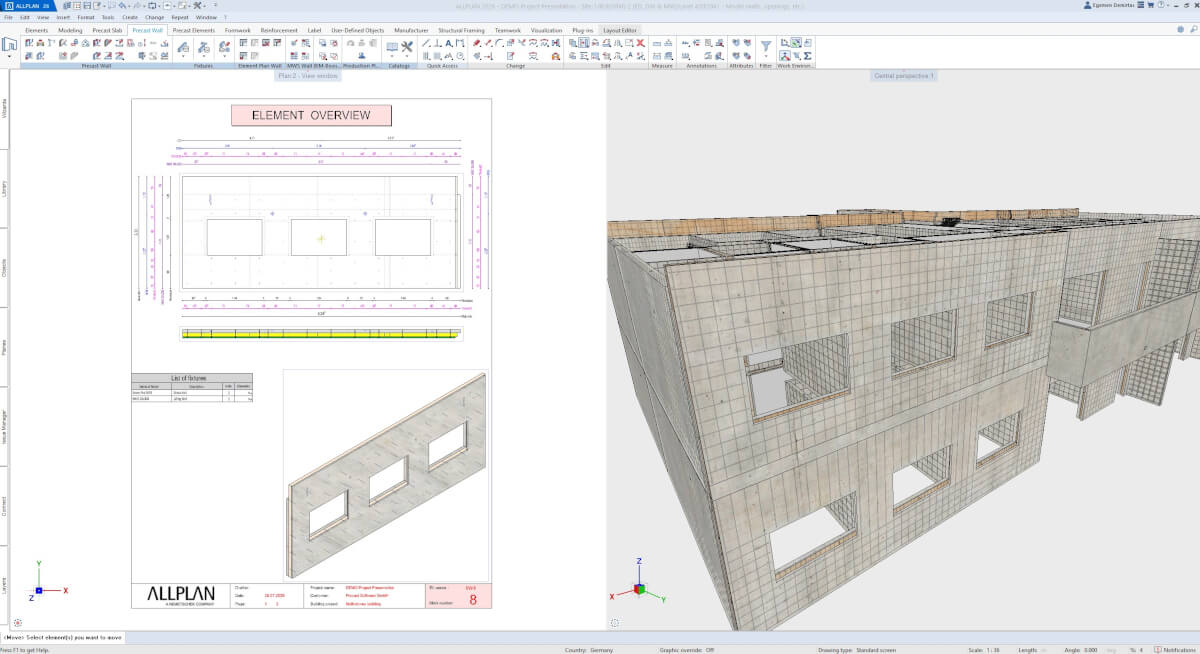
External wall panels, for example, can incorporate insulation, embedded reinforcement, electrical conduits, heating and cooling pipework, windows, doors, and architectural finishes during factory production. Timber-concrete hybrid elements and factory-finished façades further expand the possibilities, allowing projects to reduce on-site trades while improving consistency and quality.
This approach delivers benefits throughout the building lifecycle. More work completed in controlled factory conditions means less material waste, fewer site deliveries, shorter construction schedules, and improved health and safety. At the same time, integrated components contribute to better thermal performance, enhanced durability, lower maintenance requirements, and greater resource efficiency.
Intelligent elements demand intelligent design
For designers, however, these advances fundamentally change the nature of precast design. Every additional layer of functionality increases the amount of information that must be coordinated within each element. A precast panel therefore becomes an intelligent building element that must satisfy architectural, structural, manufacturing, and installation requirements simultaneously.
As the functionality of precast elements increases, so too does the complexity of designing them. Coordinating reinforcement, insulation, embedded services, openings, lifting anchors, connection details, fixtures, and architectural finishes within a single element requires far more than geometric modeling. Every design decision can affect manufacturing, transportation, installation, and ultimately the performance of the completed building.
This growing complexity presents a significant challenge. As more features are incorporated into each element, design effort can increase dramatically unless supported by efficient, highly automated workflows. Managing hundreds – or even thousands – of unique elements manually not only consumes valuable engineering time but also increases the risk of inconsistencies, coordination issues, and costly revisions later in the project.
DfMA starts with digital design
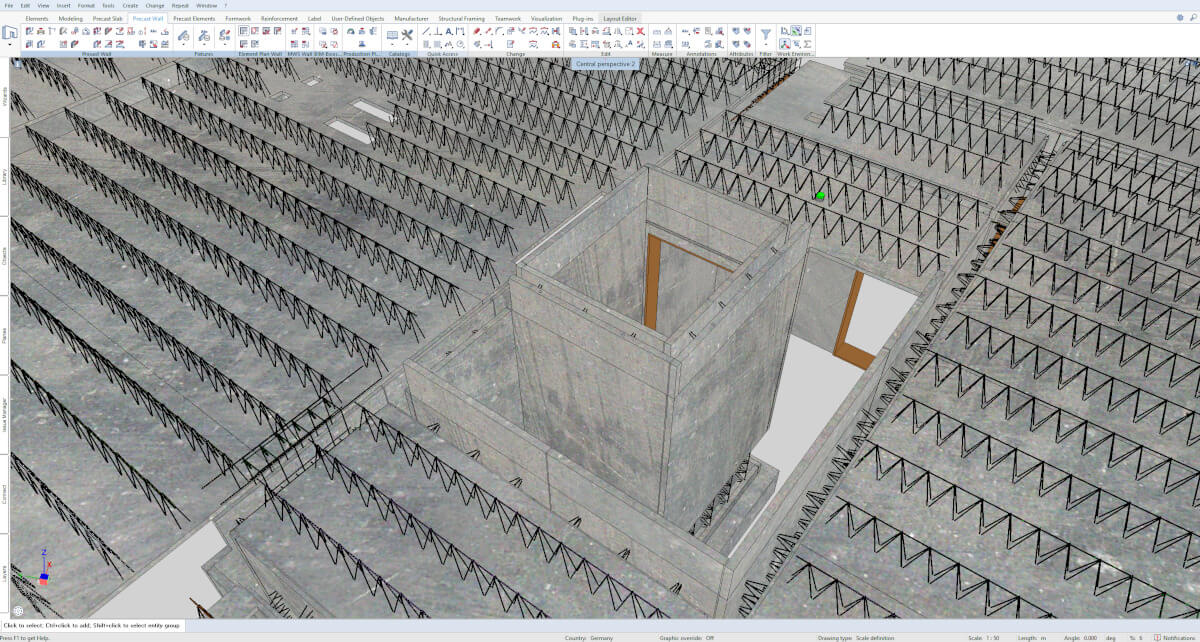
DfMA provides the framework for managing the growing complexity of modern precast construction. Rather than considering manufacturing and installation after the design is complete, DfMA brings these requirements into the design process from the very beginning. This allows project teams to optimize components before production starts, reducing rework, simplifying assembly, and creating more predictable project outcomes.
Digital design is fundamental to making this possible. Building Information Modeling (BIM) provides a shared source of project information that connects architects, engineers, manufacturers, and contractors around a single model. Manufacturing constraints, reinforcement requirements, embedded components, and assembly sequences can all be coordinated long before work begins on site, allowing potential issues to be resolved while changes are still quick and cost-effective to make.
For increasingly intelligent precast elements, this connected approach becomes even more valuable. Instead of treating each wall, slab, or façade panel as an isolated component, designers can develop coordinated building elements that carry the information needed throughout the project lifecycle. The result is a smoother transition from design to manufacturing and from manufacturing to construction, with fewer errors, less manual coordination, and greater confidence that every element will perform exactly as intended.
How ALLPLAN Precast supports intelligent precast design
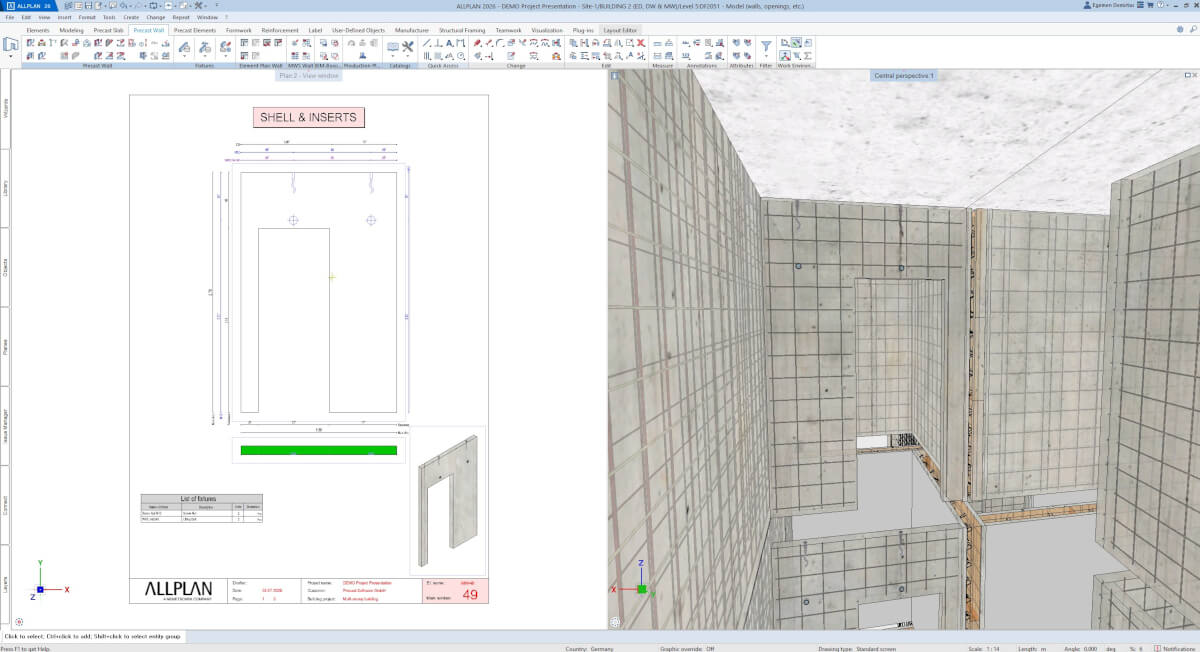
Without purpose-built digital workflows, this growing complexity can quickly become difficult to control. This is precisely where ALLPLAN Precast delivers its greatest value. Developed specifically for precast construction, it enables engineers to model increasingly sophisticated precast elements while maintaining intelligent relationships between every component. Reinforcement, embedded parts, fixtures, and openings remain associated with their host element, allowing the model to behave as a coordinated building component rather than a collection of disconnected objects.
Parametric modeling and highly automated workflows further reduce repetitive design tasks, allowing project teams to efficiently manage large numbers of complex precast elements while maintaining consistency across the project. When changes inevitably occur, production drawings, reinforcement layouts, quantity takeoffs, and manufacturing data are automatically updated from the model, eliminating much of the manual work traditionally associated with design revisions.
The result is a workflow that scales with complexity. Rather than seeing design effort increase in proportion to the sophistication of each precast element, engineers can continue to deliver highly detailed, highly prefabricated building components efficiently and accurately.
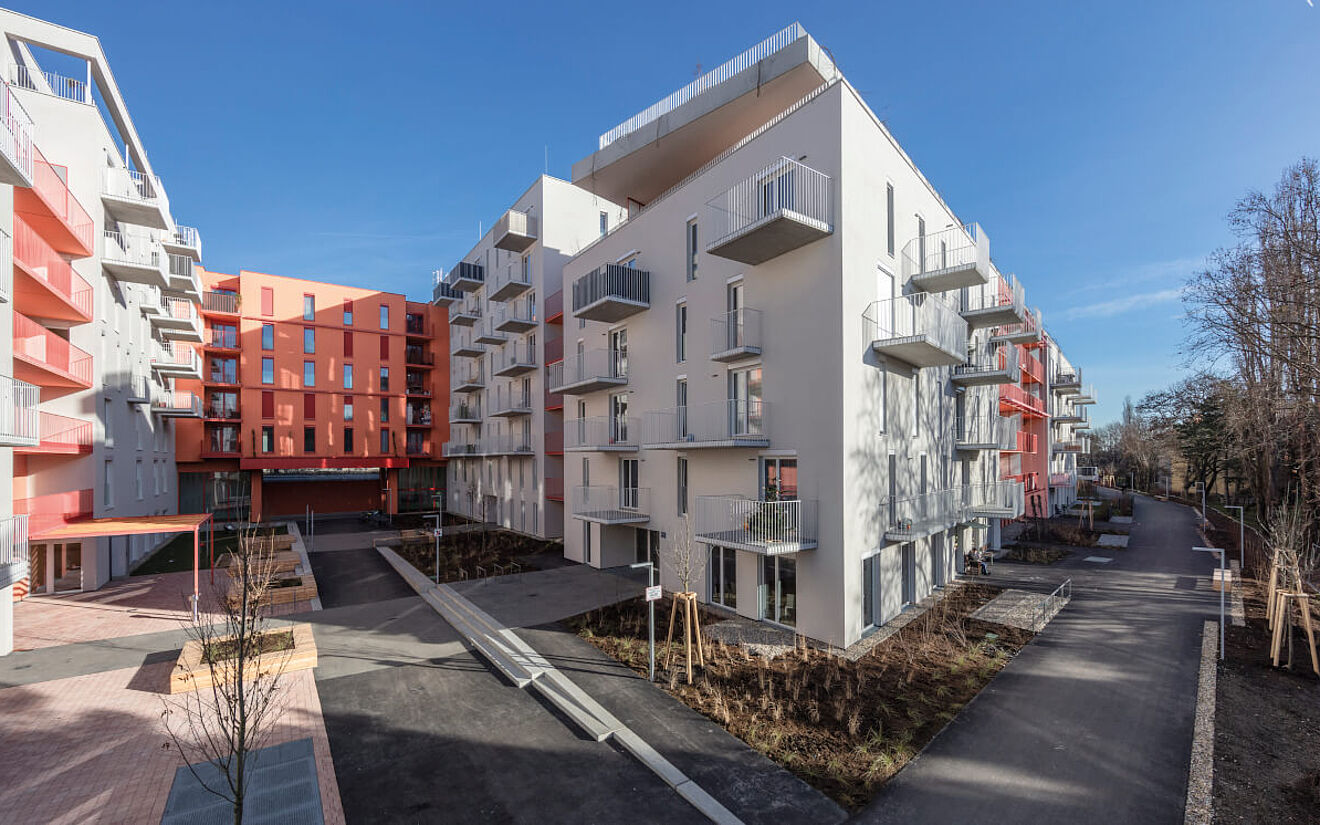
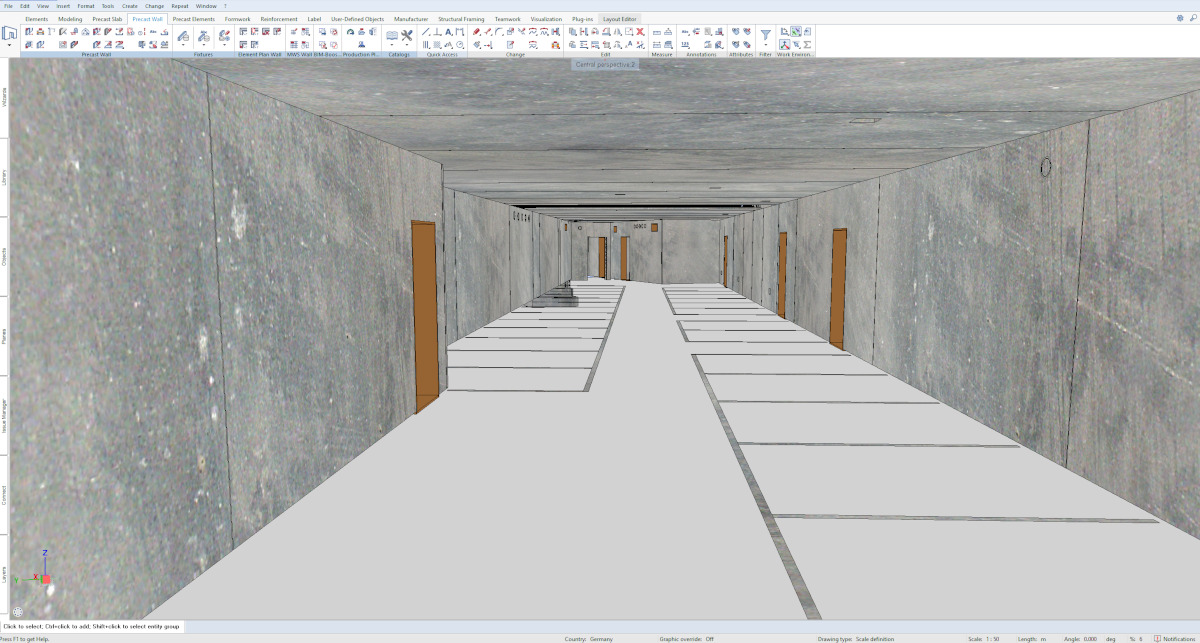
This approach is already delivering results on real-world projects. The award-winning Wientalterrassen residential development in Vienna was constructed using more than 3,100 precast concrete elements, all designed with ALLPLAN Precast before being manufactured offsite. The connected digital workflow supported the coordination of thousands of individual elements while helping reduce construction time, transportation requirements, and on-site emissions. It is a striking example of how intelligent precast design contributed to one of Austria’s most innovative residential developments.
Intelligent design for an intelligent future
As the degree of prefabrication increases, the role of digital design will only become more important. Intelligent precast elements have the potential to deliver faster, more sustainable, and higher-quality buildings, but only when they are supported by connected workflows that integrate design, manufacturing, and construction from the outset.
By combining DfMA principles with intelligent BIM workflows, project teams can manage increasing design complexity while maximizing the benefits of modern precast construction. The result is a more efficient Design to Build process that helps manufacturers, designers, and contractors deliver better outcomes with greater confidence.
Want to learn more? Download our free DfMA eBook to explore how digital workflows are transforming precast, modular, and industrialized construction.